
Man of Iron (Człowiek z żelaza) — 1981 film by Andrzej Wajda
1981 Polish drama directed by Andrzej Wajda that dramatizes the birth of the Solidarity movement; mixes fiction with real footage, features Lech Wałęsa, won Cannes' top prize and earned an Oscar nomination.
Overview
Man of Iron (Polish title: Człowiek z żelaza) is a 1981 Polish drama directed by Andrzej Wajda. The film examines labor unrest in late 1970s Poland and the emergence of the independent trade-union movement known as Solidarity. Wajda frames the story as a blend of fictional narrative and documentary-style reporting, following workers, activists and journalists as they confront the political and economic system of the time.
Image gallery
1 Image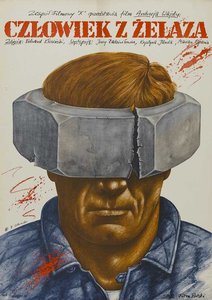
Style and themes
The film is notable for combining staged scenes with footage that resembles reportage, giving it a quasi-documentary immediacy. Major themes include workers' rights, social solidarity, state repression, and the ethical dilemmas faced by individuals who become symbols of a larger movement. Wajda uses location shooting in shipyards and urban settings to emphasize realism and to locate the story in a recognizable social context.
Production and principal cast
Wajda assembled a cast that mixed professional actors with real-life participants. Among the performers were Jerzy Radziwiłowicz and Krystyna Janda, both of whom had worked with Wajda before. The film also includes appearances by prominent public figures such as Lech Wałęsa, who appears as himself, strengthening the film's link to contemporary events. Distribution outside Poland was handled by United Artists, which brought the picture to a wider international audience.
Awards, reception and impact
Internationally the film drew strong attention: it received top honors at major festivals and was nominated for an Academy Award for Best Foreign Language Film in 1982. Critics and historians have regarded it as one of Wajda's most politically engaged works, credited with capturing the mood and aspirations of a pivotal moment in Polish history. The film contributed to global awareness of the Solidarity movement and remains a reference point in discussions of cinema as political intervention.
Legacy and notable facts
- Man of Iron functions as a sequel and response to earlier Wajda work on social themes, extending a cinematic conversation about labor and national identity.
- Its mixture of fiction and documentary elements has been studied in film courses as an example of political cinema that blurs genre boundaries.
- The presence of actual activists and leaders in the cast underlines the film's historical immediacy and has helped preserve contemporary testimony about the period.
Today the film is often cited in overviews of Eastern European cinema and in histories of the Solidarity era. For viewers and researchers it remains a compelling dramatization of how cultural production and political struggle can interact during times of rapid social change.
Author
AlegsaOnline.com Man of Iron (Człowiek z żelaza) — 1981 film by Andrzej Wajda Leandro Alegsa
URL: https://en.alegsaonline.com/art/142154