
Lochem — city and municipality in Gelderland, Netherlands
Lochem is a small Dutch city and municipality in Gelderland, spanning Achterhoek and the IJssel valley, known for wooded heights, the Twentekanaal and a history dating to 1233.
Overview
Lochem is a municipality and town in the eastern Netherlands, located in the province of Gelderland. The area combines rural villages, small-scale agriculture and wooded hills with a compact historic centre. The municipal population was about 34,000 in 2021, and the town of Lochem serves as the administrative and cultural hub for the surrounding villages.
Image gallery
10 Images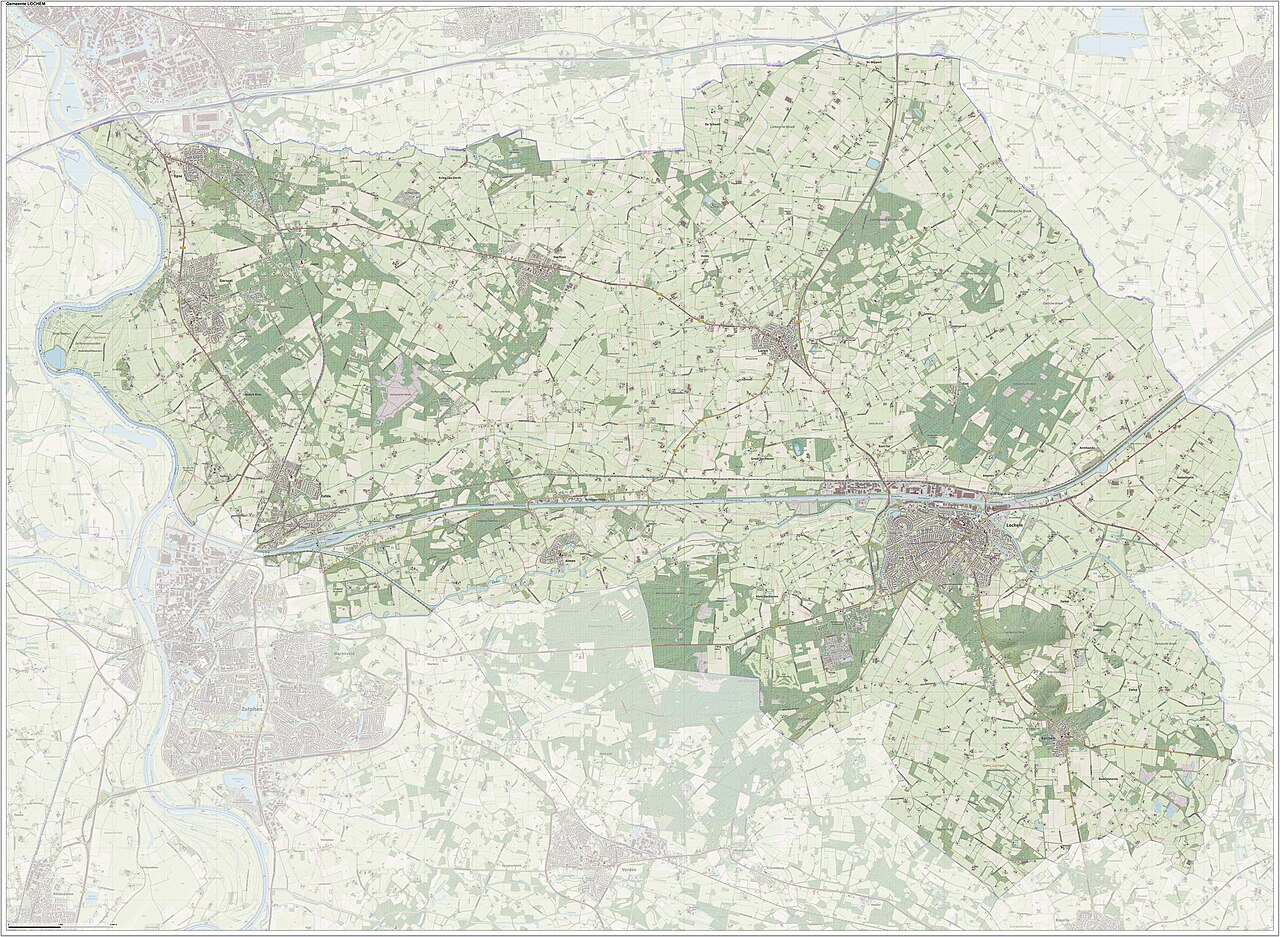


Geography and landscape
Lochem sits where the low, cultivated floodplain of the IJssel valley meets the gently rising countryside of the Achterhoek. The municipality borders the region of Salland to the north. Two local wooded elevations — the Lochemse Berg and the Kale Berg — rise as conspicuous green ridges in an otherwise flat landscape and are popular for walking and nature recreation.
History and development
The town of Lochem received city rights in 1233, which anchored its role as a local market and administrative centre in the medieval period. Over the centuries the settlement grew modestly around its church and marketplace. In 2005 the neighbouring municipality of Gorssel was merged into Lochem, enlarging its territory and adding several villages and countryside areas to the municipality.
Transport, economy and culture
Lochem’s economy is mixed: light industry, services, local commerce and agriculture are all present. The Twentekanaal begins at the municipality’s southwestern edge near the city of Zutphen and runs eastward; this canal divides parts of the municipality and provides inland navigation and industrial access. Local culture emphasises outdoor life — cycling routes, walking trails through the forests and small cultural festivals anchored in village communities.
Attractions and notable facts
- Historic town centre with traditional houses and a market square.
- Recreation in the Lochemse Berg and Kale Berg woodlands.
- Waterways and the Twentekanaal supporting boating and industry.
- Short distances to larger regional centres while retaining a rural character.
Visitors and residents value Lochem for its combination of historic town amenities, accessible countryside and a network of small villages that reflect the agricultural and natural character of eastern Gelderland.
Author
AlegsaOnline.com Lochem — city and municipality in Gelderland, Netherlands Leandro Alegsa
URL: https://en.alegsaonline.com/art/141745