
Lingewaard: municipality in Gelderland, Netherlands
Lingewaard is a Dutch municipality in Gelderland formed in 2001. It combines river landscapes, fruit-growing Betuwe countryside and small historic towns such as Bemmel, Gendt and Huissen.
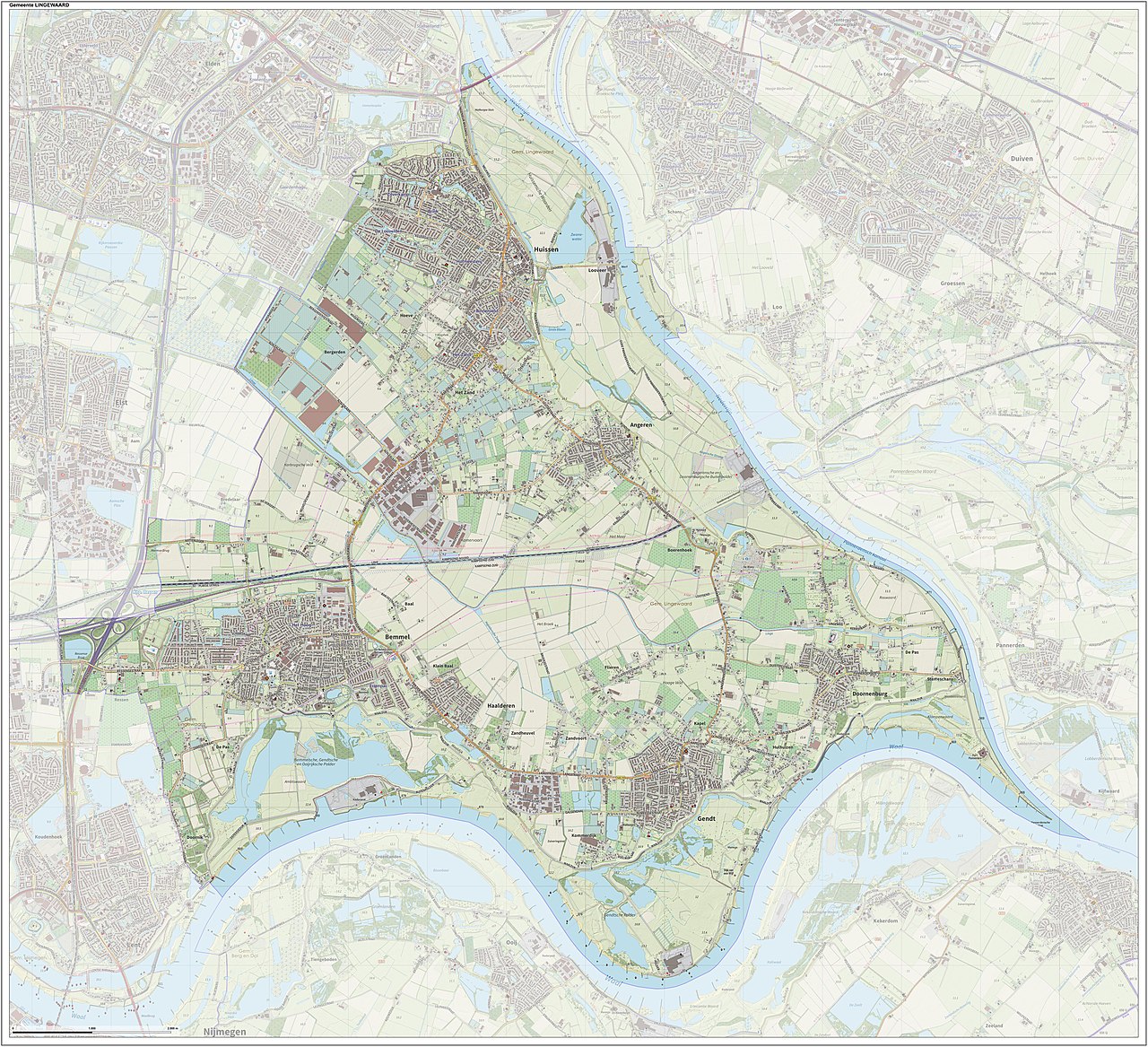
Lingewaard is a municipality in the eastern Netherlands, located in the province of Gelderland. Created at the start of the 21st century through the merger of several former municipalities, it had a population of about 46,475 in 2019. The municipal seat and largest town is Bemmel; other principal towns include Gendt and Huissen. For official information see the municipality page: Lingewaard municipality.
Image gallery
10 Images




Landscape and environment
The area is marked by riverine plains and fertile farms typical of the Betuwe region. Lingewaard takes its name from the valley of the river Linge and sits near larger rivers that have shaped its floodplains and dikes. These landscapes support orchards, pasture and patches of managed wetland. Local nature areas and riverine reserves draw visitors for walking, birdwatching and cycling.
Settlements and character
Lingewaard combines small urban centres and rural villages. Bemmel functions as the administrative and service hub, while places such as Gendt and Huissen retain historic cores, churches and streets that reflect medieval and later development. Residential neighbourhoods, agricultural holdings and green corridors are interwoven across the municipality.
Economy, recreation and transport
Agriculture—especially fruit production—has long been important; orchards and market gardening remain visible elements of the local economy. Many residents commute to nearby cities for work, and the municipality is integrated into regional transport and cycling networks. Recreational activities focus on nature reserves, riverside paths and seasonal events that highlight local produce.
History and governance
The modern municipality was formed to streamline local government and combine services. The settlements within Lingewaard have older origins, with medieval townships and a history tied to rivers and trade. Today the municipal council oversees planning, public services and environmental management, balancing development with flood control and conservation.
Notable features
- Fruit-growing landscapes typical of the Betuwe.
- River and floodplain habitats important for wildlife and recreation.
- Compact towns with local shops, cultural activities and community facilities.
- Good regional connections to nearby urban centres and transport routes.
For broader context about the country and province, see the Netherlands and Gelderland, or consult further resources: more information.
Author
AlegsaOnline.com Lingewaard: municipality in Gelderland, Netherlands Leandro Alegsa
URL: https://en.alegsaonline.com/art/141558