
Provinces of the Netherlands
Overview of the twelve Dutch provinces: their names, governance, responsibilities, historical origins, and how they relate to the Caribbean Netherlands and other parts of the Kingdom.
The European part of the country commonly known in English as the Netherlands is divided into twelve provinces. These administrative regions (called provincies in Dutch) form the intermediate level between the national government and municipal authorities. Each province combines geographic, economic and cultural identity with formal tasks defined by national law.
Image gallery
5 Images


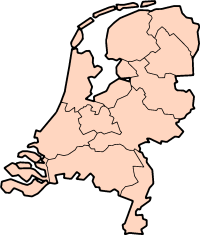
Role and responsibilities
Provinces manage a range of regional matters including spatial planning, infrastructure and regional transport, environmental policy, water management and nature conservation. Their responsibilities often overlap with municipal and national competencies, so coordination is an important part of their work. Provinces also play a role in cultural heritage and regional economic development.
Governance at provincial level is bicameral in practice: an elected provincial council (Provinciale Staten) sets policy and a college of deputies (Gedeputeerde Staten) executes it. Each province has a King's Commissioner (Commissaris van de Koning), who represents the central government and chairs provincial bodies. Members of the provincial councils also participate indirectly in national politics: they elect the members of the national Senate (Eerste Kamer).
List of provinces
- Groningen
- Friesland (Fryslân)
- Drenthe
- Overijssel
- Flevoland
- Gelderland
- Utrecht
- Noord-Holland (North Holland)
- Zuid-Holland (South Holland)
- Zeeland
- Noord-Brabant (North Brabant)
- Limburg
Historically the present provinces evolved from medieval counties, duchies and seafaring provinces; over centuries their boundaries and functions were reshaped by wars, centralization and modern administrative reforms. The contemporary provincial framework balances local interests with national standards and European regulations.
Important distinctions: the Caribbean Netherlands (Bonaire, Sint Eustatius and Saba) are not provinces but special municipalities of the country, while three other constituent countries in the Kingdom — Aruba, Curaçao and Sint Maarten — are separate entities with their own governments (other countries within the Kingdom). This constitutional arrangement separates territorial administration in Europe from the wider Kingdom structure.
Questions and answers
Q: How many provinces are there in the Netherlands?
A: There are twelve provinces in the Netherlands.
Q: What are the provinces called?
A: The provinces are not named in the given text.
Q: Are the Caribbean Netherlands part of the thirteen provinces?
A: No, the Caribbean Netherlands are completely separate from the twelve provinces of the Netherlands.
Q: What is the official language of the Netherlands?
A: The official language of the Netherlands is Dutch.
Q: What is the governmental system of the Netherlands?
A: The Netherlands is a parliamentary democracy and a constitutional monarchy.
Q: Are the Netherlands a part of the European Union?
A: Yes, the Netherlands is a member of the European Union.
Q: What other countries make up the Kingdom of the Netherlands?
A: The text does not name the other countries that make up the Kingdom of the Netherlands.
Related articles
Author
AlegsaOnline.com Provinces of the Netherlands Leandro Alegsa
URL: https://en.alegsaonline.com/art/79751