
Kosovo–Serbia Economic Normalization Agreements (September 2020)
Two economic agreements signed at the White House on 4 September 2020 aimed at improving trade, connectivity and investment between Kosovo and Serbia; public mediation was led by the United States.
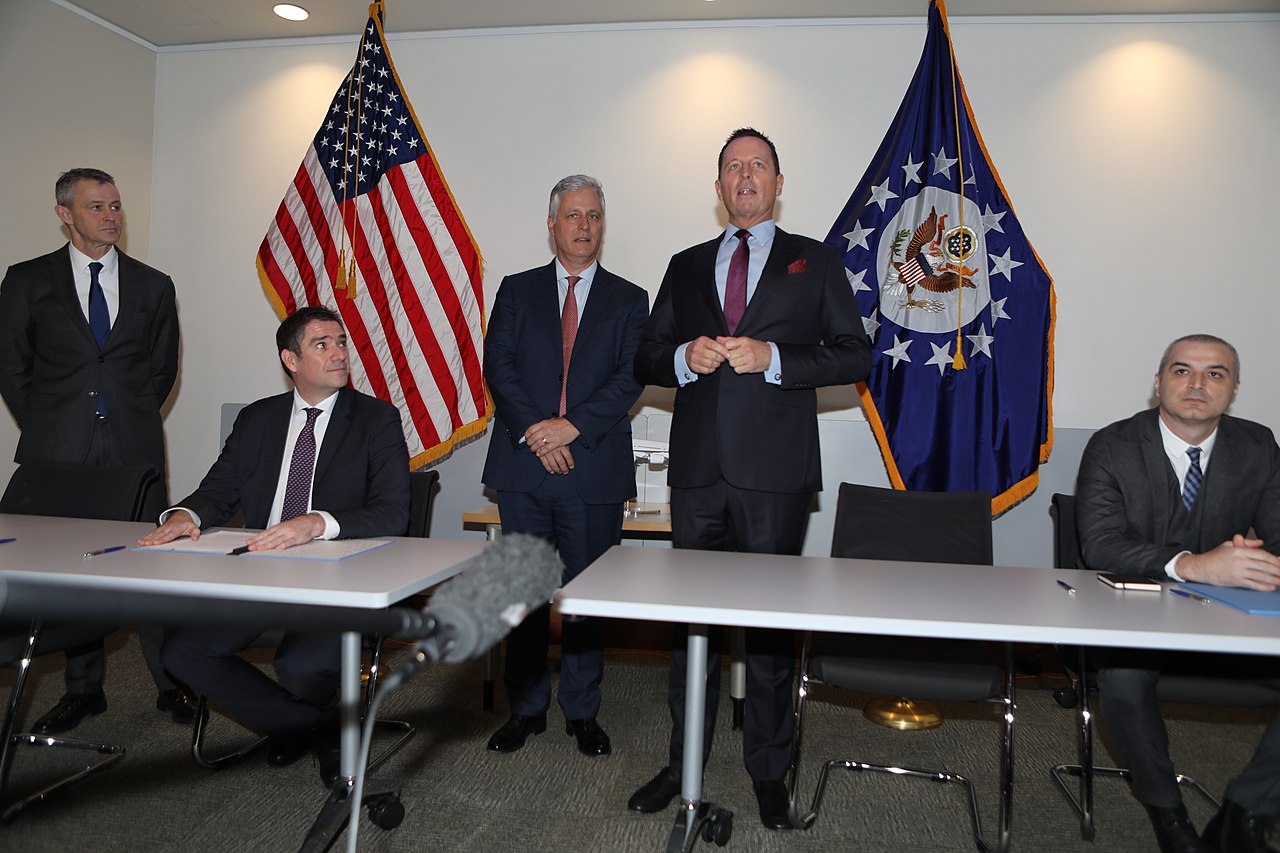
Overview: On 4 September 2020 two closely related economic normalization documents were signed in Washington. Each document was signed separately: one by the Prime Minister of Kosovo, Avdullah Hoti, and the other by the President of Serbia, Aleksandar Vučić. The ceremony took place at the White House and was observed by then U.S. President Donald Trump. The texts focused on steps to deepen economic cooperation and reduce barriers to trade and investment rather than on final political status.
Image gallery
3 Images

Main areas addressed
The documents emphasized practical and economic measures intended to build confidence and improve everyday contacts between the two societies. Typical areas covered included:
- Trade facilitation and reduction of tariffs and administrative obstacles for goods and services.
- Transport and infrastructure links such as roads, rail and regional connectivity projects.
- Energy cooperation and potential cross-border projects to improve supply and networks.
- Investment promotion, encouragement of private and public investment, and financial links.
- Telecommunications, freedom of movement for people and vehicles, and measures to boost tourism and business ties.
Background and negotiation context
The Kosovo–Serbia relationship has been shaped by the 1990s conflicts and by subsequent international mediation. For years the European Union led a structured dialogue aimed at normalizing relations. In 2020 the United States took a prominent public role in hosting talks and presenting an economic-focused approach. The signing in Washington represented a shift in emphasis toward economic confidence-building steps as a path to reduce tensions and create incentives for cooperation. The Serbian delegation included Aleksandar Vučić and allied officials; Kosovo’s delegation included its prime minister and ministers responsible for economy and foreign policy.
Reactions, implementation and significance
Reactions were mixed. Supporters described the documents as a pragmatic way to improve daily life, encourage investment, and create jobs while leaving political status issues to later negotiation. Critics argued that economic measures alone could not substitute for a comprehensive political agreement and cautioned that domestic constituencies in both places might resist concessions. International actors, including EU institutions, welcomed practical steps but reiterated that final status and legal questions remained subject to long-term diplomacy. Implementation proceeded unevenly, with some projects advancing and others delayed by political or technical hurdles.
Distinctive features and notable facts
Notable aspects include the fact that two separate but related documents were signed rather than a single bilateral treaty, and that the signing occurred under U.S. auspices in Washington rather than in a European forum. The agreements sought to reframe parts of the Kosovo–Serbia relationship around shared economic interests. Observers see such economic normalization measures as potential confidence-building tools that can complement, but not replace, political dialogue toward a more comprehensive settlement.
Author
AlegsaOnline.com Kosovo–Serbia Economic Normalization Agreements (September 2020) Leandro Alegsa
URL: https://en.alegsaonline.com/art/141029