
Kang Kek Iew (Comrade Duch) — head of Tuol Sleng (S-21)
Kang Kek Iew, known as Comrade Duch, was the Khmer Rouge official who ran the Tuol Sleng (S-21) prison. He was tried by the Cambodian tribunal and died in Phnom Penh in 2020.

Overview
Kang Kek Iew (also romanized Kaing Kek Iev and Kaing Guek Eav), widely known by his nom de guerre Comrade Duch, was a senior figure in the Khmer Rouge leadership. Born on 17 November 1942, he became notorious as the chief administrator of the Tuol Sleng security centre commonly called S-21, the detention, interrogation and torture facility operated under Democratic Kampuchea. He died on 2 September 2020 in a Phnom Penh hospital; contemporary reports attributed his death to lung disease.
Image gallery
2 Images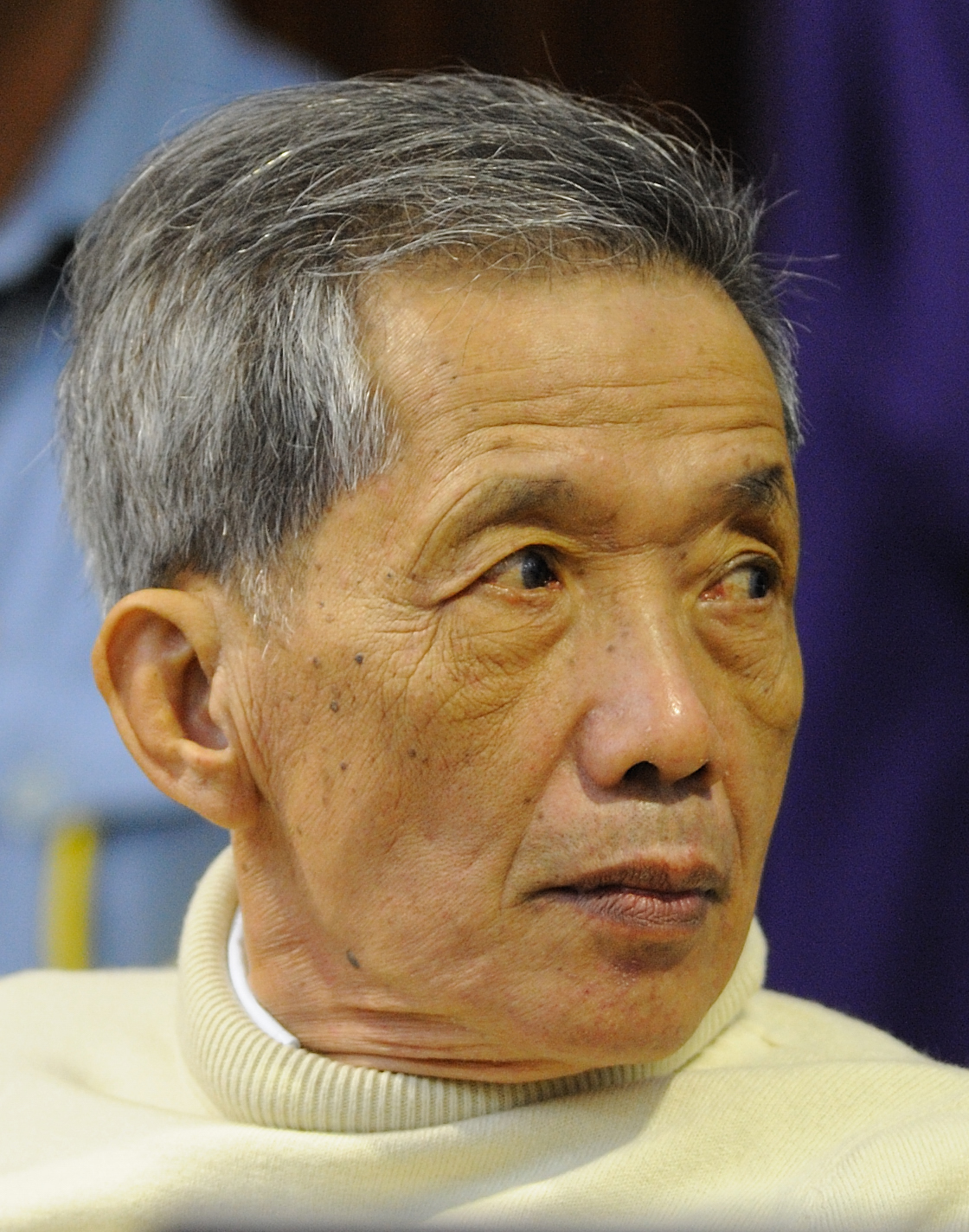

Role and operations at S-21
Under Duch's direction S-21 functioned as the regime's principal internal security prison. Detainees brought to the site were interrogated, coerced to give confessions and often transferred to execution sites. The facility was characterized by detailed record keeping, systematic photography of prisoners, and extensive interrogation procedures. Many of the people processed through S-21 were accused—often on the basis of fabricated evidence—of political crimes or of being foreign agents.
Arrest, trial and conviction
After the fall of the Khmer Rouge, Duch remained for years outside public attention before his arrest. He was later prosecuted by the Extraordinary Chambers in the Courts of Cambodia (ECCC), the hybrid tribunal established to try senior leaders and those most responsible for crimes committed during the Khmer Rouge period. The court found him guilty of crimes against humanity and grave breaches of the Geneva Conventions. The trials and judgments attracted widespread international attention as part of efforts to document atrocities and to deliver judicial accountability.
Historical context and significance
The S-21 operation under Duch is frequently cited as emblematic of the Khmer Rouge's internal terror. The prison's archives, including interrogations, logs and photographs, have provided crucial documentation for historians, survivors and prosecutors. S-21 has since been preserved as a museum and memorial to victims, helping to inform public memory and education about the 1975–1979 period when the Khmer Rouge governed Democratic Kampuchea.
Notable facts and legacy
- Kang Kek Iew used several names and aliases; his Khmer name and transliterations appear in historical records and court documents — see Khmer script references such as Khmer spelling.
- He was among the highest-profile individuals tried for Khmer Rouge-era crimes by the ECCC; the proceedings are often discussed in studies of transitional justice and genocide trials — background material is available from legal and historical sources on war crimes and from documentation of the Khmer Rouge period.
- His death in a Phnom Penh hospital was reported by multiple outlets; local landmarks and institutions referenced in those reports include locations in Phnom Penh.
Remembrance and ongoing relevance
The case of Duch and the evidence from S-21 continue to shape how scholars, survivors and the broader public understand mechanisms of state violence, bureaucratic atrocity and responsibility. The extensive documentation preserved from S-21 is a critical resource for education, memorialization and legal study. For general background on the Khmer Rouge era and post-conflict accountability, readers can consult specialized histories and institutional reports about the movement and dedicated resources on transitional justice.
Author
AlegsaOnline.com Kang Kek Iew (Comrade Duch) — head of Tuol Sleng (S-21) Leandro Alegsa
URL: https://en.alegsaonline.com/art/140706