
Hausa language
Hausa is an Afroasiatic Chadic language spoken mainly in northern Nigeria and southern Niger and widely used as a lingua franca across West Africa.
Overview
Hausa is an Afroasiatic language of the Chadic branch, widely used as both a first language and a second language across large parts of West Africa. It has deep roots in the Sahel and Savannah regions and serves as a major vehicle of everyday communication, commerce, and media. Hausa originally developed among the communities of northern Nigeria and southern Niger and then spread by trade, religion, and migration.
Linguistic classification and distribution
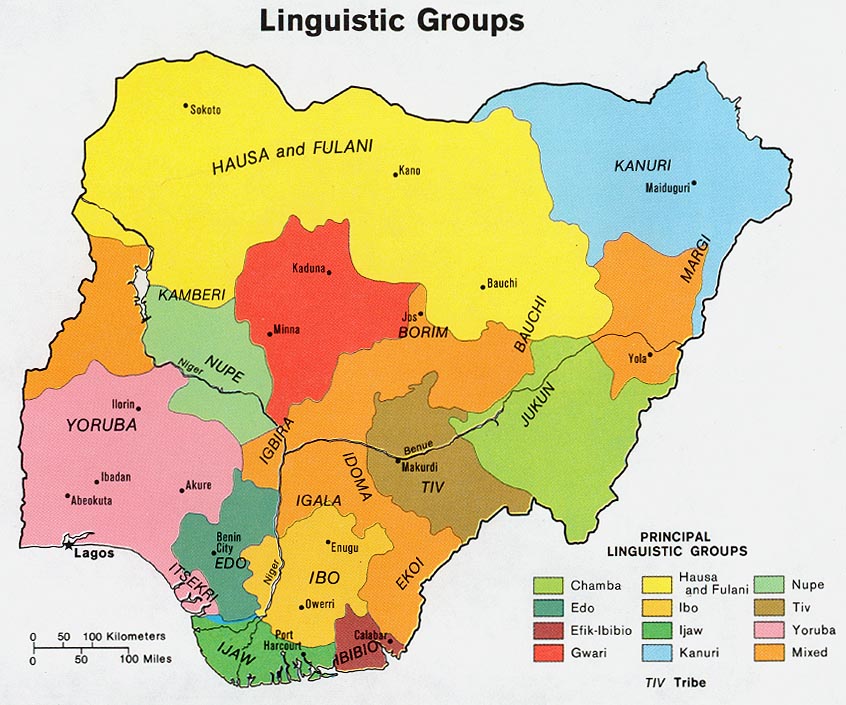
Hausa belongs to the Chadic subgroup of the Afroasiatic family. It was first spoken in areas now identified with Southern Niger and Northern Nigeria, and today it functions as a regional lingua franca throughout much of West Africa. Speakers live in cities and rural areas and in diasporas beyond the region.
Image gallery
4 Images


Characteristics
Hausa is typically described as an SVO (subject–verb–object) language with a rich consonant inventory and a tonal system used to distinguish meaning. Its grammar uses affixation and particles to mark tense, aspect, mood and to form relative clauses. Pronouns, demonstratives and numeral systems are well developed, and the language supports both formal registers and many localized dialects.
Writing systems and literature
Historically, Hausa was written in an Arabic-derived script known as Ajami, used especially in Islamic scholarship and local administration. During and after the colonial period a standardized Latin-based orthography was introduced and is now widespread in education, publishing and broadcasting. Hausa has a lively oral tradition—storytelling, proverbs, and poetry—and a growing body of written literature and journalism.
History and cultural role
The spread of Hausa followed the rise of Hausa city-states and long-distance trade routes across the Sahel. Its role as a trade and interethnic lingua franca was reinforced by markets, Islamic networks, and modern communications. Today Hausa appears on radio and television, in films, and online; it plays a central part in regional identity and cultural exchange.
Uses and notable facts
- Widely used in commerce, education, and mass media across several countries.
- Maintains both Ajami (Arabic-derived) and Latin scripts in different contexts.
- One of the largest and most influential Chadic languages, important for regional communication and cultural production.
Questions and answers
Q: What is the Hausa language?
A: The Hausa language is a Chadic language that was first spoken in Southern Niger and Northern Nigeria.
Q: Where is the Hausa language widely spoken?
A: The Hausa language is widely spoken in West Africa by around 47 million people as a first language.
Q: What is the significance of the Hausa language in Chadic languages?
A: The Hausa language is the most widely spoken Chadic language.
Q: How did the Hausa language spread to other parts of West Africa?
A: The Hausa language spread to other parts of West Africa as many other people began to speak it.
Q: How does one refer to the Hausa language in Hausa?
A: The Hausa language is referred to as "Harshen" or "Halshen Hausa" in Hausa.
Q: How does the number of Hausa language speakers compare to other Chadic languages?
A: The Hausa language has the highest number of speakers in comparison to other Chadic languages.
Q: What is the estimated number of Hausa language speakers worldwide?
A: There are approximately 47 million people worldwide who speak the Hausa language as a first language.
Author
AlegsaOnline.com Hausa language Leandro Alegsa
URL: https://en.alegsaonline.com/art/139532