
Donald A. Glaser: inventor of the bubble chamber and interdisciplinary scientist
Donald A. Glaser (1926–2013) was an American physicist and neurobiologist who invented the bubble chamber, won the 1960 Nobel Prize in Physics, and later applied scientific methods to biology and teaching.
Donald Arthur Glaser (September 21, 1926 – February 28, 2013) was an American physicist and neurobiologist best known for inventing the bubble chamber, an experimental device that transformed mid‑20th century studies of subatomic particles and earned him the 1960 Nobel Prize in Physics. Trained initially in physics, Glaser later turned much of his attention to biological research and to teaching, exemplifying an interdisciplinary career that bridged physics and the life sciences.
Image gallery
3 Images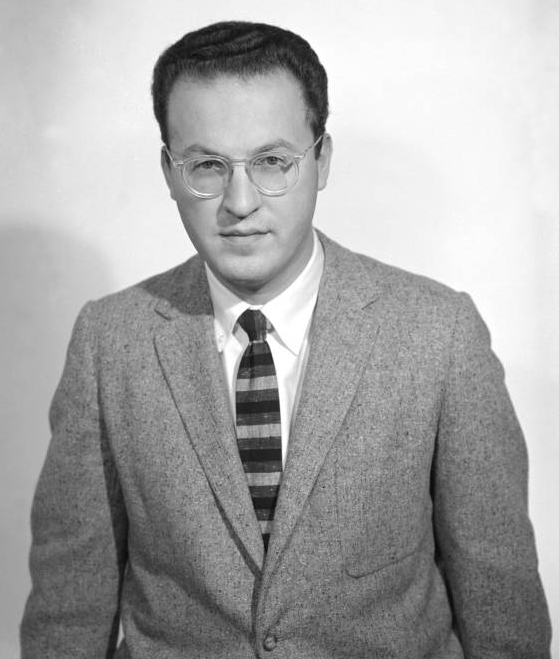


Early life and education
Glaser was born in Cleveland, Ohio, and grew up in a family of Jewish descent. He pursued undergraduate studies at Case Western Reserve University and continued graduate work at the California Institute of Technology, where he developed the experimental skills and instrumentational perspective that led to his invention. His early training combined practical laboratory technique with an interest in the emerging experimental tools used in particle physics.
Invention of the bubble chamber
While working on experimental problems in particle detection, Glaser devised the bubble chamber as a way to record the paths of charged particles traveling through a transparent, superheated liquid. When a charged particle passed through the medium, it left a trail of microscopic vapor bubbles that expanded and could be photographed. The design required precise timing: a rapid pressure drop to bring the liquid into a metastable state, synchronized illumination and cameras to capture the brief bubble tracks, and often a magnetic field so the curvature of tracks would reveal momentum and charge.
Operation, strengths and limitations
- Working principle: a liquid (commonly a low‑atomic‑number substance) is briefly superheated so that ionization by charged particles produces visible bubble trails.
- Imaging: multiple photographic views enabled three‑dimensional reconstruction of particle trajectories.
- Measurement: track curvature in a magnetic field allowed determination of particle momentum and charge sign.
- Limits: bubble chambers produced photographic data that required manual or semi‑automatic scanning; they had lower event rates than later electronic detectors and were gradually replaced as accelerator intensities and electronic readout techniques advanced.
The bubble chamber became a central tool in particle physics from the 1950s through the 1970s, contributing to the discovery and study of many resonances and short‑lived particles and providing iconic images of particle interactions. Its impact was both practical, in enabling new measurements, and pedagogical, by giving a direct visual record of subatomic phenomena.
Later career and interdisciplinary work
After his pioneering work on particle detectors and the recognition that followed, Glaser broadened his research interests toward biological problems, including molecular and neurobiological topics. He applied an experimental, instrument‑driven approach to biological questions and became known for moving between fields rather than remaining confined to a single specialty. He also taught and mentored students, contributing to academic life at institutions with which he was associated.
Recognition and legacy
Glaser received the Nobel Prize in Physics in 1960 for his invention of the bubble chamber, a clear acknowledgment of the device's importance to experimental physics. Although bubble chambers are no longer the dominant detectors in high‑energy physics, the methodological advances they introduced and the many discoveries made using them remain part of the historical foundations of the field. Glaser's career is often cited as an example of scientific curiosity and adaptability, illustrating how training in one field can be redirected to fruitful work in another.
Personal life and death
Glaser was married twice: to Ruth Bonnie Thompson from 1960 until their divorce around 1970, and later to Lynn Bercovitz from 1975 until his death. He died at his home in Berkeley, California, on February 28, 2013, aged 86. For further biographical summaries and archival material, readers can consult institutional and archival sources linked below.
Further reading and resources
Brief biographical sketches and career overviews are available from several institutional repositories and published summaries. For general background and curated material see a biographical sketch (biographical sketch), a career overview (career overview), context on particle physics and detector development (particle‑physics context), information associated with his graduate training (California Institute of Technology), and local memorials or notices from the city and state of his later life (Berkeley, California).
Author
AlegsaOnline.com Donald A. Glaser: inventor of the bubble chamber and interdisciplinary scientist Leandro Alegsa
URL: https://en.alegsaonline.com/art/137598