
Doc Holliday: Dentist, Gambler, and Frontier Figure
John Henry 'Doc' Holliday (1851–1887), trained dentist turned gambler and western figure, best known for his role alongside Wyatt Earp in Tombstone and the Gunfight at the O.K. Corral.
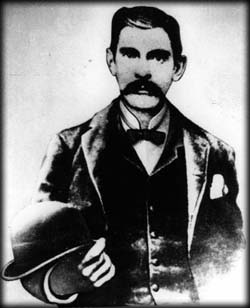
John Henry "Doc" Holliday (1851–1887) was a prominent and controversial personality of the American Old West: a trained dentist who became a professional gambler, noted gunfighter, and a close associate of lawman and ex-gunslinger circles. He remains best known for his part in the events around Tombstone, Arizona, including the famous confrontation at the O.K. Corral in 1881.
Image gallery
10 Images




Early life and education
Born John Henry Holliday in Griffin, Georgia, he studied dentistry and received formal training at the Pennsylvania College of Dental Surgery. After practicing briefly, Holliday contracted a chronic respiratory illness. Hoping a drier climate would slow the disease’s progression, he moved west and shifted away from a settled professional life toward gambling and saloons.
Western career and reputation
In the frontier towns of the Southwest Holliday developed a reputation for quick temper, precision with a pistol, and a steady hand at card tables. He formed a lasting friendship and working relationship with Wyatt Earp, who is frequently identified as a lawman and associate in numerous episodes of frontier justice. Holliday’s exact record as a killer is debated: contemporaries and later storytellers attributed many deaths to him, while modern researchers typically find fewer confirmed instances.
Role in Tombstone and the O.K. Corral
Holliday arrived in Tombstone during heightened tensions between competing groups of ranchers, miners, and outlaws. He stood with the Earps during a string of confrontations that culminated in the shootout at the O.K. Corral on October 26, 1881. Accounts differ about details, but the altercation became central to Holliday’s legend and to broader narratives about law, order, and vigilante justice in the Old West. His close association with Wyatt Earp ensured his place in many later retellings and biographies.
Later years and death
Holliday’s health continued to decline under the strain of tuberculosis. He drifted among western towns, alternately gambling, fighting, and seeking respite from illness. He died of the disease in a hotel room in Glenwood Springs, Colorado, on November 8, 1887. Contemporary reports and later studies also refer to his ailment as tuberculosis, which curtailed his life at age 36.
Legacy and notable facts
- Holliday is often portrayed in literature and film as an archetypal outlaw and reluctant hero; his life illustrates how myth blended with fact in the popular memory of the frontier.
- He trained as a dentist and maintained a reputation for being well-spoken and educated compared with many of his contemporaries.
- Estimates of how many people he killed vary widely; careful historical work tends to be more conservative than early sensational accounts.
- For more context on Holliday’s life and the era in which he lived, readers can consult specialized biographies and archival sources: dentistry background and regional histories offer deeper detail.
Doc Holliday remains a compelling figure because he combined professional training, chronic illness, and a willingness to operate at the edges of law and violence. His story helps illuminate tensions in American expansion, the culture of gambling and saloons, and the process by which frontier individuals were transformed into enduring legends.
Author
AlegsaOnline.com Doc Holliday: Dentist, Gambler, and Frontier Figure Leandro Alegsa
URL: https://en.alegsaonline.com/art/137571
Sources
- truewestmagazine.com : "Doc Holliday's Last Days" · web.archive.org