
Crimean Tatar language
A Turkic (Kipchak) language spoken by the Crimean Tatar people, with distinct dialects, a complex writing history, and a diasporic speaker community concentrated in Crimea and Central Asia.
Overview
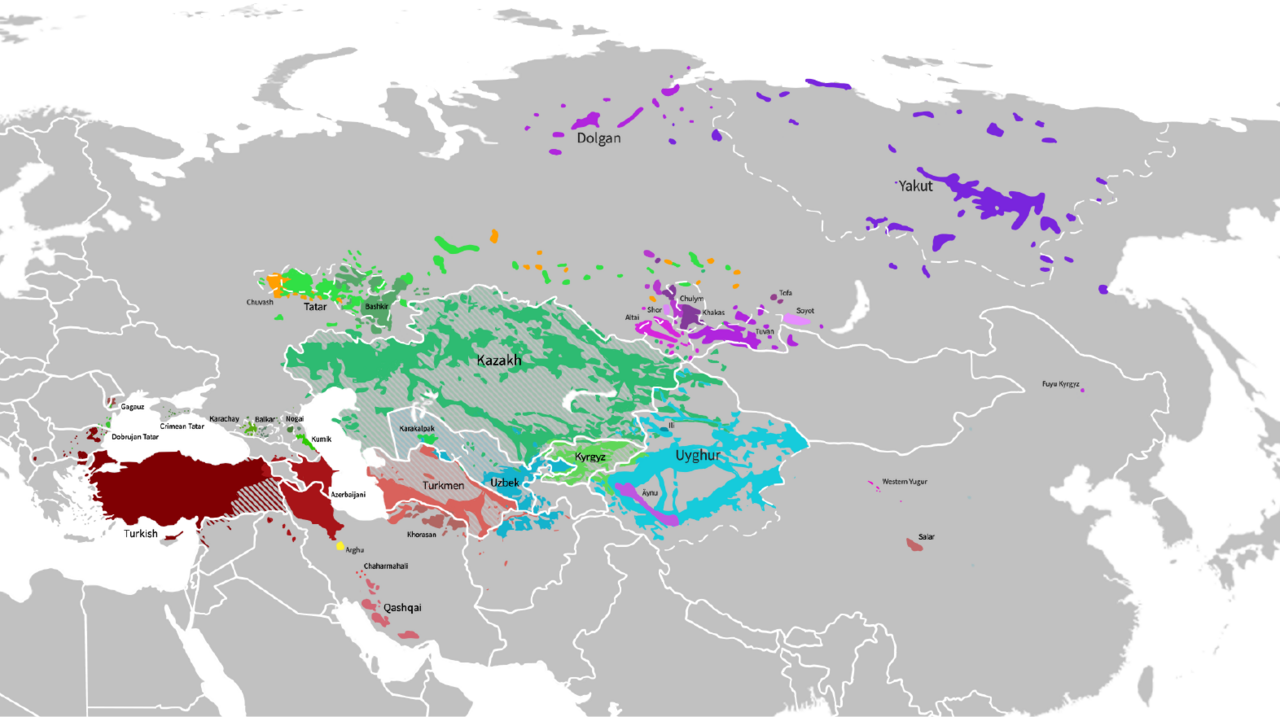
Crimean Tatar is a Turkic language of the Kipchak (Northwestern Turkic) group spoken by the Crimean Tatar people. It is commonly called Crimean and historically developed on the Crimean peninsula. The language is distinct from other Turkic tongues often labelled "Tatar"; for example, it is not mutually intelligible with the Kazan (Volga) Tatar language.
Image gallery
7 Images




Classification and characteristics
As a member of the Kipchak branch, Crimean Tatar displays features typical of Turkic languages: agglutinative morphology, vowel harmony, and a tendency toward subject–object–verb (SOV) word order. Its vocabulary includes native Turkic roots alongside loanwords from Arabic, Persian, Ottoman Turkish, Russian and surrounding regional languages. Phonological and grammatical differences distinguish it from related languages in the region.
Dialects and varieties
The language shows internal variation, traditionally grouped into several dialectal zones that reflect historical contacts and migrations. Some varieties retain local lexical and phonetic features influenced by neighboring peoples. This dialectal diversity has influenced attempts at developing a common literary standard used in education and media.
Writing systems and standardization
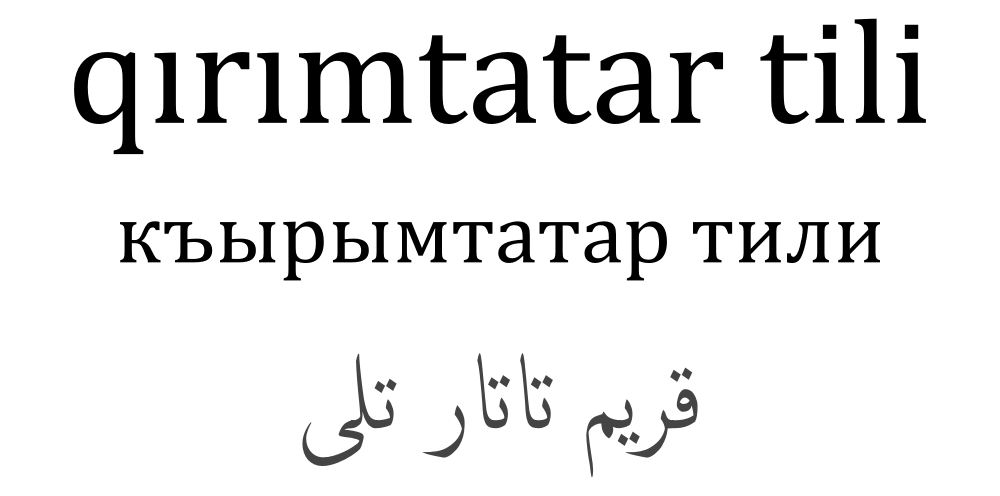
Across its modern history Crimean Tatar has been written in multiple scripts: an Arabic-based alphabet historically, a Latin-based reform in the early 20th century, and Cyrillic during much of the Soviet period. Since the late 20th century there have been movements to reintroduce a Latin orthography alongside Cyrillic in different communities, producing competing standards used in publishing and schooling.
History, speakers and distribution
Crimean Tatar evolved on the Crimean peninsula and spread with the movements of Crimean Tatars. Large-scale deportations in 1944 dispersed many speakers to Central Asia and beyond. Today there are roughly half a million native speakers worldwide: many live in Crimea itself, with substantial communities in Uzbekistan, and smaller populations in Russia, Romania and Bulgaria. The language remains a central marker of identity for Crimean Tatars and is taught, published and broadcast in community contexts.
Status and importance
Crimean Tatar faces challenges common to minority languages: reduced intergenerational transmission in some areas, pressure from dominant national languages, and political factors affecting education and media. At the same time, there are active revitalization efforts — publishing, schooling, cultural programs and digital media — aimed at maintaining the language and promoting its use among younger generations. For comparative study, see discussions contrasting Crimean Tatar with other "Tatar" languages such as Volga Tatar, which are separate language entities often confused in popular usage (Tatar language).
- Key features: Kipchak Turkic, agglutinative, vowel harmony.
- Scripts: Arabic (historical), Latin (20th century and revival), Cyrillic (Soviet era).
- Present-day communities: Crimea, Central Asia, parts of Eastern Europe.
Author
AlegsaOnline.com Crimean Tatar language Leandro Alegsa
URL: https://en.alegsaonline.com/art/137067