
Acre (Akko) — Historic port city in northern Israel
Acre (Akko) is a coastal city in Israel's Northern District with a multi-layered history from ancient Canaanite ports through Crusader and Ottoman periods. Its Old City is a UNESCO World Heritage Site and a living mixed community.
Overview
Acre, commonly called Akko in English and known locally by its Hebrew name עַכּוֹ (ʻAkkō) and Arabic name عكّا (ʻAkkā), is a coastal city on the Mediterranean plain in Israel. It lies within the Northern District and has served for millennia as a regional port and a strategic fortress. The city is sometimes written as Acre in international sources.
Image gallery
10 Images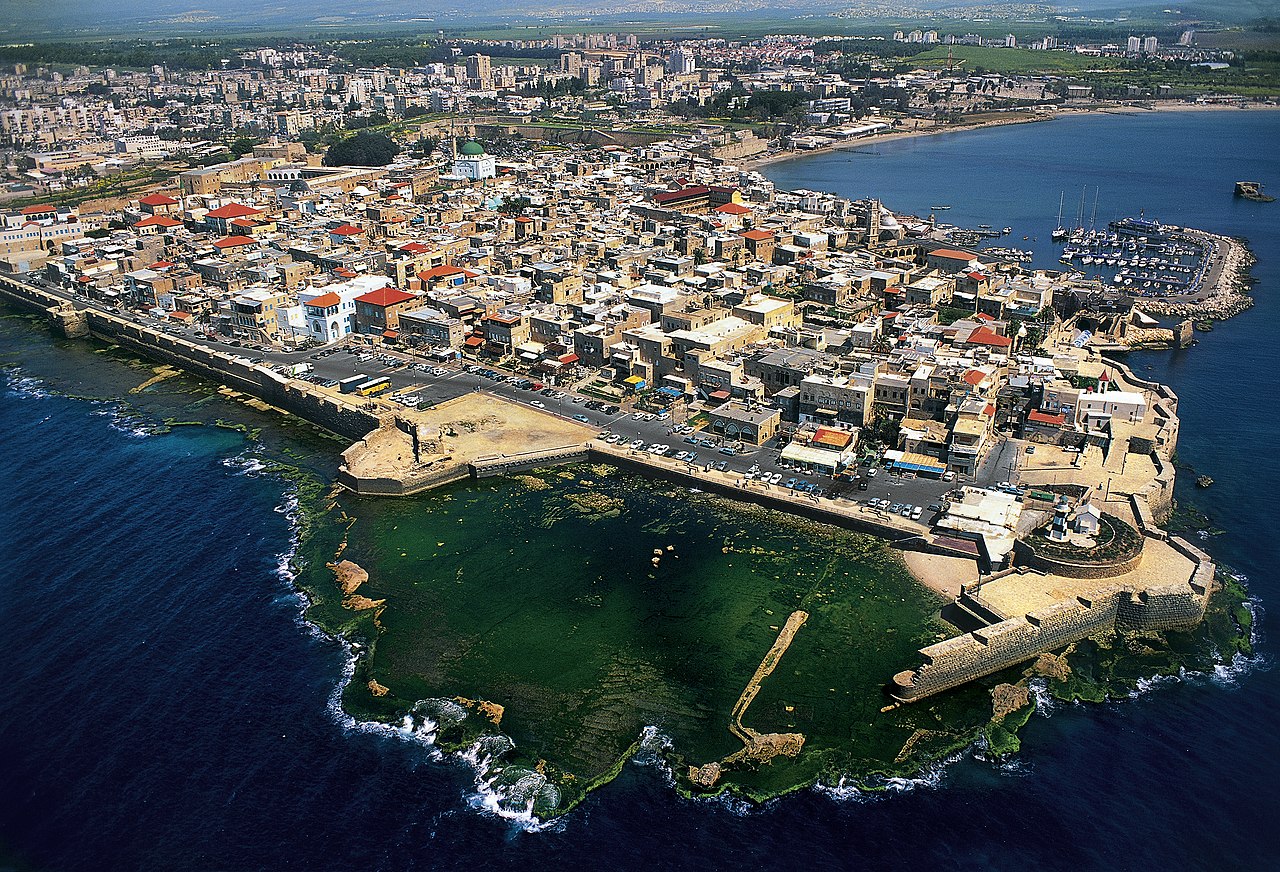


Historical development
Acre's recorded history stretches back to antiquity. It was an important harbor for Phoenician and later Hellenistic and Roman maritime trade. During the medieval era the city became a major Crusader stronghold, leaving extensive fortifications and an underground Crusader city. Ottoman rule reshaped its architecture and urban fabric, and Acre figured in 19th-century events that drew attention from Europe. Under the British Mandate and after 1948 it became part of the modern State of Israel.
Characteristics and notable sites
The Old City of Acre is notable for its layered archaeological remains: city walls and citadel, Crusader halls, Ottoman-era bathhouses and khans, mosques, synagogues and churches. Its Old City and fortifications are inscribed as a UNESCO World Heritage Site, recognized for preserving successive cultural layers in a still-inhabited urban context. Visitors often see subterranean Crusader halls, the citadel, and the working fishing port.
Population, culture and economy
Acre is a culturally mixed urban center. Its population includes Muslims, Jews and Arabs, reflecting long-standing communal diversity in the region. The local economy combines tourism, small-scale industry, fishing and services. The port area and old marketplaces contribute to a living heritage economy while modern neighborhoods expand beyond the historic core.
Importance and distinctions
- Archaeological and architectural richness spanning ancient, Crusader and Ottoman periods.
- Recognition as a UNESCO World Heritage Site for the Old City and its fortifications.
- Role as a cultural crossroads and a contemporary example of a mixed community on Israel's northern coast.
Because Acre preserves both ruins and continuous urban life, it is an important destination for students of history, archaeology and Mediterranean urbanism as well as for travelers seeking a compact, historically layered city.
Author
AlegsaOnline.com Acre (Akko) — Historic port city in northern Israel Leandro Alegsa
URL: https://en.alegsaonline.com/art/134085