
2006 Mumbai train bombings
A coordinated series of explosions on Mumbai's suburban trains on 11 July 2006 that killed over 200 people, injured hundreds more, and prompted major changes to rail security and emergency response.
Overview
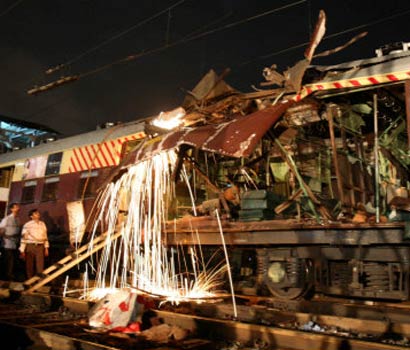
On 11 July 2006 a sequence of timed explosions struck the suburban train network in Mumbai, India. Seven devices detonated within an eleven-minute span during the evening rush, producing widespread destruction on the Western Line and severe casualties. Contemporary accounts and later summaries are available in press coverage and official statements (news report).
Image gallery
3 Images

How the attacks were carried out
The bombs were concealed in common household containers and placed on crowded local trains. Investigators determined that the improvised explosive devices were designed to be triggered while the trains were in motion, maximizing casualties at peak travel times. The devices were widely reported to have been contained in pressure cookers (pressure cooker), a technique intended to enhance blast and fragmentation effects.
Location, timing and immediate impact
The explosions occurred on multiple trains along the Mumbai Suburban Railway system, which serves millions of passengers daily. The blasts focused on the Western Line suburban section, disrupting services and overwhelming medical facilities as wounded commuters were transported to hospitals. The city of Mumbai and the state of Maharashtra mobilized emergency services, while national authorities in India coordinated investigative and security responses.
Investigation and legal aftermath
Criminal and counterterrorism agencies conducted a lengthy investigation that included forensic analysis of blast sites, tracking of materials and interrogations of suspects. Over time authorities arrested individuals and pursued prosecutions; courts and investigators examined links between suspects and extremist networks. Public records and later reporting document trials, convictions and appeals that followed the initial inquiries.
Significance and legacy
The 2006 train bombings had a lasting effect on urban security and emergency planning in India. They highlighted vulnerabilities of mass-transit systems and prompted enhanced screening, patrols, and coordination among police, rail authorities and hospitals. Memorials and commemorations have been held to honor victims. The attacks remain a key reference point in discussions about preventing mass-casualty incidents on public transportation.
Notable facts
- Seven explosions occurred in quick succession during the evening commute.
- Civilian responders and medical staff faced large-scale triage and treatment challenges.
- Long-term reforms focused on surveillance, passenger awareness and intelligence-sharing.
For contemporary reports and official summaries see the cited material and archived reporting (news report), and for background on the transport system consult railway overviews (Mumbai Suburban Railway references).
Author
AlegsaOnline.com 2006 Mumbai train bombings Leandro Alegsa
URL: https://en.alegsaonline.com/art/133613