
Ælfthryth, Queen Consort of England and Mother of Æthelred
Ælfthryth (c.945–1000/1001) was queen consort to King Edgar, noted as the first English queen to be crowned and anointed; a political actor and patron, she was later implicated in the contested murder of Edward the Martyr.
Overview
Ælfthryth (also written Elfrida, Alfrida or Elfthryth; c. 945–1000 or 1001) was the wife of King Edgar and the mother of King Æthelred (the Unready). She is widely remembered as the earliest English queen recorded to have been formally crowned and anointed, a development that marked a more visible institutional role for queenship in late Anglo-Saxon England. Surviving charters, monastic records and later chronicles present her as an active figure in landholding, patronage and the politics of succession.
Image gallery
2 Images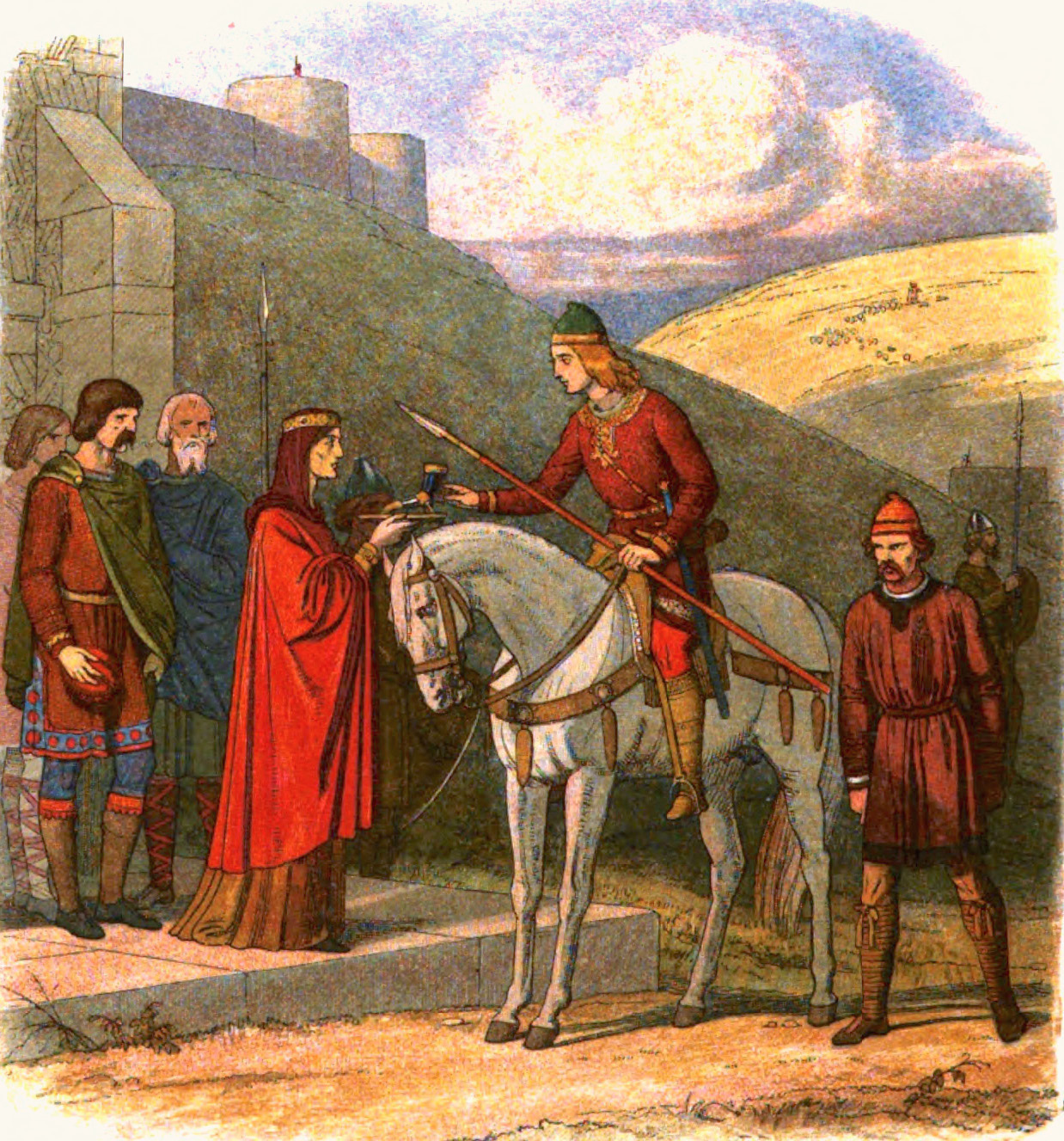

Origins and family background
Medieval and near-contemporary sources place Ælfthryth in a high-status West Saxon family; she is often described as probably the daughter of an ealdorman of the southwest. Her Old English name combines elements meaning "elf" and "strength," following common naming patterns of the period. Details of her early life are scarce and scholars treat precise family connections with caution.
Marriage, coronation and public role
Ælfthryth became Edgar’s consort at a time when the ritual and symbolism of kingship were becoming more elaborate. Accounts record that she was publicly crowned and anointed as queen at the royal assembly associated with Edgar’s coronation; historians see this as evidence for evolving ceremonial recognition of queenship in England. For wider background, see studies of coronation rites and anointing practices in the period.
Political influence and patronage
As queen she attested royal charters, managed estates, and was a notable patron of religious houses. Documents suggest she exercised influence through grants, witness lists and alliances with important ecclesiastical and secular figures. After Edgar’s death she remained an influential presence during her son’s minority and early reign, using monastic patronage and landholding to maintain status and power. In later life she retired to a religious community at Wherwell, where she appears to have taken vows and held a leadership role.
Succession crisis and contested accusations
The death of Edward, Edgar’s elder son by a previous wife, in 978 set off a succession contest that left lasting reputational damage for Ælfthryth. Contemporary and later chronicles implicated her and her faction in Edward’s killing; Edward’s death and the subsequent accession of Æthelred produced narratives that often portray Ælfthryth as complicit. Modern historians treat the evidence as ambiguous, noting the partisan, regional and moralising motives of many sources and urging caution in assigning direct responsibility.
Legacy and historiography
In medieval literature Ælfthryth frequently appears as a stock figure of the "wicked stepmother," a portrayal amplified by later moral tales and monastic writers. More recent scholarship has sought to balance these depictions with administrative and documentary evidence showing a capable royal woman who shaped property and ecclesiastical networks. Her coronation and anointing remain significant for studies of royal ritual, and debates about her role in succession politics continue to illustrate how gender and power were interpreted in medieval chronicles.
- Also known as: Elfrida, Alfrida, Elfthryth.
- Notable as: earliest English queen on record to be crowned and anointed.
- Mother of: King Æthelred (the Unready).
- Contested episode: linked in sources to the death of Edward the Martyr, though evidence remains debated.
- Later life: retired to Wherwell, where she is reported to have taken religious vows and died c. 1000–1001.
For readers seeking further context, surveys of late Anglo-Saxon kingship and ritual life discuss Edgar’s court and the changing public role of queens; primary narratives and charter evidence form the basis for ongoing scholarly discussion of Ælfthryth’s influence and reputation. See also entries on Edgar, ceremonial studies of coronations and research into anointing and succession; contemporary accounts of the period include material on Edward the Martyr.
Author
AlegsaOnline.com Ælfthryth, Queen Consort of England and Mother of Æthelred Leandro Alegsa
URL: https://en.alegsaonline.com/art/133367