
Willem Einthoven and the invention of the electrocardiogram
Dutch physician Willem Einthoven developed the string galvanometer and the modern ECG technique; he won the 1924 Nobel Prize for his work on recording the heart's electrical activity.
Willem Einthoven (born May 21, 1860 – died September 29, 1927) was a Dutch physician and physiologist credited with creating the first practical method for recording the heart's electrical activity. His work turned the electrocardiogram (ECG) from an experimental idea into a clinical tool.
Image gallery
4 Images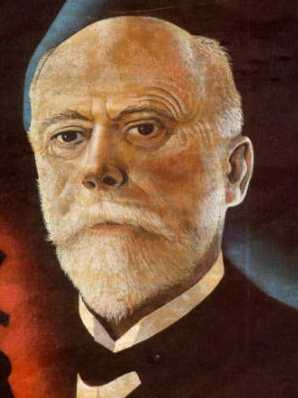


Early life and career
Einthoven trained in medicine and physiology and conducted his main scientific work while affiliated with the University of Leiden. He combined clinical interest in cardiac function with precise physical measurement, seeking a way to display small bioelectric currents as visible tracings. His national background and professional identity are often noted: he was a Dutch physician by training and profession (Dutch physician).
Invention and method
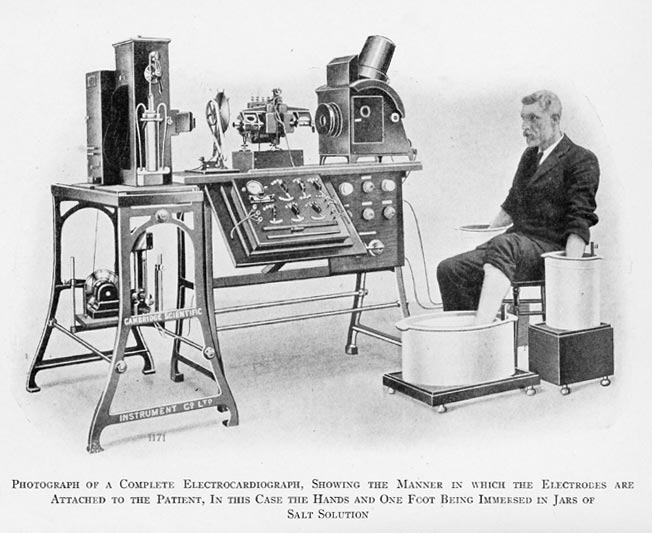
Around the turn of the 20th century Einthoven devised the string galvanometer, an instrument that used a fine conductive string placed in a strong magnetic field. Variations in current caused the string to move; these movements were optically amplified to create a trace on photographic paper. By refining this technique he produced reliable recordings of the heart beat and introduced a labeling system for the wave components now known as P, Q, R, S and T.
Characteristics and contributions
- Created the first clinically useful ECG recorder (string galvanometer).
- Established standard lead configurations and conceptual tools, including the idea now called "Einthoven's triangle."
- Defined the principal waves of the cardiac cycle used for diagnosis.
The standardization he introduced allowed physicians to compare tracings and correlate patterns with different heart conditions. His labeling of leads and waves remains the basis of modern electrocardiography, even though today's devices use different electronic amplifiers and portable formats.
Uses, impact and recognition
Electrocardiography transformed cardiology: ECGs are indispensable for diagnosing arrhythmias, conduction defects, ischemia and myocardial infarction, and for perioperative and emergency care. Einthoven's invention made these applications practical and reproducible, leading to broad adoption in hospitals and clinics worldwide.
For his fundamental contribution to medical science he was awarded the Nobel Prize in Physiology or Medicine in 1924. His work remains a foundation of cardiac diagnostics and an example of applying physics to clinical medicine.
Further reading and historical sources can be found via archival and academic summaries (birth and biography, early years, later life, death and legacy, professional record, electrocardiogram details).
Author
AlegsaOnline.com Willem Einthoven and the invention of the electrocardiogram Leandro Alegsa
URL: https://en.alegsaonline.com/art/132876