
Wayne Thiebaud — American painter of cakes, everyday objects, and landscapes
Wayne Thiebaud (1920–2021) was an American painter known for brightly colored, tactile images of cakes, confections and quotidian objects; connected to pop art and recipient of the National Medal of Arts.
Wayne Thiebaud was an American artist celebrated for paintings that transform ordinary objects into vivid, painterly images. Often depicting cakes, pies, gumball machines, lipsticks and other household items, Thiebaud developed a distinct visual language that combined careful observation with a painterly handling of color and surface. He is commonly referred to as an American painter whose work is frequently associated with the pop art moment, though many of his signature pictures were executed before that movement became widely identified.
Image gallery
2 Images
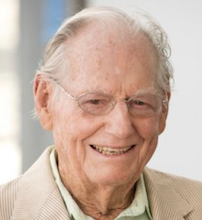
Style and subjects
Thiebaud's work is recognizable for its bright palette, thick paint application and strong, often long shadows that give objects weight and a sculptural presence. He painted in series and from life, arranging repetitive forms on tablets of tabletop surface and employing a slightly elevated viewpoint. While confectionery subjects are the most famous, his output also includes cityscapes, landscapes, figures and still lifes that use the same attention to color, light and edge.
- Common subjects: cakes, pies, ice-cream cones, gumball machines, packaged goods, storefronts.
- Technical traits: impasto brushwork, crisp contours, high-key color, rhythmic repetition.
- Visual effects: a tension between commercial imagery and painterly craft.
Life and career
Thiebaud was born on November 15, 1920, in Mesa, Arizona, to parents who were members of the Church of Jesus Christ of Latter-day Saints. His family relocated to Long Beach, California when he was an infant. Over many decades he lived and worked in California, developing a career as a practicing artist and teacher. He taught art at several California institutions and influenced generations of students while also maintaining an active exhibition schedule. In recognition of his contribution to American art, he received numerous honors, including the National Medal of Arts in 1994.
Importance and reception
Collectors and museums around the world acquired Thiebaud's paintings, and his work has been seen as a bridge between representational traditions and the concerns of mid-20th-century modernism. Critics have noted how his images appear to celebrate commercial culture while simultaneously insisting on paint as a material. His confectionary pictures, with their alluring surfaces, have become iconic images that helped broaden public appreciation of contemporary figurative painting.
Personal notes and legacy
Thiebaud married twice and had four children, among them Twinka Thiebaud (born 1945) and Paul Thiebaud (1960–2010). He remained active as an artist well into advanced age and continued to exhibit into his later years. Thiebaud died on December 25, 2021, at his home in Sacramento, California, at the age of 101. His long career left an enduring influence on American painting through both his own images and his impact as a teacher and mentor.
For further study, look for exhibition catalogues and museum collections that document his series of desserts, cityscapes and figure paintings; these sources trace the evolution of a practice that is as much about paint and perception as it is about subject matter.
Author
AlegsaOnline.com Wayne Thiebaud — American painter of cakes, everyday objects, and landscapes Leandro Alegsa
URL: https://en.alegsaonline.com/art/132806