
Terry Melcher: American record producer and musician
Terry Melcher (1942–2004) was an American musician and record producer known for early rock production work, his ties to the 1960s Los Angeles scene, and his family connection to actress Doris Day.
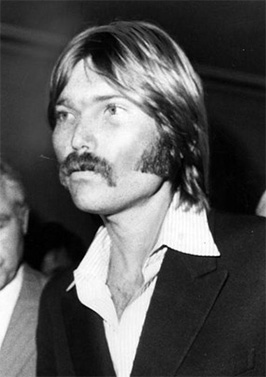
Terry Melcher (born Terrence Paul Jorden; February 8, 1942 – November 19, 2004) was an American musician, songwriter and record producer who played a significant role in the Los Angeles popular-music scene of the 1960s and 1970s. He worked in the studio as a producer and arranger, and later as a music publisher and executive. He is widely remembered for shaping the sound of early folk-rock and pop records while also moving in high-profile entertainment circles.
Image gallery
3 Images

Career and notable productions
Melcher produced several influential records during the mid-1960s. He worked with the Byrds, producing their landmark electrified folk-rock singles including the chart-topping cover "Mr. Tambourine Man" (a composition by Bob Dylan) and the hit version of "Turn! Turn! Turn!" (credited to folk songwriter Pete Seeger). These recordings helped popularize the blending of folk songwriting and rock instrumentation and influenced many subsequent bands.
Musical style and roles
Melcher combined studio musicianship with an ear for vocal arrangements and radio-ready production. He worked behind the scenes as a producer, arranger and occasional performer. Over his career he collaborated with a variety of artists, supervised recording sessions, and later managed aspects of music publishing and licensing. His work is associated with the early development of folk-rock and with the polished pop-rock sound of the period.
Background and public profile
Melcher was the son of actress Doris Day (born Doris Kappelhoff) and her first husband; he was adopted by Day's third husband, Martin Melcher, in 1951. Because of his family ties and his positions within the entertainment industry, Melcher became a recognizable figure in Hollywood and the California music community during the 1960s.
Notable events and later life
Melcher's name is sometimes mentioned in accounts of the darker side of the late 1960s Los Angeles scene: he had interactions with figures who later became infamous, and properties he rented were connected to events that received large public attention. In later years he continued working in music and lived in Southern California. He died at his home in Beverly Hills on November 19, 2004 of melanoma, at age 62.
Selected productions
- "Mr. Tambourine Man" – produced for the Byrds (Dylan composition)
- "Turn! Turn! Turn!" – produced for the Byrds (Pete Seeger composition)
These records remain part of Melcher's public legacy: influential early examples of folk material presented in a rock context and emblematic of a major stylistic shift in 1960s popular music.
Author
AlegsaOnline.com Terry Melcher: American record producer and musician Leandro Alegsa
URL: https://en.alegsaonline.com/art/131719