
Stan Kenton — American jazz pianist and progressive big band leader
Overview of Stan Kenton, his musical style, key collaborations, major projects and legacy as a pioneering big band leader in mid-20th-century jazz.
Overview
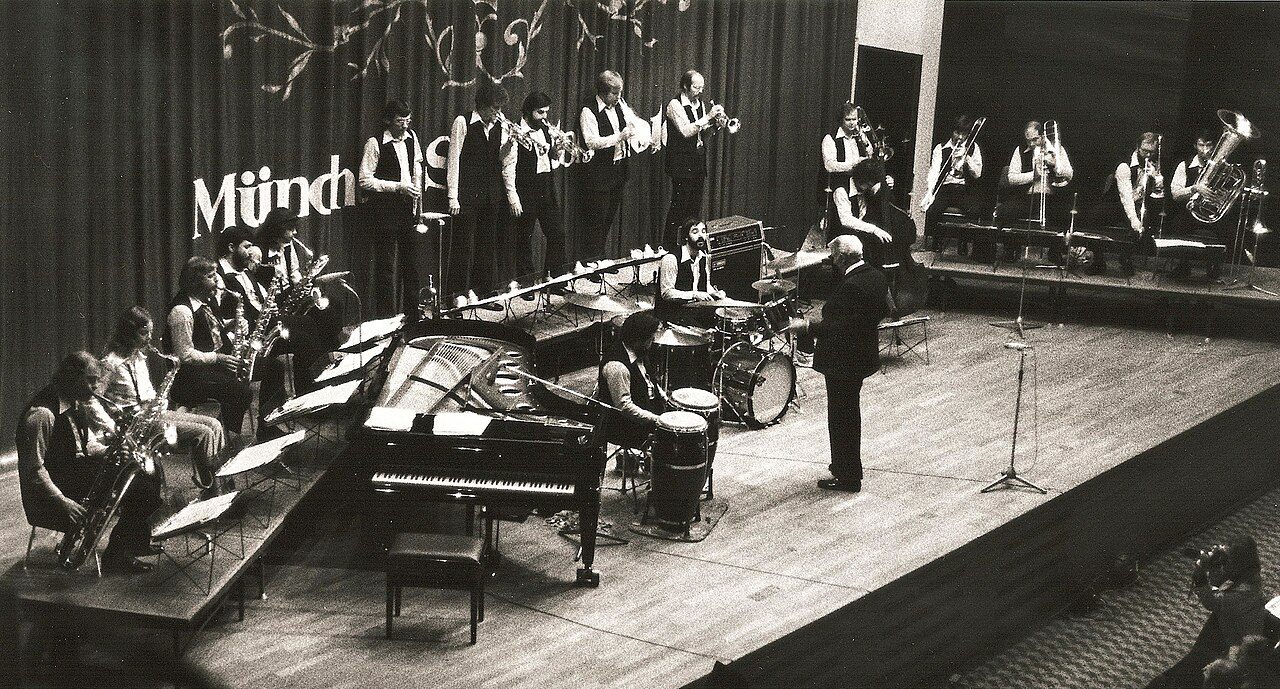
Stan Kenton (December 15, 1911 – August 25, 1979) was an American jazz pianist and bandleader noted for leading a succession of large ensembles that pushed big-band jazz into more modern, orchestral territory. Born in Wichita, Kansas, he became known for powerful sonorities, adventurous arrangements and an unmistakable theme tune, often heard as his orchestra's signature.
Image gallery
10 Images




Style and innovations
Kenton's sound emphasized dense brass sections, layered textures and harmonies influenced by modern classical music. Critics and listeners often described the aesthetic as "progressive" jazz: it blended swinging sections with experimental arrangements, occasional Latin rhythms and orchestral percussion. He commissioned and recorded pieces that expanded the palette of big-band timbres, sometimes adding strings or nonstandard instruments to the ensemble.
Career and collaborations
Across several decades Kenton's bands served as a springboard for many rising soloists and arrangers. He worked with notable musicians such as Art Pepper, Stan Getz and Zoot Sims, and employed arrangers who helped shape the group's direction. His projects ranged from dance-oriented charts to highly arranged studio suites and ambitious concert presentations.
Notable works and projects
- Signature numbers: pieces often associated with Kenton include his theme and showpieces that showcased the full orchestra.
- Large-scale projects: Kenton organized ensembles and recordings that explored extended forms and orchestral jazz textures.
Legacy
Kenton left a complex legacy: he broadened what a big band could be while attracting both admiration and criticism for his sometimes grand, uncompromising sound. His bands trained many young jazz musicians who later became important figures in their own right. Reissues, scholarly attention and continued performances of his arrangements have kept interest in his work alive since his death at age 67.
Further reading and context
For readers seeking introduction and deeper study, look for biographies, anthology liner notes and recordings that trace the arc from Kenton's dance-band beginnings to his more experimental orchestral ventures. His influence is frequently discussed in histories of postwar jazz and in studies of the big-band revival movement.
Author
AlegsaOnline.com Stan Kenton — American jazz pianist and progressive big band leader Leandro Alegsa
URL: https://en.alegsaonline.com/art/131145