
Sinéad O'Connor (1966–2023)
Irish singer-songwriter and activist best known for 'Nothing Compares 2 U'. Noted for a distinctive, emotive voice, outspoken activism, shifting religious identity, openness about mental health, and nine studio albums.
Sinéad O'Connor was an Irish singer-songwriter whose voice and public presence made her a prominent and often controversial figure in late 20th- and early 21st-century music. Born in Dublin in 1966, she rose to international prominence with her interpretation of a song written by Prince, "Nothing Compares 2 U", which became a global hit and remains closely associated with her name. She combined a stark, expressive vocal timbre with sparse and intense arrangements and a willingness to foreground emotional honesty over conventional pop polish. Her recordings and performances attracted both critical praise and passionate public debate, and she released nine studio albums during her career. For official materials and archives consult her site official pages.
Image gallery
10 Images



Early life and career
Raised in Dublin, O'Connor began singing and performing while still young and quickly developed a reputation for a singular vocal approach and interpretive skill. Her debut album introduced her to a wide audience and established themes that would recur throughout her work: personal vulnerability, political awareness, and spiritual searching. She moved between musical idioms — rock, folk, traditional Irish elements, gospel and reggae — bringing a consistent emphasis on direct emotional communication. Detailed credits and songwriting notes are available through resources on her musical work songwriting and recordings.
Music, style and recordings
O'Connor's voice was often described as raw and urgent; critics and listeners noted her capacity to move from whispering intimacy to full-throated intensity. Her repertoire mixed original material with reworkings of songs by others, and she used arrangement, silence and close-miked vocal delivery to make performances feel immediate. Her studio albums span a range of themes and styles, and include:
- The Lion and the Cobra (debut)
- I Do Not Want What I Haven't Got (contains "Nothing Compares 2 U")
- Universal Mother
- Gospel Oak
- Faith and Courage
- Sean-Nós Nua (traditional material)
- Throw Down Your Arms (reggae covers)
- Theology (spiritual and liturgical themes)
- How About I Be Me (And You Be You)?
Across recordings she was respected as an interpreter and as a songwriter; many commentators highlighted her commitment to saying something candid and personal rather than conforming to commercial expectations.
Activism, controversies and public life
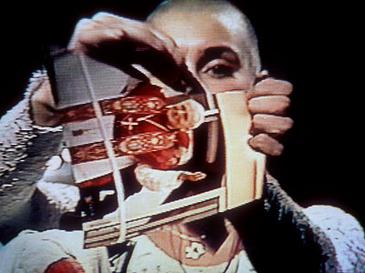
O'Connor was an outspoken figure who frequently used public platforms to draw attention to social issues. Some of her acts of protest were highly public and provoked intense reaction as well as support. She declined certain industry honours and took stands against institutions she judged responsible for injustice and abuse. A widely publicised incident on live television in the early 1990s was interpreted as a dramatic gesture of protest and triggered extensive discussion about free expression, media responsibility and the role of celebrity dissent. Her willingness to act on conscience and to invite debate was a consistent feature of her public life.
Religion, identity and personal life
Religious belief and spiritual searching were recurrent in O'Connor's life. At times she aligned with non‑mainstream Catholic movements and accepted ordination outside the Roman hierarchy, identifying with an independent Catholic tradition and rejecting the authority of Rome in matters she considered unsound Independent Catholic context. References to her ordination and priestly role appear in reports and interviews ordination references. In 2018 she announced a conversion to Islam and later used a Muslim name; she described this as part of a broader spiritual journey. She identified as bisexual, had four children (each by a different father), and experienced several marriages that ended in divorce. O'Connor also spoke publicly about mental health challenges; she reported a diagnosis of bipolar disorder in the 2000s and discussed periods of treatment and hospitalisation mental health resources. Her critiques of church leadership and institutional failures informed much of her activism and public commentary church authority debates.
Legacy and further resources
Sinéad O'Connor left a layered cultural legacy: musically she influenced artists who prize emotional directness, and publicly she became emblematic of a performer willing to risk popularity for principle. Her recordings continue to be reexamined, and retrospectives consider both her artistic achievements and her complex, often contested public life. For further reading, archival materials and music research see her official resources and music scholarship pages: official pages, songwriting and credits, discussions of the song origins with Prince, contexts for Independent Catholic practice Independent Catholic, documentation of ordination and clerical status ordination references, analysis of church authority and institutional criticism church authority debates, and sources addressing mental health and support mental health resources.
Author
AlegsaOnline.com Sinéad O'Connor (1966–2023) Leandro Alegsa
URL: https://en.alegsaonline.com/art/130969