
Satyendra Nath Bose (1894–1974)
Indian physicist Satyendra Nath Bose developed the counting rules behind Bose–Einstein statistics; the term 'boson' honors him. His work laid groundwork for quantum statistics and the Bose–Einstein condensate.
Overview
Satyendra Nath Bose (1894–1974) was an Indian theoretical physicist best known for formulating the statistical rules that bear his name and for prompting Albert Einstein to extend those ideas. In a brief 1924 paper he showed how to derive Planck's radiation law by counting indistinguishable quanta; Einstein recognized the significance, translated the work into German, and generalized it to material particles. The resulting Bose–Einstein statistics provided a new class of quantum behavior that contrasts with the statistics obeyed by fermions. The class of integer-spin particles governed by these rules later became known as bosons.
Image gallery
8 Images


Key ideas and scientific importance
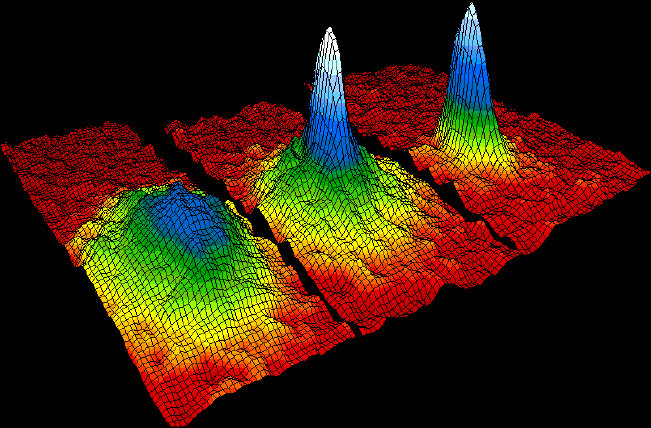
Bose's insight was that when identical particles are indistinguishable in quantum mechanics, the combinatorics of their arrangements change, which leads to collective effects that are impossible for distinguishable particles. This concept underlies phenomena such as superfluidity, the operation of lasers, and the formation of a Bose–Einstein condensate — a macroscopic quantum state achieved at very low temperatures. For a concise technical introduction see Bose–Einstein statistics and for the particle class named after him see boson.
Career, collaboration, and development
Bose studied and taught in Calcutta and Dacca (now Dhaka) in the early 20th century. While working on a paper about the radiation law he submitted it to a European journal but received a rejection; he then sent the manuscript to Einstein, who saw its importance and arranged for its publication in German. Einstein's endorsement helped bring Bose's ideas to a wider audience and led to the combined name Bose–Einstein for the statistics and to later theoretical developments that connected quantum statistics to physical systems.
Contributions beyond the famous paper
Although the 1924 contribution is his best known work, Bose pursued a wide variety of scientific and educational activities. His interests and research touched on:
- Foundations of statistical mechanics and quantum theory — see general context at statistical mechanics.
- Applications in atomic and condensed-matter physics, where bosonic behavior explains collective quantum states.
- Topics in crystallography and scattering methods that overlap with X-ray crystallography.
Honors, legacy, and wider interests
Bose received national recognition in India and international acknowledgment for his influence on 20th‑century physics. Among Indian honors he was awarded the Padma Vibhushan in 1954 (Padma Vibhushan) and is remembered as a major figure in the country's scientific history (India). The term "boson" was later adopted to honor his role in identifying the class of particles that obey Bose–Einstein statistics.
Why Bose matters today
Measurements and technologies that exploit bosonic behavior — from superconducting circuits and quantum optics to the experimental realization of Bose–Einstein condensates in dilute atomic gases — all trace conceptual roots back to Bose's counting argument. His blend of theoretical clarity and pedagogical commitment also influenced generations of students and helped establish modern physics research in South Asia.
Notable facts
Author
AlegsaOnline.com Satyendra Nath Bose (1894–1974) Leandro Alegsa
URL: https://en.alegsaonline.com/art/130546