
Boortmeerbeek (Flemish Brabant, Belgium)
Boortmeerbeek is a municipality in Flemish Brabant, central Belgium. It had 11,561 inhabitants in 2007 (coordinates 50°58′N, 4°34′E). Overview, history, transport, and local features summarized.

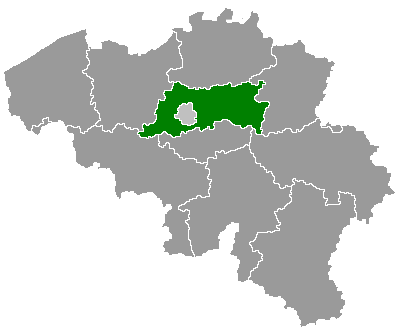
Boortmeerbeek is a municipality in the province of Flemish Brabant in central Belgium. It is an administrative town with a mix of residential areas, small businesses and agricultural land. The locality was recorded with a population of 11,561 in 2007 and lies at approximately 50°58′N, 4°34′E. As part of the wider region around Brussels and Leuven, Boortmeerbeek functions largely as a local service centre and a commuter community.
Image gallery
3 Images

Characteristics and layout
The municipality comprises a compact town centre and adjacent hamlets and countryside. Typical features include a historic parish church, a town hall, local shops and community facilities. Green corridors, walking routes and cycling lanes form part of the local infrastructure that connects residential neighbourhoods with agricultural areas and nearby towns.
History and development
Like many settlements in this part of Flanders, Boortmeerbeek has roots that stretch back to the medieval period and developed around agriculture and local crafts. Over the 19th and 20th centuries the village adapted to broader economic changes in Belgium, gaining improved roads and public transport links that encouraged commuting and modest population growth. The historic core contains traditional buildings while newer housing extends into former fields.
Transport and economy
- Transport: regional roads and public transport connect the town with larger centres; many residents commute to nearby cities for work.
- Economy: local services, small enterprises, light industry and agriculture are typical economic components.
- Recreation: parks, trails and community events attract both residents and visitors.
Local life and notable facts
The town hosts seasonal markets and community festivals, and maintains cultural and sports clubs that form the backbone of local life. Visitors and residents can explore rural landscapes and short walking circuits. For official information and municipal services consult the local municipality pages or the provincial resources on Flemish Brabant.

Boortmeerbeek is representative of many small Flemish municipalities: a blend of historical character, local commerce and modern commuting patterns, with accessible green space and a modest population size that has varied over time.
Related articles
Author
AlegsaOnline.com Boortmeerbeek (Flemish Brabant, Belgium) Leandro Alegsa
URL: https://en.alegsaonline.com/art/13047
Sources
- statbel.fgov.be : Werkelijke bevolking per gemeente op 1 januari 2007 / Population de droit par commune au 1 janvier 2007 (.xls)
- statbel.fgov.be : Geografische coördinaten van de gemeenten (.xls)