
Robert Reich: American political economist, academic, and former U.S. Labor Secretary
Profile of Robert Reich (born 1946), his career in government and academia, major themes of his work on labor and inequality, public influence, and selected writings and links.
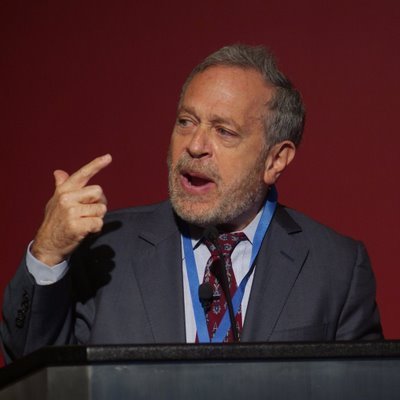
Robert Bernard Reich (born June 24, 1946) is an American political economist, professor, author, and public commentator. He is best known for his work on labor policy, economic inequality, and the political effects of globalization. Reich has held senior roles in multiple U.S. administrations and later became a prominent academic and media figure who explains complex economic issues to broad audiences.
Image gallery
6 Images



Early life and education
Raised in the northeastern United States, Reich studied at Dartmouth College and won a Rhodes Scholarship to study at Oxford. He completed a law degree at Yale, and early in his career combined public service, legal work, and academic appointments. His training blends law, public policy, and economics, which shaped his approach to questions about work, markets, and governance.
Government service
Reich served in the administrations of Presidents Gerald Ford and Jimmy Carter, and he was U.S. Secretary of Labor under President Bill Clinton from 1993 to 1997. In those roles he focused on labor standards, workforce training and adjustment programs, and policy responses to changing labor markets. His time in cabinet-level government informed his later writing and teaching on how institutions shape economic outcomes.
Academia, writing, and media
After public office Reich held faculty appointments at institutions including Harvard and the University of California, Berkeley. He is the author of more than a dozen books addressing globalization, technology, and inequality, including The Work of Nations and Saving Capitalism: For the Many, Not the Few. He has reached wide audiences through opinion essays, documentary film projects, short online videos, and public lectures.
Themes and influence
- Inequality: Reich has emphasized widening income and wealth gaps and their social and political consequences.
- Labor and work: He has written about job displacement, training, minimum wages, and labor standards in a global economy.
- Public policy: His prescriptions often combine regulatory, tax, and social-policy tools aimed at broadening economic opportunity.
Reich is also known as a public intellectual who translates economic research for non-specialist audiences, using accessible examples and clear language in print and on digital platforms.
Personal details and public stands
Reich has disclosed that he was born with multiple epiphyseal dysplasia (Fairbanks disease), a condition that affects bone growth; his short stature is part of his public biography. In the political sphere he has been an active commentator and occasional endorser of candidates; in January 2016 he publicly endorsed Senator Bernie Sanders for president.
Selected resources
- Professional profile and background
- Speeches and policy statements
- Works on labor policy
- Academic affiliations
- Historical government service
- Cabinet tenure and initiatives
- Early career and public roles
- Political endorsements and commentary
Reich remains an influential voice in debates about how economies distribute opportunity and reward. Readers interested in labor policy, contemporary economic debates, and the intersection of politics and markets will find his body of work a consistent source of argument and analysis.
Author
AlegsaOnline.com Robert Reich: American political economist, academic, and former U.S. Labor Secretary Leandro Alegsa
URL: https://en.alegsaonline.com/art/129813