
Rick Wakeman: English Keyboardist, Composer and Progressive Rock Figure
Overview of Rick Wakeman (born 1949), his role with Yes and Anderson Bruford Wakeman Howe, solo concept albums, musical style, instruments, stage persona, and influence. Includes family and notable works.
Rick Wakeman (born 18 May 1949) is an English keyboardist and composer known for a long career in rock and progressive music. He was born in Perivale, Middlesex and rose to prominence in the early 1970s through both band work and ambitious solo recordings. Wakeman's output spans band memberships, orchestral rock projects, solo concept albums and work as a session musician and broadcaster.
Image gallery
10 Images



Career highlights
Wakeman is best known for his time as the keyboard player for Yes, where his elaborate arrangements and classical leanings became a defining element of the group's sound. He also joined forces with former bandmates in the short‑lived supergroup Anderson Bruford Wakeman Howe. Beyond bands, he established a solo profile with large‑scale concept albums and live performances that blended rock band, orchestra and narration.
Notable works and recordings
- The Six Wives of Henry VIII — an instrumental concept album that showcased his compositional and keyboard skills.
- Journey to the Centre of the Earth — a rock‑orchestral adaptation of a literary theme performed in concert with orchestras and narrators.
- Numerous studio and live albums that mix synthesizers, organ, piano and orchestral textures.
Musical style and instruments
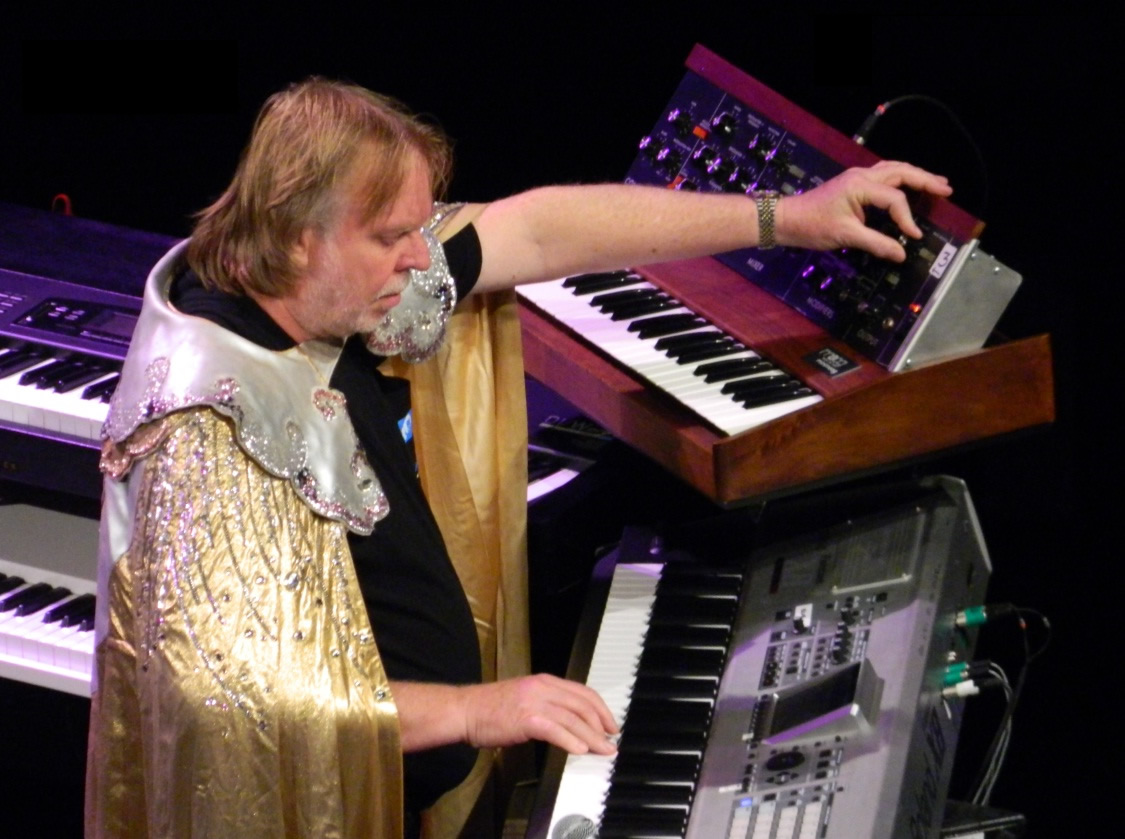
Rooted in a background of formal piano training, Wakeman blended classical techniques with rock sensibilities to help define elements of progressive rock. He is notable for using a wide palette of keyboards: grand piano, Hammond organ, Mellotron, Minimoog and later digital synths. His arranging often emphasizes melodic lines, keyboard harmonies and a strong connection to thematic material.
On stage Wakeman became known for theatrical presentation: multiple keyboard rigs, costume elements and a sense of spectacle that matched his large‑scale compositions. His concerts frequently mixed band sections with orchestral passages, spoken word and visual staging to create narrative performances.
Beyond performance, Wakeman has worked as a session musician, composer and broadcaster, contributing to film, television and radio projects while maintaining an active recording schedule. His family includes two sons who are professional musicians, Oliver Wakeman and Adam Wakeman, continuing the musical tradition.
Wakeman's career is notable for combining technical keyboard virtuosity, ambitious conceptual projects and a flair for live theatricality. For listeners exploring progressive and symphonic rock, his recordings serve as accessible examples of how classical influences can be integrated into modern popular music.
Author
AlegsaOnline.com Rick Wakeman: English Keyboardist, Composer and Progressive Rock Figure Leandro Alegsa
URL: https://en.alegsaonline.com/art/129609