
Anderson Bruford Wakeman Howe
English progressive rock group formed in 1988 by former Yes members Jon Anderson, Bill Bruford, Rick Wakeman and Steve Howe; known for a 1989 self-titled album, a tour of classic Yes material, and the later Union project.
Overview
Anderson Bruford Wakeman Howe (often abbreviated ABWH) was a short-lived English progressive rock ensemble formed in 1988 by four musicians who had been key members of the band Yes. The group sought to revisit the melodic complexity and extended arrangements associated with classic 1970s progressive rock, offering fans an alternative to the contemporary lineup of Yes at that time.
Image gallery
2 Images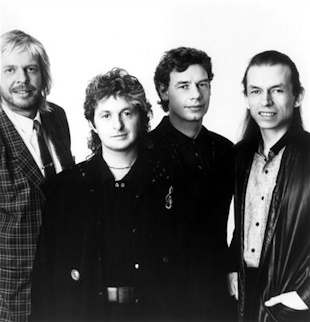

Members and roles
- Jon Anderson – lead vocals, principal songwriter and the group's distinctive high-tenor voice.
- Steve Howe – guitars, noted for his eclectic picking styles and multi-instrumental textures.
- Rick Wakeman – keyboards, responsible for orchestral and synthesizer layers.
- Bill Bruford – drums and percussion, known for a jazz-influenced, precise approach to rhythm.
Music and style
ABWH's sound emphasized melodic themes, multi-part harmonies and extended instrumental passages reminiscent of earlier progressive rock eras. Their arrangements blended acoustic and electric textures, prominent keyboard orchestrations and guitar counterpoint. The group's material mixed new compositions with reinterpretations of songs associated with the members' earlier work.
History and activities
The four musicians convened in the late 1980s and released a self-titled studio album in 1989, which was supported by a concert tour that highlighted both new songs and classic material from their collective past. Legal and naming complications surrounding the use of the name Yes meant ABWH operated as a distinct entity, despite its clear links to that band's lineage. The separate paths of the two Yes-related ensembles eventually converged for a collaborative effort billed as the 'Union' project, which brought multiple past and present members together in the early 1990s.
Legacy and distinctions
Although ABWH was active for only a short period, it attracted attention for reuniting celebrated players and for attempting to recapture a particular progressive-rock aesthetic at a time when the broader commercial sound had shifted. For fans and scholars of progressive rock, the group is notable as an episode in the longer story of Yes and as a demonstration of how veteran musicians revisit and reinterpret their musical identities across different projects.
Tags
Related articles
Author
AlegsaOnline.com Anderson Bruford Wakeman Howe Leandro Alegsa
URL: https://en.alegsaonline.com/art/3904