
Richard Lugar
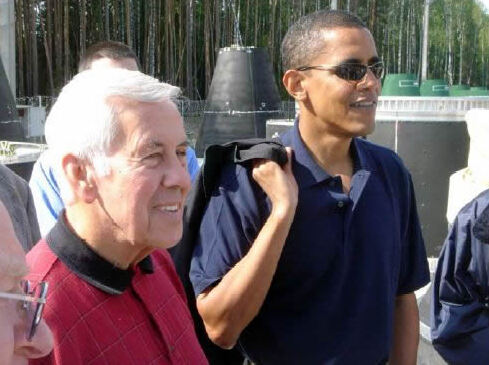
Richard G. Lugar (1932–2019) was an American Republican statesman — mayor of Indianapolis, long-serving U.S. senator from Indiana, and a leading figure in foreign policy and nuclear nonproliferation.
Overview
Richard G. Lugar was an American politician and diplomat who represented Indiana in the U.S. Senate for over three decades. Born in 1932, he combined municipal leadership as the mayor of Indianapolis with a long federal career notable for bipartisanship, a focus on foreign policy and arms control, and a reputation for pragmatic conservatism.
Image gallery
10 Images




Career and major initiatives
After serving in local government, Lugar was elected to the U.S. Senate and became a prominent member of the Senate Foreign Relations Committee. He worked across party lines on security and public health risk reduction, and he helped shape programs that addressed nuclear threats after the Cold War.
- Committee work: senior roles on the Senate Foreign Relations Committee and involvement in agriculture and appropriations matters.
- Nonproliferation efforts: co-sponsored cooperative programs to secure and reduce surplus nuclear materials and expertise in former Soviet states.
- Domestic priorities: urban development, agricultural policy for his state, and pragmatic budget oversight.
Elections and national campaigns
Lugar was a leading figure in Republican foreign-policy circles and sought the national nomination for president during the 1990s. He entered the 1996 presidential campaign and ran during 1996, but the party ultimately nominated Bob Dole. In 2012, after many terms in the Senate, Lugar was defeated in the Republican primary by a challenger, ending his long tenure in Congress.
Later life, illness, and death
After leaving the Senate, Lugar continued to be involved in public affairs and international dialogue. He died in April 2019 in Falls Church, Virginia, following complications related to chronic inflammatory demyelinating polyneuropathy, a rare neurological disorder (CIDP).
Legacy and significance
Lugar is widely remembered for his long Senate service, his work on arms control and nonproliferation, and his ability to cooperate with colleagues from both parties. His career illustrates a strand of American public service focused on expertise in foreign affairs, practical problem solving, and the management of long-term security risks.
Author
AlegsaOnline.com Richard Lugar Leandro Alegsa
URL: https://en.alegsaonline.com/art/129524