
Richard Axel — Nobel laureate in olfaction research
Richard Axel (born 1946) is an American neuroscientist who shared the 2004 Nobel Prize for discoveries about olfactory receptors and how the sense of smell is encoded.
Richard Axel (born July 2, 1946) is an American neuroscientist and molecular researcher from Brooklyn, New York City. He is best known for work that revealed the molecular basis of smell and for sharing the 2004 Nobel Prize in Physiology or Medicine for discoveries concerning olfactory receptors, an award he received alongside Linda B. Buck.
Image gallery
3 Images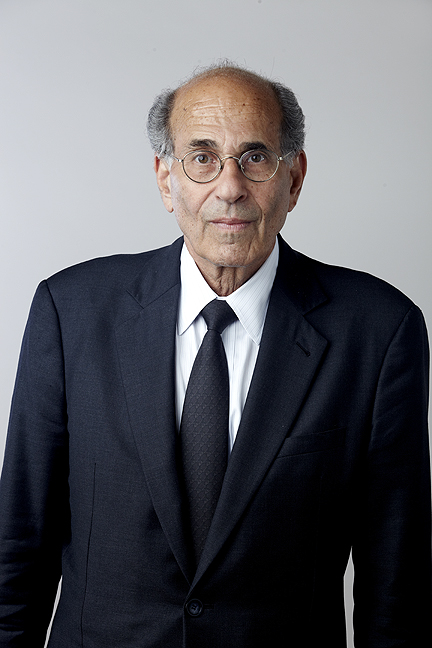


Research and main discoveries
Axel's laboratory helped identify a large family of related receptors in the nose that detect odorant molecules and initiate neural signals. These receptors belong to the class of G protein–coupled receptors and are expressed by olfactory sensory neurons in patterns that allow the brain to distinguish a vast array of odorants. Work from his group and collaborators introduced a framework for how odor identity is encoded and how sensory neurons connect to specific targets in the brain.
Methods and scientific importance
Using molecular cloning, gene expression analysis and anatomical mapping, Axel's research connected gene-level receptor identity with the wiring of olfactory circuits. The findings provided one of the clearest examples of how a family of genes can produce a sensory map that the brain interprets as distinct smells. This molecular-to-systems linking has been influential across sensory neuroscience.
Career highlights and recognition
Over decades, Axel has held research and teaching positions at major institutions and has been widely cited for pioneering studies on sensory receptors and neural organization. The Nobel Prize recognized the conceptual breakthrough his work provided in understanding sensory perception and neural coding. He has also been honored by scientific societies and has influenced a generation of investigators in molecular neurobiology.
Legacy and applications
Axel's discoveries helped establish the olfactory system as a model for studying neural map formation and receptor gene regulation. Practical implications extend from basic neuroscience to fields interested in odor detection and loss, including clinical studies of anosmia, the design of biosensors and industrial fragrance research.
Notable facts
- The identification of olfactory receptor genes explained how a limited set of receptor types can encode many odors.
- Axel's work emphasized how single-gene expression in neurons can guide precise connections in the brain.
- His research fostered interdisciplinary approaches combining molecular biology, genetics and systems neuroscience.
Author
AlegsaOnline.com Richard Axel — Nobel laureate in olfaction research Leandro Alegsa
URL: https://en.alegsaonline.com/art/129455