
Quett Ketumile Joni Masire — President of Botswana (1980–1998)
Overview of Quett K. J. Masire, Botswana's second president (1980–1998): background, leadership, policies, regional role, honors and legacy; died in Gaborone in 2017 at age 91.
Overview
Quett Ketumile Joni Masire (23 July 1925 – 22 June 2017) was a leading statesman of Botswana. A career politician and member of the Botswana Democratic Party, he became the country's second president in 1980 and held the office until 1998. Masire is remembered for guiding Botswana through sustained economic growth, strengthening democratic institutions, and managing mineral wealth prudently.
Image gallery
4 Images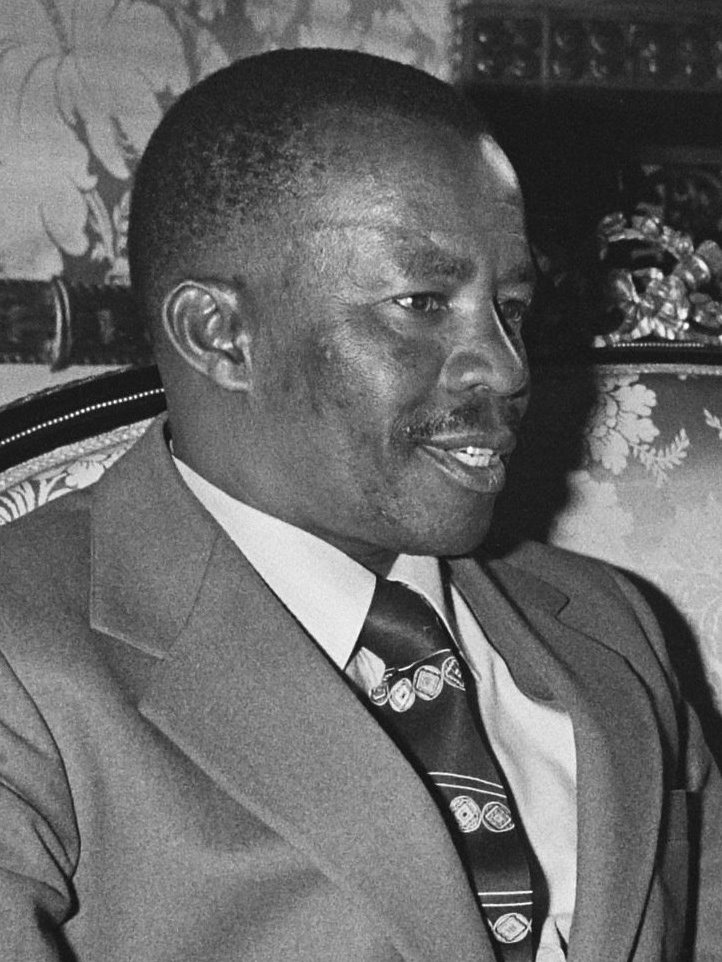


Early political career and presidency
Masire was born in Kanye and rose through public service during the formative years of independent Botswana. He served as vice-president under Seretse Khama from independence in 1966 until 1980. Following President Khama's death, Masire assumed the presidency and led the nation for nearly two decades, overseeing a period of relative stability and institutional consolidation.
Domestic policies and economic management
Under Masire's leadership the government emphasized fiscal caution, investment in infrastructure, and the expansion of social services using revenues from diamond mining. His administration prioritized education, road and public utility projects, and modernizing state institutions. These policies helped transform Botswana from one of the world’s poorest countries at independence into a middle-income economy by the end of his tenure, while maintaining competitive, multiparty elections and a comparatively low level of corruption for the region.
Regional role and approach to foreign affairs
Masire maintained a pragmatic foreign policy, balancing relations with Western partners and African neighbors. Botswana under his leadership took a firm stance against apartheid-era regimes and sought cooperative approaches to regional development and security. He participated in diplomatic efforts and supported regional organizations that aimed to foster stability in southern Africa.
Later life, honors and death
After stepping down in 1998 he handed the presidency to his successor, Festus Mogae, marking a peaceful transfer of power. Masire received several national and international honors during and after his service, including distinctions such as the GCMG (Grand Cross of St Michael and St George). In retirement he remained an elder statesman and occasional advisor on public affairs. Masire died in Gaborone on 22 June 2017 from surgical complications at the age of 91.
Legacy and notable facts
- He led Botswana during sustained economic growth driven largely by mineral exports.
- His administration emphasized prudent public finance and investment in infrastructure and education.
- Masire is widely regarded for supporting democratic norms and for a peaceful succession in 1998.
- He remains a prominent figure in Botswana’s post-independence history and is frequently cited in discussions of successful governance in Africa.
For further reading and authoritative sources on Masire’s life and presidency, consult dedicated biographical entries and histories of post‑colonial Botswana listed by academic and governmental archives. See also related political histories and contemporary analyses of Botswana’s development trajectory under the Botswana Democratic Party.
Author
AlegsaOnline.com Quett Ketumile Joni Masire — President of Botswana (1980–1998) Leandro Alegsa
URL: https://en.alegsaonline.com/art/129077