
Percy Lavon Julian
American chemist who developed large‑scale syntheses of plant‑derived steroids and medicinal compounds, helping make hormone therapies and related drugs widely available.
Percy Lavon Julian (1899–1975) was an American research chemist noted for translating natural plant substances into widely used medicinal chemicals. His laboratory achievements and industrial processes lowered the cost of steroid hormones and other drug precursors, and his career is remembered for both scientific innovation and perseverance in the face of racial barriers.
Image gallery
1 Image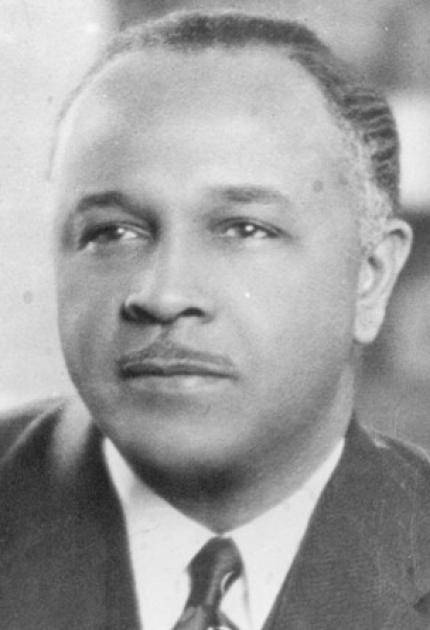
Early life and education
Born in Montgomery, Alabama, Julian showed early ability in science and mathematics. He completed undergraduate studies in chemistry and pursued advanced training and research in the United States and abroad. While opportunities for Black scientists were limited in his era, Julian built a career that combined academic study, laboratory research, and later industrial development.
Scientific contributions and methods
Julian is best known for advancing the chemical synthesis of medically important compounds from plant sterols. He developed laboratory and commercial processes to convert abundant plant-derived materials into steroidal intermediates. Among his notable achievements was work on the synthesis of physostigmine, a compound used in the treatment of glaucoma, and on routes to steroid hormones such as progesterone and cortisone precursors obtained from plant sources like soybean and yam sterols.
Career and industrial impact
After research positions in academia, Julian moved into industrial chemistry where he oversaw large‑scale production techniques. His methods made steroid-based medicines and hormone derivatives cheaper to manufacture, lowering the cost of therapies that previously were difficult or expensive to obtain. He later founded a company to produce chemical intermediates and advised industrial partners on scalable synthesis.
Legacy and significance
Julian’s work had broad medical and economic consequences: by creating practical, inexpensive routes to steroid intermediates, he helped enable the wider availability of corticosteroids and other hormone medicines. These developments also played a supporting role in the pharmaceutical advances of the mid‑20th century, including the development of oral contraceptives and corticosteroid treatments. Beyond the bench, Julian became a prominent African American scientist whose success challenged discriminatory practices and inspired later generations.
Notable facts and resources
Julian received numerous honors during and after his life and is remembered for both scientific achievement and civic engagement. He died in Waukegan, Illinois, in 1975 from liver cancer.
Author
AlegsaOnline.com Percy Lavon Julian Leandro Alegsa
URL: https://en.alegsaonline.com/art/128432