
Pat Buchanan: American conservative commentator, politician, and author
Profile of Pat Buchanan, his career as a presidential advisor, media figure, political campaigns, core views, and the controversies and influence surrounding his nationalist conservatism.
Overview
Patrick Joseph "Pat" Buchanan (born November 2, 1938) is an American conservative commentator, author, and former political operative. He served on the staffs of several Republican presidents and later became a widely read columnist and television personality. Buchanan has been a prominent voice for a nationalist, economically protectionist and socially conservative strand of U.S. politics.
Image gallery
9 Images



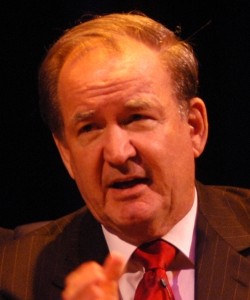
Early life and White House service
Buchanan was born in Washington, D.C. and rose to national prominence through his work in Republican administrations. He served as an aide and advisor to Presidents Richard Nixon, Gerald Ford, and Ronald Reagan. Those roles brought him into national policy debates and set the stage for his later public career.
Political campaigns and activism
Buchanan sought the Republican presidential nomination in the 1992 and 1996 contests, campaigning on a blend of populism, trade protectionism, and cultural conservatism. In 2000 he ran for president under the Reform Party banner. His campaigns emphasized immigration limits, opposition to unrestricted free trade, and skepticism of long-term military commitments abroad.
Media, writing, and public profile
After government service Buchanan became a familiar media figure: he was an original host on CNN’s Crossfire, wrote syndicated newspaper columns, and published several books on politics and culture. As a public commentator (conservative commentator), he mixed policy arguments with cultural critiques, attracting a substantial readership and frequent television appearances.
Views, influence, and controversies
- Key themes: economic nationalism, immigration restriction, cultural conservatism, and a foreign policy often described as non-interventionist.
- Influence: shaped aspects of late 20th- and early 21st-century conservative debates over trade, sovereignty, and national identity.
- Controversy: Buchanan’s rhetoric and positions have provoked debate and criticism across the political spectrum, contributing to his polarizing reputation.
Legacy
Whether viewed as a principled dissenter or a divisive figure, Buchanan’s career spans government, media, and electoral politics. His combination of populist economics and cultural traditionalism has had a lasting impact on certain currents within American conservatism and on subsequent political movements and candidates.
Author
AlegsaOnline.com Pat Buchanan: American conservative commentator, politician, and author Leandro Alegsa
URL: https://en.alegsaonline.com/art/128169