
CNN: The Cable News Network — overview, history and impact
Overview of CNN, the US 24-hour cable news channel founded in 1980: origins, development of round‑the‑clock news, programming, operations, and its role in modern journalism.
Overview
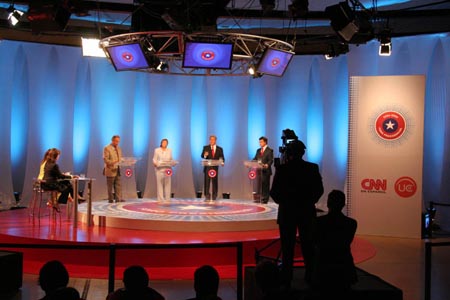
CNN (Cable News Network) is a United States–based television news channel that established the model of continuous, 24‑hour televised news. The channel operates as part of the broader CNN Global group and is owned by Warner Bros. Discovery. CNN produces live reporting, breaking news coverage and scheduled news programs from multiple studios in the U.S., combining field reporting with studio analysis.
Image gallery
9 Images


Founding and early years
CNN was launched in 1980 by media entrepreneur Ted Turner and began broadcasting on June 1 of that year. Its first regular newscast was presented by David Walker and his wife Lois Hart, marking the start of a new approach to television news. In its early phase the network recruited established political commentators such as Rowland Evans and Robert Novak, seeking to build a roster that combined reporting experience with analysis.
Development of the 24‑hour format
One of CNN’s defining moves was to maintain continuous news coverage. In 1982 the network expanded its offerings with a sister channel focused on nonstop headline updates and concise newscasts; this channel emphasized shorter, repeated segments rather than long-form commentary. The 24‑hour format allowed CNN to report on breaking events in real time and helped establish expectations for immediate television news coverage worldwide.
Operations, studios and programming
CNN operates major studios and bureaus across the United States, with its historic headquarters at the CNN Center in Atlanta and significant operations at the Deutsche Bank Center in New York City, as well as facilities in Washington, D.C. and Los Angeles. The network’s schedule mixes live breaking-news blocks, daily news shows, investigative reports and scheduled interview programs. Typical program categories include:
- Breaking and live event coverage
- Daily news and morning shows
- Political analysis and interviews
- Documentaries, long-form reports and special investigations
Influence, reach and criticisms
CNN played a prominent role in transforming television news into a 24‑hour medium, influencing competitors worldwide and helping to shape public expectations for immediate reporting during major events. Over the decades it has been praised for live coverage of crises and elections but has also faced criticism—like other large news organizations—over perceived bias, editorial decisions, and the balance between analysis and impartial reporting.
Notable facts and distinctions
As part of a global news organization, CNN supplies content to international audiences as well as domestic viewers. Its studios and on‑air talent have evolved, technology has changed how reporting is produced, and the network’s ownership and corporate structure have shifted with media consolidation. The channel’s early innovations, including its continuous news format and rapid breaking‑news model, remain central to its identity and to modern broadcast journalism.
For more contextual information on cable news history and the network’s role in media, see additional resources linked by reference: headquarters and corporate info, and other media analyses available through industry overviews and academic studies.
Related articles
Author
AlegsaOnline.com CNN: The Cable News Network — overview, history and impact Leandro Alegsa
URL: https://en.alegsaonline.com/art/21195
Sources
- meandted.com : Reese Schonfeld Bio.
- cnn.com : Charles Bierbauer, CNN senior Washington correspondent, discusses his 19-year career at CNN.
- cnnpressroom.blogs.cnn.com : cnnpressroom.blogs.cnn.com/2011/06/01/cnns-first-broadcast-june-1-1980/
- news.google.com : news.google.com/newspapers?nid=2209&dat=19810516&id=P6krAAAAIBAJ&sjid=IP0FAAAAIBAJ&pg=429…
- news.google.com : news.google.com/newspapers?nid=1454&dat=19800529&id=v8gsAAAAIBAJ&sjid=RhMEAAAAIBAJ&pg=713…
- books.google.com : Call Me Ted
- news.google.com : news.google.com/newspapers?nid=888&dat=19810821&id=8Z4oAAAAIBAJ&sjid=OnsDAAAAIBAJ&pg=3119…
- timewarner.com : "Time Warner: Turner Broadcasting"
- townhall.com : "Clinton News Network"
- mrc.org : mrc.org
- mrc.org : "CyberAlert -- 08/07/2001 -- "Dazzled" by "Candid" Clinton"
- jpupdates.com : jpupdates.com