
Mir Osman Ali Khan, Asaf Jah VII — the last Nizam of Hyderabad
Overview of Mir Osman Ali Khan (Asaf Jah VII), his rule as the last Nizam of Hyderabad, wealth and public works, accession to India, later ceremonial role, and cultural legacy.
Mir Osman Ali Khan, Asaf Jah VII, was the final sovereign Nizam of the princely state of Hyderabad in south-central India. Revered and controversial in equal measure, he ruled through much of the early 20th century and became widely known for his vast personal wealth, patronage of public institutions and the modernization of Hyderabad’s infrastructure. He is commonly referenced under the honorifics used during his lifetime and in contemporary histories of the subcontinent; see Mir Osman Ali Khan for more context.
Image gallery
10 Images
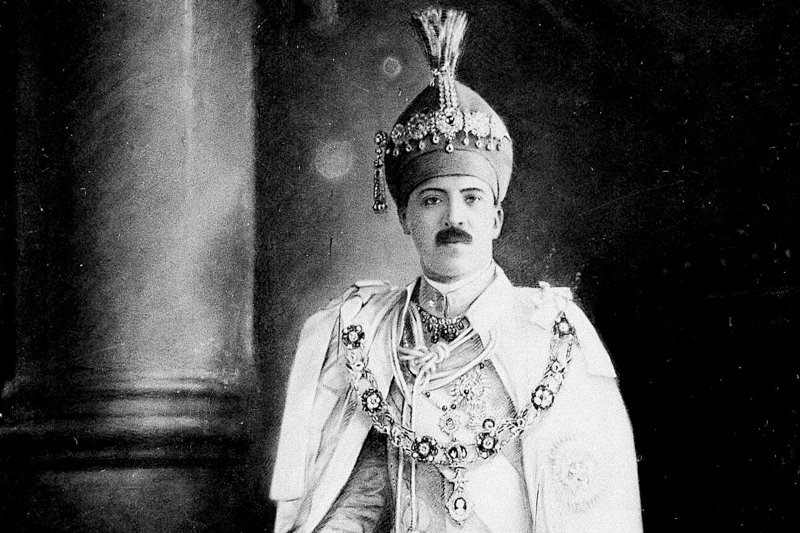


Early life and reign
Born into the Asaf Jahi dynasty, he succeeded to the Nizamate in the early 1900s. During his rule the administration combined traditional courts and landed privileges with selective modernization: the state expanded educational and medical facilities, improved civic services and sponsored new public buildings. He supported the establishment of Osmania University, which became a major center of higher education for the region and remains a defining legacy of his reign.
Wealth, treasures and public works
The Nizam’s fortune attracted intense public interest. Hyderabad and the surrounding Golconda region had long been associated with famous diamonds and gems; the Nizam’s treasury included substantial jewelry and valuable assets, among them renowned pieces such as the Jacob Diamond. Contemporary accounts often described him as one of the wealthiest individuals of his era. Much of that wealth was used to fund hospitals, schools, public endowments and civic projects that shaped the city’s skyline and institutions.
Accession to India and later ceremonial office
Following the end of British colonial rule in 1947, the Nizam initially sought to preserve Hyderabad’s autonomy. After a period of negotiation and a short armed intervention in 1948, Hyderabad was integrated into the Indian Union. In the years that followed he accepted a largely ceremonial constitutional role as Rajpramukh (governor) of Hyderabad State, serving in that capacity as the region adjusted to democratic governance and eventual state reorganization. For contemporary discussions about the transition see Hyderabad accession and related sources at regional history summaries.
Legacy and notable facts
- Modernization: He is credited with modernizing aspects of Hyderabad’s administration and supporting higher education and medical services.
- Cultural patronage: His era left many public buildings, mosques, palaces and institutions that are central to Hyderabad’s heritage.
- Contested memory: Historians debate his political decisions, the pace of reform within princely rule, and the circumstances of accession to India.
Mir Osman Ali Khan remains a prominent figure in South Asian history — both for the scale of his personal wealth and for the visible public institutions and architecture that survive in Hyderabad. For additional reading and archival material see further references at research archives.
Questions and answers
Q: Who was Mir Osman Ali Khan?
A: Mir Osman Ali Khan, also known as H.E.H Nawab Mir Osman Ali Khan, Asaf Jah VII, was the last Nizam of Hyderabad.
Q: What position was Mir Osman Ali Khan given after the formation of India?
A: Mir Osman Ali Khan was made Rajpramukh (Governor) of Andhra Pradesh based on public demand after the formation of India.
Q: What was Mir Osman Ali Khan's claim to fame?
A: Mir Osman Ali Khan was known for being the richest man on earth with the Golconda mines making Hyderabad the main supplier of diamonds in the world at that time.
Q: Was Mir Osman Ali Khan the last Nizam of Hyderabad?
A: Yes, Mir Osman Ali Khan was the last Nizam of Hyderabad.
Q: What was the role of Mir Osman Ali Khan following the formation of India?
A: Following the formation of India, Mir Osman Ali Khan was made Rajpramukh (Governor) of Andhra Pradesh.
Q: What made Hyderabad an important city during Mir Osman Ali Khan's reign?
A: Hyderabad was important during Mir Osman Ali Khan's reign because the city was the main supplier of diamonds in the world at that time.
Q: Why was Mir Osman Ali Khan considered the richest man on earth?
A: Mir Osman Ali Khan was considered the richest man on earth because of the Golconda mines in Hyderabad that made the city the main supplier of diamonds in the world at that time.
Author
AlegsaOnline.com Mir Osman Ali Khan, Asaf Jah VII — the last Nizam of Hyderabad Leandro Alegsa
URL: https://en.alegsaonline.com/art/127968