
Omar Torrijos (1929–1981): Panamanian military leader and negotiator of the Canal treaties
Omar Torrijos was the de facto leader of Panama (1968–1981), notable for negotiating the 1977 treaties that returned control of the Panama Canal to Panama and for his populist domestic reforms.
Overview
Omar Efraín Torrijos Herrera (1929–1981) was the dominant political and military figure in Panama from 1968 until his death in 1981. Although he never held the formal office of president for most of his rule, Torrijos exercised effective control over the state as the head of the National Guard and as Panama's chief policymaker. He remains best known internationally for negotiating the agreement that led to Panamanian sovereignty over the Panama Canal.
Image gallery
5 Images


Rise to power and political role
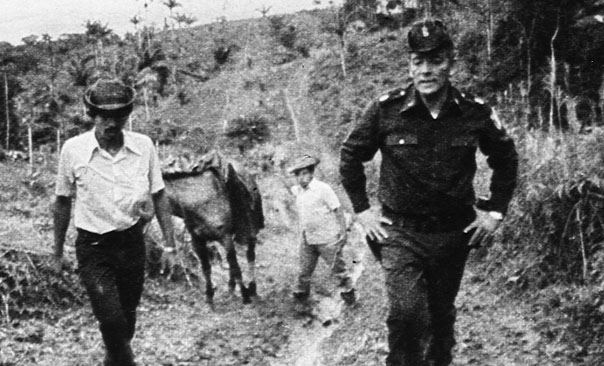
Torrijos emerged from the National Guard after participating in the 1968 coup that removed the elected government. He consolidated authority through a combination of military position, charismatic leadership, and alliances with civilian sectors. Despite existing constitutional offices, including a nominal president, Torrijos was the central authority, shaping policy and appointments. He styled his rule as a nationalist and populist project that sought greater Panamanian control over national resources and institutions.
Policies, initiatives and the Canal treaties
Domestically, Torrijos promoted agrarian reform, expanded social programs, and pursued policies aimed at reducing inequality and increasing state presence in the economy. He courted broad popular support by emphasizing national dignity and social development while tolerating limited political pluralism under military oversight.
Internationally, his most consequential achievement was negotiating treaties with the United States in 1977—commonly called the Torrijos–Carter Treaties—which set a timetable for transferring control of the Panama Canal to Panamanian authority. The accords, concluded with U.S. President Jimmy Carter, ended a century of foreign control and reshaped Panama’s international standing.
Characteristics and controversies
- Leadership: De facto head of Panama through military authority rather than continuous presidential tenure.
- Governance: A mix of populist socio-economic reforms and centralized, authoritarian control.
- Legacy debates: Admired for nationalism and social programs; criticized for limits on political freedoms and for governing through the armed forces.
Death and legacy
Torrijos died in a plane crash on July 31, 1981. His sudden death removed a dominant figure and left a contested legacy. Supporters credit him with achieving full sovereignty over the canal and advancing social measures; critics point to the authoritarian aspects of his rule. His family remained politically active—his son Martín Torrijos later served as president from 2004 to 2009—continuing public debate over Omar Torrijos’s place in Panamanian history.
For further context on Panamanian institutions and subsequent developments under civilian presidents see relevant sources and archival materials at official presidential and historical archives.
Questions and answers
Q: Who is Omar Torrijos?
A: Omar Torrijos was a leader of Panama from 1968 to 1981 and the Commander of the Military of Panama.
Q: What is Omar Torrijos best known for?
A: Omar Torrijos is best known for making a treaty to give Panama full control of the Panama Canal.
Q: How did Omar Torrijos die?
A: Omar Torrijos died in a plane crash on July 31, 1981.
Q: Was Panama a democracy during Omar Torrijos' rule?
A: Panama had a President during Omar Torrijos' rule but he was the leader of the country.
Q: Who succeeded Omar Torrijos as the leader of Panama?
A: Omar Torrijos' son, Martín Torrijos, was elected president and served from 2004 to 2009.
Q: Where is the Panama Canal located?
A: The Panama Canal is located in Panama, a country in Central America.
Q: When did Omar Torrijos become the leader of Panama?
A: Omar Torrijos became the leader of Panama in 1968.
Author
AlegsaOnline.com Omar Torrijos (1929–1981): Panamanian military leader and negotiator of the Canal treaties Leandro Alegsa
URL: https://en.alegsaonline.com/art/127912