
Newton Moore
Sir Newton Moore (1870–1936) was an Australian politician who served as Premier of Western Australia (1906–1910), later became agent-general in London, served in WWI, and sat in the British House of Commons.
Overview
Sir Newton James Moore (17 May 1870 – 28 October 1936) was an Australian political figure and administrator who played roles in state government, imperial representation and British politics. He led the government of Western Australia from 7 May 1906 until 16 September 1910, then relocated to London to serve as his state’s representative abroad and subsequently pursued public service during and after the First World War.
Image gallery
3 Images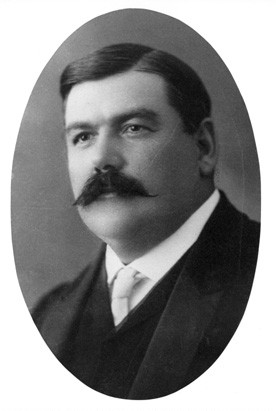


Political career in Western Australia
Moore became Premier when his predecessor resigned, guiding the state government through a period of economic and administrative development. His premiership is remembered for pragmatic, non-doctrinal management of state affairs rather than radical reform. In 1910 he resigned the premiership to accept the post of agent-general in London, a role intended to promote Western Australian interests overseas and to liaise with the British government.
Service abroad and military record
As agent-general he lived in London and acted as a prominent voice for his state within the empire. During World War I Moore joined the Australian Army and served as an officer; his wartime service reflected a pattern among colonial administrators who combined civil and military duties in the conflict years.
British parliamentary career
After the war Moore remained in Britain and entered national politics there, winning a seat in the British House of Commons that had been held by former Australian prime minister Sir George Reid. His election to Westminster made him one of the relatively few Australians to serve in the British parliament. In his first speech he spoke in favour of enabling women to become members of parliament, a notable public stand on representation in that era. The House of Commons to which he was elected is described more fully at the House of Commons.
Legacy and notable facts
- Premiership: Premier of Western Australia, 7 May 1906 – 16 September 1910; see the office of the Premier of Western Australia for context.
- Imperial role: Served as agent-general in London representing Western Australian interests (agent-general).
- Military service: Officer in the Australian Army during World War I.
- British MP: Elected to the British House of Commons after the war, succeeding a prominent Australian statesman.
Moore’s career crosses several distinct arenas—colonial state government, imperial diplomacy, military service and British parliamentary politics—making him a figure of interest for studies of Australian political ties with Britain in the early 20th century.
Author
AlegsaOnline.com Newton Moore Leandro Alegsa
URL: https://en.alegsaonline.com/art/127534