
Nadir Afonso: Portuguese Geometric and Kinetic Painter
Overview of Nadir Afonso (1920–2013), his background in architecture, development of geometric and kinetic painting, key characteristics, collaborations, and legacy.
Overview
Nadir Afonso (December 4, 1920 – December 11, 2013) was a Portuguese artist best known for his rigorous approach to geometric abstraction and contributions to kinetic art. Trained as an architect before devoting himself to painting, Afonso combined structural thinking and an interest in motion to produce work that emphasizes line, plane and optical rhythm. He is often described as a bridge between architectural discipline and abstract visual practice; many accounts label him a leading figure in Portuguese geometric painting (geometric painting).
Image gallery
3 Images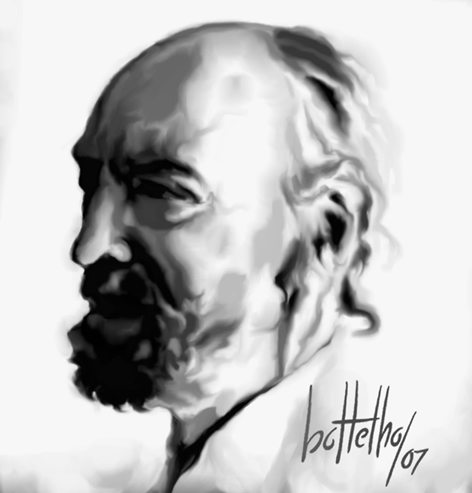


Training and early career
Afonso originally pursued architecture and worked briefly in that profession, an experience that informed his artistic vocabulary. Early in his career he had professional contact with leading modern architects and practices, which shaped his sense of proportion, perspective and spatial relationships. Sources note associations with figures such as Le Corbusier and Oscar Niemeyer, and his architectural background continued to influence his compositional choices throughout his life (architecture).
Move to painting and Paris years
Afonso later moved to study painting in Paris, where he came into contact with artists working in abstraction and early kinetic experiments. During this period he refined a language based on geometric precision and controlled color relationships, aligning him with international tendencies that explored movement, optical vibration and systematic construction.
Characteristics of his work
- Emphasis on geometry: grids, diagonals and interlocking planes arranged with architectural clarity.
- Optical movement: subtle effects of rhythm and visual tension related to kinetic art.
- Measured composition: a preference for clean lines, careful proportion and a reduced palette in many series.
- Dialogue with space: works that suggest constructed depth or architectural logic rather than pictorial illusion.
Peers, collaborations and recognition
Afonso worked alongside or in the same circles as several prominent modern artists; his contemporaries included Victor Vasarely and figures from the Parisian abstraction scene. He is also recorded as having worked with artists such as Auguste Herbin and André Bloc and is often mentioned in connection with Fernand Léger. Over time he exhibited internationally and took part in debates about the relationship between science, architecture and painting.
Importance and legacy
Nadir Afonso is valued for articulating a disciplined variant of geometric abstraction that kept an architectural foundation at its core. His career illustrates how professional training in one creative discipline can inform and expand another: his paintings are studied both for their formal clarity and for their role in the development of kinetic and constructive tendencies in 20th-century art. Museums, retrospectives and scholarly writing have continued to assess his contribution to Portuguese and international abstraction, and he is frequently cited in discussions about the crossover between architecture and modern art.
Further reading and resources can be sought through institutional catalogues and exhibition histories; for general context on movements and figures related to Afonso, see references on geometric abstraction and kinetic art.
Author
AlegsaOnline.com Nadir Afonso: Portuguese Geometric and Kinetic Painter Leandro Alegsa
URL: https://en.alegsaonline.com/art/127359