
Mohammed Rafi — Indian playback singer
Mohammed Rafi (1924–1980) was a celebrated Indian playback singer whose versatile voice dominated Hindi film music for decades. Known for emotional range, technical skill and many notable collaborations and awards.
Mohammed Rafi (24 December 1924 – 31 July 1980) was one of the most influential playback singers in Indian cinema. Over a career that spanned more than four decades, he became synonymous with the sound of Hindi film songs, lending his voice to actors across genres and eras. He is widely remembered for his expressive range, technical control, and ability to adapt his voice to different personalities and styles.
Image gallery
3 Images

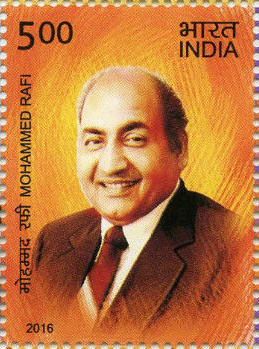
Early life and rise
Born in a village near Amritsar in British India, Rafi moved to Bombay (now Mumbai) to pursue a career in music. He began with small parts in studio recordings and gradually earned recognition. By the 1950s and 1960s he was a leading voice in the film industry, working on hundreds of films and becoming a household name throughout the Indian subcontinent.
Voice and musical characteristics
Rafi was admired for the purity of his tone, fluid phrasing and the ease with which he shifted between registers. He could sing romantic ballads, devotional numbers, qawwalis, ghazals, classical-based songs and playful comic pieces with equal conviction. Music directors prized him for his flexibility, and actors relied on him to convey a wide spectrum of emotions through song.
Collaborations and notable work
Rafi recorded with many of the period's most prominent composers and singers. Frequent collaborators included Naushad, S. D. Burman, Shankar–Jaikishan, the duo Laxmikant–Pyarelal and others. He performed duets and ensembles with leading female singers and provided playback for a long list of film stars. For an introduction to the role of a playback singer in Indian films, see introductory material on film music here.
- Worked with major composers across decades
- Adapted to classical and popular idioms
- Performed songs in several Indian languages
Awards, recognition and legacy
Rafi received significant national recognition during his lifetime, including civilian honours and multiple film awards. His recordings continue to be reissued and celebrated, and his style influenced generations of singers who followed. For discographies and curated collections, consult archives and reference guides indicated here and here.
Today Mohammed Rafi is remembered not only for the volume of his output but for the emotional depth and technical skill of his singing. His songs remain part of popular culture across South Asia and among diaspora communities, and he is often cited as a standard against which later playback voices are measured.
Questions and answers
Q: Who was Mohammed Rafi?
A: Mohammed Rafi was a popular Bollywood playback singer.
Q: What is the national language of India?
A: India has multiple national languages.
Q: How many songs did Mohammed Rafi sing in his career?
A: Mohammed Rafi sang more than 26,000 songs in his career.
Q: Which languages other than national languages of India did Mohammed Rafi sing in?
A: Mohammed Rafi sometimes sang in other languages too.
Q: What was the career span of Mohammed Rafi?
A: Mohammed Rafi's career spanned over 40 years.
Q: When was Mohammad Rafi born and when did he pass away?
A: Mohammed Rafi was born on 24th December 1924 and passed away on 31st July 1980.
Q: What was Mohammed Rafi's occupation?
A: Mohammed Rafi was a playback singer in Bollywood.
Author
AlegsaOnline.com Mohammed Rafi — Indian playback singer Leandro Alegsa
URL: https://en.alegsaonline.com/art/127175