
Miep Gies — Dutch helper of Anne Frank and custodian of her diary
Miep Gies (1909–2010) was a Dutch secretary who helped hide Anne Frank's family during WWII and salvaged Anne's diary after the arrest. Her actions preserved a key testimony of the Holocaust.
Overview
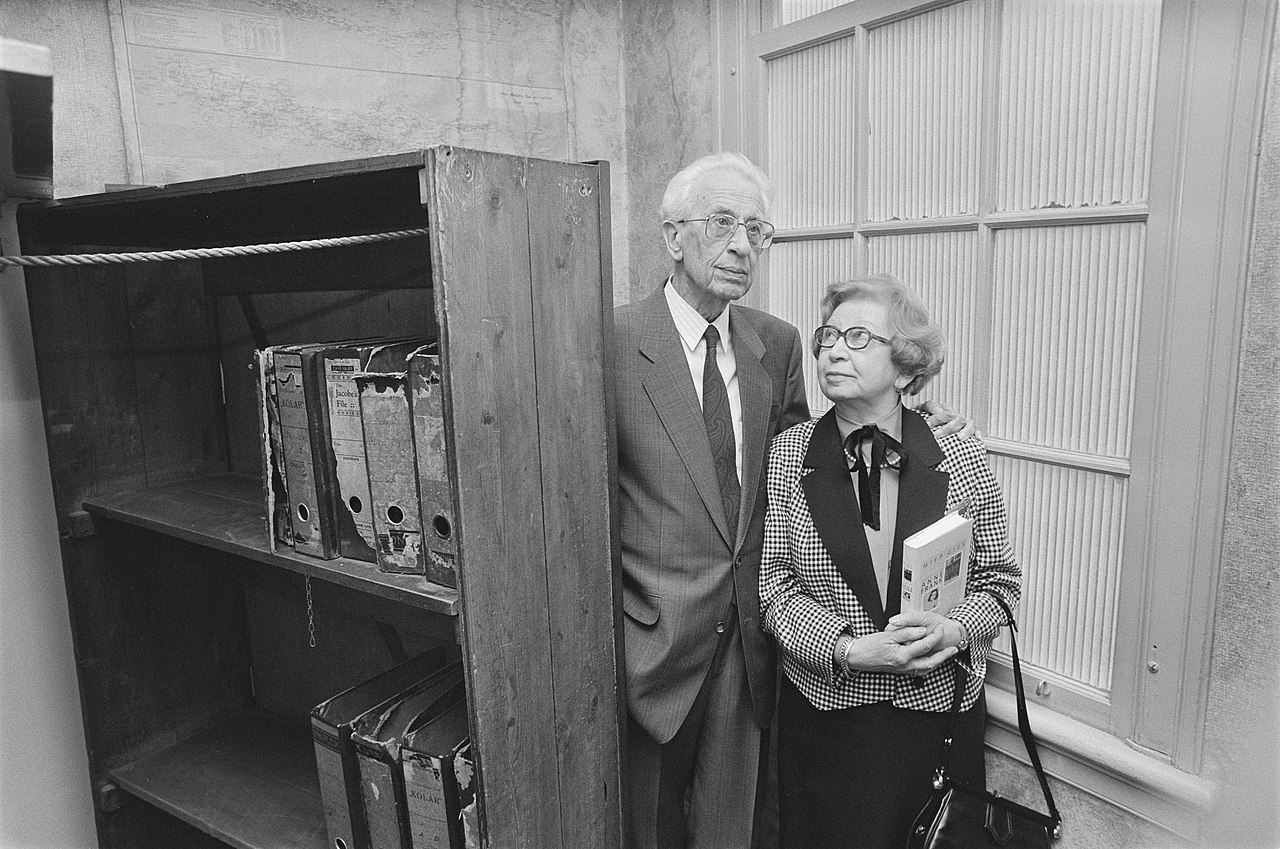
Miep Gies (born Hermine Santrouschitz, 15 February 1909 – 11 January 2010) was a Netherlands-based secretary and resistance helper best known for assisting the Frank family during the German occupation. She was one of several Dutch citizens who provided refuge, food and news to people hiding from the occupying forces and later recovered and preserved the diary of Anne Frank after the family's arrest.
Image gallery
5 Images



Early life and work
Born in Vienna and raised in the Netherlands from childhood, Gies became a trusted employee of Otto Frank's company and household. Her role as a secretary put her in daily contact with the people who would later move into the hidden annex. Through her employment she learned the routines and needs of the household, and she used that knowledge to help sustain the hidden group without drawing attention.
Hiding the Frank family
During World War II, Gies joined a small network that assisted families persecuted by the occupying authorities. She worked alongside others—colleagues and friends—who brought food, books, and information to the annex. Those helpers included men and women who risked arrest and worse so the occupants could remain concealed. The group’s efforts are commonly described as part of the wider civilian resistance in the Netherlands.
Actions after the arrest and the diary
When the annex was discovered and its inhabitants arrested by the Nazis, Gies entered the hiding place and collected personal papers left behind. Among these items she found Anne's diary, a handwritten record the young girl had kept while in hiding. Gies chose not to read the diary; she later explained that she wanted the material to be given intact to Otto Frank, Anne's father, if he survived. She safeguarded the notebook and other documents until she could hand them over. Once Otto Frank returned and saw the diary, he arranged for its eventual publication, which made Anne Frank’s voice known worldwide.
Legacy, recognition and later years
Gies lived long enough to see the diary become one of the most widely read personal accounts of life under Nazi persecution. She spoke modestly about her role, saying that many others acted similarly during those dark years: "I stand at the end of the long, long line of good Dutch people who did what I did or more..." Her testimony and the preserved diary have been used for education about the Holocaust and human rights.
Notable facts and context
- Gies was one of a group of helpers who supplied the annex; her work involved both practical support and personal risk.
- By not reading the diary she respected the privacy of the writer and ensured the material remained intact for the family.
- Her custodianship was a crucial link in transforming a private journal into a historical document that speaks to later generations.
Over time, historians and educators have highlighted the Gies family's example when discussing civilian resistance and the moral choices ordinary people faced under occupation. Her life story continues to be cited in discussions about courage, memory and the preservation of testimony from victims of mass persecution. For further information, see resources linked through archival sites and museum collections (example references: Dutch archives, educational pages at historical sites, and survivor testimony collections at WWII research centers and literary archives).
Author
AlegsaOnline.com Miep Gies — Dutch helper of Anne Frank and custodian of her diary Leandro Alegsa
URL: https://en.alegsaonline.com/art/126914