
Michel Suleiman: Lebanese army commander and president (2008–2014)
Biography of Michel Suleiman, Lebanese military leader who became president in 2008. Covers his background, command of the Lebanese Armed Forces, presidency, priorities, and legacy.
Overview
Michel Suleiman (Arabic: ميشال سليمان, born 21 November 1948) is a Lebanese politician and retired military officer who served as President of Lebanon from 2008 until 2014. He rose to national prominence after a long career in the Lebanese Armed Forces and was widely viewed at the time of his election as a consensus choice intended to calm a polarized political scene. As required by Lebanon's sectarian system, he is a Maronite Christian and his presidency followed a period of political deadlock.
Image gallery
6 Images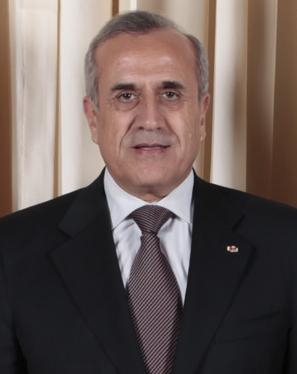


Military career and rise
Suleiman spent most of his professional life in the military, culminating in his appointment as Commander of the Lebanese Armed Forces in December 1998. He succeeded General Émile Lahoud in that role. During his decade as chief of the military, Suleiman emphasized rebuilding and professionalizing the army, overseeing internal security operations and seeking to maintain the institution's cohesion amid regional tensions.
Presidency (2008–2014)
Suleiman was elected president by the Lebanese parliament and was sworn into office on 25 May 2008. His election came after months of political stalemate, and he presented himself as a figure capable of promoting dialogue among rival factions. His stated priorities included strengthening state institutions, supporting the national army, and encouraging political compromise. He presided over a period marked by efforts to restore governmental functions and manage spillover effects from regional conflicts.
Policies, challenges and significance
As a former army commander, Suleiman placed continued public emphasis on security and institutional stability. His term coincided with heightened regional tensions that affected Lebanon's fragile political balance. He worked with prime ministers and parliamentary groups to bridge differences, though persistent divisions in Lebanese politics limited sweeping reforms. International actors and domestic parties often regarded his role as that of a mediator and safeguard for constitutional order.
Later life and legacy
After leaving the presidency in 2014, Suleiman has maintained a low public profile while remaining a respected figure within parts of Lebanon's political and security establishments. Observers credit him with helping to steer the country through a difficult transitional phase and for underscoring the importance of a unified armed force. Assessments of his legacy note both the stabilizing role he played and the broader challenges that continued to face Lebanon.
Key roles and facts
- Born: 21 November 1948.
- Commander of the Lebanese Armed Forces: 1998–2008.
- President of Lebanon: 2008–2014 (presidency details).
- Known for advocating national unity and supporting state institutions (Lebanese politics).
Author
AlegsaOnline.com Michel Suleiman: Lebanese army commander and president (2008–2014) Leandro Alegsa
URL: https://en.alegsaonline.com/art/126891