
Max Wolf (German astronomer, 1863–1932)
German astronomer who pioneered photographic techniques in observational astronomy and discovered many asteroids, including the first Trojan asteroid, 588 Achilles.
Maximilian Franz Joseph Cornelius Wolf (21 June 1863 – 3 October 1932) was a German astronomer known for introducing photographic methods to routine sky surveys. Born in Heidelberg, he spent most of his career at the local observatory and became one of the most productive discoverers of minor planets in the early 20th century. Contemporary sources describe him simply as a leading astronomer of his time in Germany.
Image gallery
3 Images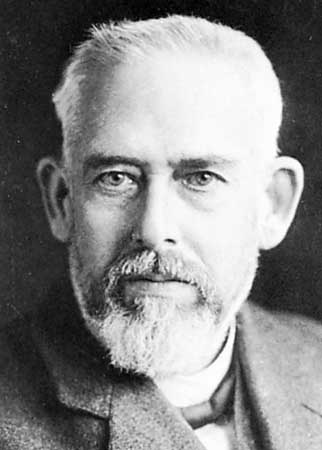


Work and methods
Wolf was an early adopter of dry-plate astrophotography and long-exposure imaging to reveal faint objects. By photographing large sky fields and comparing plates taken at different times, his team could detect small moving objects as short streaks or displacements against the fixed star background. This approach transformed minor-planet searches from visual telescopic sweeps into systematic photographic surveys, greatly increasing discovery rates.
Notable discoveries
Using these photographic techniques, Wolf discovered hundreds of new objects in the solar system and contributed to stellar and nebular photography. Two widely cited examples are:
- 323 Brucia — recognized as the first asteroid discovered by photographic means (discovered at Heidelberg and announced at the end of the 19th century).
- 588 Achilles — the first identified Trojan asteroid, an object sharing Jupiter's orbit and located near one of Jupiter's stable Lagrange points; this discovery highlighted a new population of small bodies in the solar system and was cataloged as 588 Achilles.
Importance and legacy
Wolf's systematic use of photography made asteroid hunting more efficient and influenced later photographic and electronic surveys. He trained assistants and built observational programs at the Heidelberg Observatory that continued after his death. His discoveries expanded knowledge of the solar system's small-body populations and demonstrated how instrumental technique could drive discovery. Modern asteroid survey strategies trace a line of development back to the practices he popularized.
Although best known for minor-planet work, Wolf also photographed star fields and nebulae, contributing to astronomical catalogs and public awareness of observational techniques. His career illustrates the shift from visual to photographic astronomy at the turn of the 20th century and the scientific gains that followed.
For more on his life and work see resources at the observatory and specialist biographies; introductory entries in general astronomy references place his achievements in the context of early photographic surveys and the growing study of small solar-system bodies.
Germany | astronomy | biography | Heidelberg | Trojan asteroid | 588 Achilles
Author
AlegsaOnline.com Max Wolf (German astronomer, 1863–1932) Leandro Alegsa
URL: https://en.alegsaonline.com/art/126524