
Martha Chase (American geneticist)
American geneticist who co-performed the 1952 Hershey–Chase experiment that provided decisive evidence that DNA, not protein, carries genetic information.
Martha Cowles Chase (November 30, 1927 – August 8, 2003), sometimes cited as Martha C. Epstein, was an American laboratory geneticist best known for her experimental work in 1952 that helped identify the molecular nature of heredity. Working with Alfred Hershey, she played a central role in an experiment that tilted scientific opinion toward DNA as the hereditary material.
Image gallery
2 Images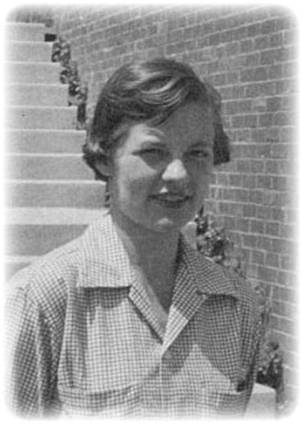

Key experiment and findings
In the Hershey–Chase experiment Chase and her colleague Alfred Hershey used bacteriophages (viruses that infect bacteria) to test whether genetic information was carried by DNA or by protein. They labeled the two kinds of molecules with different radioactive markers and observed which component entered bacterial cells during infection. Their results showed that the viral DNA entered infected bacteria and directed the production of new viruses while labeled protein largely remained outside the cells. Published in 1952, these findings were among the clearest experimental demonstrations that DNA is the repository of genetic information.
Context and collaborators
Chase conducted the work under the direction of Alfred Hershey at a research laboratory where bacteriophages were an active subject of study. The experiment built on earlier discoveries and on an active mid-20th-century debate about the chemical basis of inheritance, contributing decisive empirical data to the emerging field of molecular genetics.
Impact and legacy
The Hershey–Chase results helped shift the consensus in biology away from proteins as the likely hereditary material and toward DNA, shaping subsequent research into replication, genetic code, and molecular biology. Although Chase did not receive the high-profile awards later given to some contemporaries, historians of science note her pivotal technical contribution to a cornerstone experiment.
- Year of the experiment: 1952.
- Organism studied: bacteriophage and its bacterial host.
- Commonly referenced as the Hershey–Chase experiment.
- Also known by the name Martha C. Epstein in later records.
Chase's work remains a standard example in genetics and microbiology courses because it combines clear experimental design with decisive evidence. Her role illustrates how laboratory collaborators and technically skilled researchers can make foundational contributions to science.
Author
AlegsaOnline.com Martha Chase (American geneticist) Leandro Alegsa
URL: https://en.alegsaonline.com/art/126205