
Maria I of Portugal (1734–1816), queen regnant of Portugal, Brazil and the Algarves
Maria I was the first undisputed queen regnant of Portugal. Her long reign saw political change, a royal relocation to Brazil and a late-life incapacity that led her son to govern as regent.
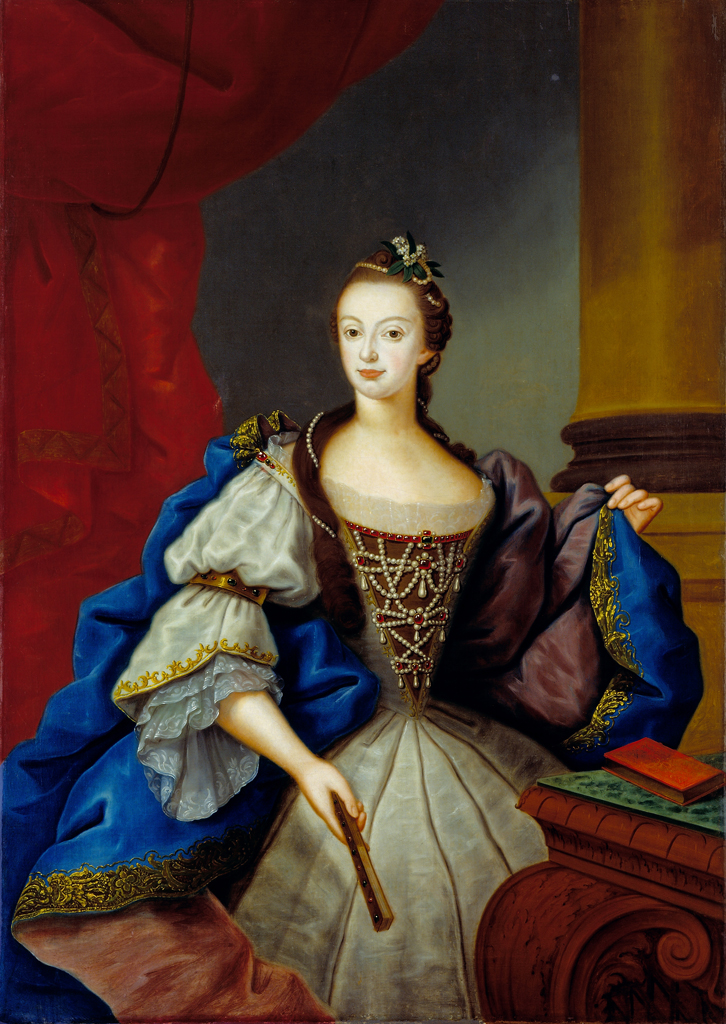
Maria I (17 December 1734 – 20 March 1816) was the sovereign Queen of Portugal, Brazil and the Algarves. She succeeded to the throne as the legitimate monarch and became widely known at home as Maria the Pious and, after the onset of a grave mental illness, as Maria the Mad abroad. Her reign bridged the ancien régime of 18th-century Portugal and the crises of the Napoleonic era that forced the royal household to relocate to the Americas.
Early life and accession. Born into the Portuguese royal family, Maria was the eldest surviving daughter of King José I. She married her uncle, the infante who became Pedro III, and upon her father's death she assumed the crown in her own right. Her accession ended an extended period of de facto ministerial rule and allowed her to reshape court life and policy.
Reign and political character. Maria's government marked a move away from the centralized, reforming policies associated with the Marquis of Pombal, restoring privileges to nobles and reinforcing traditional institutions and religion. She was a noted patron of charitable works and the arts, and her personal piety influenced court culture. Her household and administrative circle were repeatedly reshaped by the tensions between reformers and conservative courtiers.
Illness and regency. In the 1790s Maria developed a long‑term mental illness that progressively impaired her ability to rule. Because of her incapacity, the administration of the kingdom fell to her eldest surviving son, Prince João, who acted as head of the government in a regental role. The arrangement placed João at the center of major decisions, especially during the wars that engulfed Europe.
Flight to Brazil and the United Kingdom. Facing the threat of French invasion, the royal court withdrew to the Portuguese territories in America in 1807–1808. The move transformed the status of the transatlantic realms: in 1815 Brazil was elevated from a colony to a constituent Kingdom, and the monarchy was styled as the United Kingdom of Portugal, Brazil and the Algarves. Maria remained sovereign in title while the seat of government and much of the political life of the monarchy operated from Rio de Janeiro.
Death and legacy. Maria died in Rio de Janeiro in 1816. Her reign is remembered for its symbolic first as an undisputed queen regnant of Portugal, for its conservative turn after the Pombaline era, and for the extraordinary relocation of the monarchy to Brazil that set the stage for the colony’s eventual independence. Historians also note how her illness affected succession and governance, shaping the course of early 19th‑century Portuguese and Brazilian history.
Image gallery
10 Images




Notable facts
- She is the first undisputed female sovereign to reign in her own right over Portugal.
- Her later incapacity led to a prolonged regency under her son João, who governed from the royal court in Brazil.
- The transfer of the monarchy to the Americas during her reign temporarily made Rio de Janeiro the capital of the Portuguese empire.
- Her era saw Brazil raised from a colony to a component Kingdom within a united monarchy.
- Her name is associated with contrasting epithets: pious at home and mad in some foreign accounts.
Questions and answers
Q: Who was Maria I of Portugal?
A: Maria I of Portugal was the Queen of Portugal, Brazil, and the Algarves.
Q: What was Maria I known as in Portugal and Brazil?
A: Maria I was known as Maria the Pious in Portugal and Maria the Mad in Brazil.
Q: What was Maria I's significance in Portuguese history?
A: Maria I was the first undisputed Queen of Portugal in her own right.
Q: Who directed Maria I's court?
A: Maria I's court was directed by her eldest son and heir Dom João, the Prince Regent.
Q: Where did Maria I's court move?
A: Maria I's court moved to the Portuguese colony of Brazil, under the direction of her son Dom João.
Q: What happened when Maria I's court moved to Brazil?
A: Brazil was elevated from a colony to a Kingdom, leading to the formation of the United Kingdom of Portugal, Brazil, and the Algarves.
Q: When did Maria I pass away?
A: Maria I passed away on March 20, 1816.
Author
AlegsaOnline.com Maria I of Portugal (1734–1816), queen regnant of Portugal, Brazil and the Algarves Leandro Alegsa
URL: https://en.alegsaonline.com/art/125980