
Manfred Gerlach: East German Liberal Politician and Transitional Head of State
Biography of Manfred Gerlach (1928–2011), leader of the Liberal Democratic Party, long-time member of the GDR Council of State and acting head of state during the 1989–1990 transition.
Overview
Manfred Gerlach (8 May 1928 – 17 October 2011) was a German politician best known as the last Chairman of the Council of State of the German Democratic Republic (GDR) and the only non-communist to serve as East Germany's head of state. A member of the Liberal Democratic Party (LDPD), Gerlach spent decades working within the political structures of the GDR as a representative of one of the so-called bloc parties. His period as acting head of state coincided with the collapse of the one-party system and the transition toward free elections and eventual reunification.
Image gallery
1 Image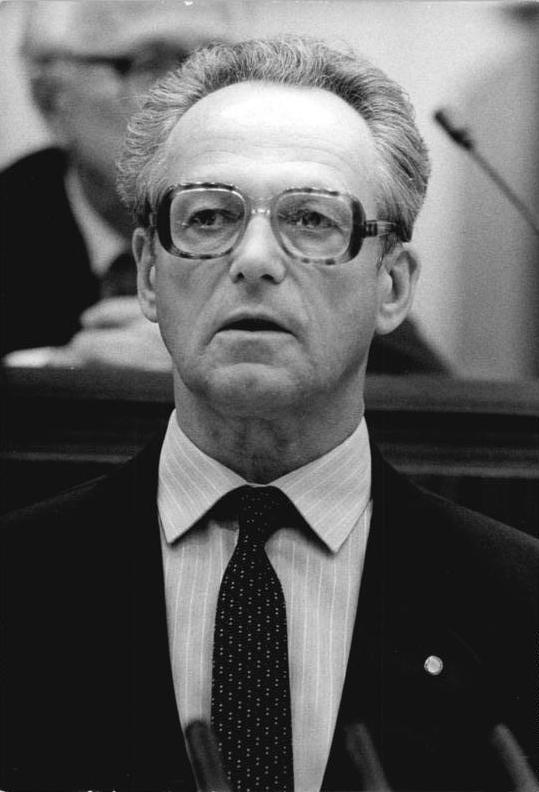
Early life and political beginnings
Born in Leipzig, Gerlach became politically active as a youth. In 1944 he was arrested for organizing an anti-fascist youth group during the final years of the Nazi regime. After World War II he joined the Liberal Democratic Party, one of several small parties that were permitted to exist under the communist-dominated political arrangement. He pursued legal studies at the Walter Ulbricht German Academy of State Sciences and Law and gradually advanced within his party's ranks.
Political career and offices
Gerlach held a series of party and state posts over many years. During the 1950s he rose in the leadership of the LDPD, serving in senior roles such as General Secretary and later as party chairman from 1967. From 1967 until the political upheavals of 1990 he was a member of the GDR's Council of State and served as one of its vice-chairmen. He also worked in municipal affairs in Leipzig early in his career, linking local and national responsibilities.
Role in the 1989–1990 transition
As the political system in East Germany began to unravel in late 1989, Egon Krenz resigned as Chairman of the Council of State. On 6 December 1989 Gerlach, by virtue of his position in the Council, became acting chairman and thus de facto head of state. His appointment was symbolically significant because he was not a member of the ruling Socialist Unity Party (SED). However, his authority was exercised during a period of rapid change when traditional institutions were being reformed or abolished. Following the first free elections in the GDR and a reorganization of state structures, the Council of State was discontinued and Gerlach resigned on 5 April 1990.
Legacy and notable facts
Gerlach is remembered as a transitional figure: a longtime participant in the GDR's political system who assumed the highest ceremonial office at the moment that system was collapsing. His career illustrates the role of the bloc parties, which operated under the SED-dominated National Front, and the limited space available to non-communist politicians within East German institutions. He died in Berlin in 2011 after a long illness.
Key positions and context
- Liberal Democratic Party (LDPD) leader and senior official.
- Member and vice-chairman of the GDR Council of State (1967–1990).
- Acting Chairman of the Council of State (6 December 1989 – 5 April 1990), serving as East Germany's head of state during the transition.
For more information about his hometown and early life see Leipzig. For context about anti-fascist youth movements in wartime Germany see anti-fascist youth organizing. To learn about the nature of East Germany's permitted small parties, consult resources on the bloc parties. Background on the immediate leadership change in late 1989 is available through material on Egon Krenz.
Related articles
Author
AlegsaOnline.com Manfred Gerlach: East German Liberal Politician and Transitional Head of State Leandro Alegsa
URL: https://en.alegsaonline.com/art/125759