
Madalyn Murray O'Hair
American atheist activist who founded American Atheists and spearheaded legal challenges that ended mandatory Bible readings and school prayer in U.S. public schools; a polarizing figure until her 1995 murder.
Overview
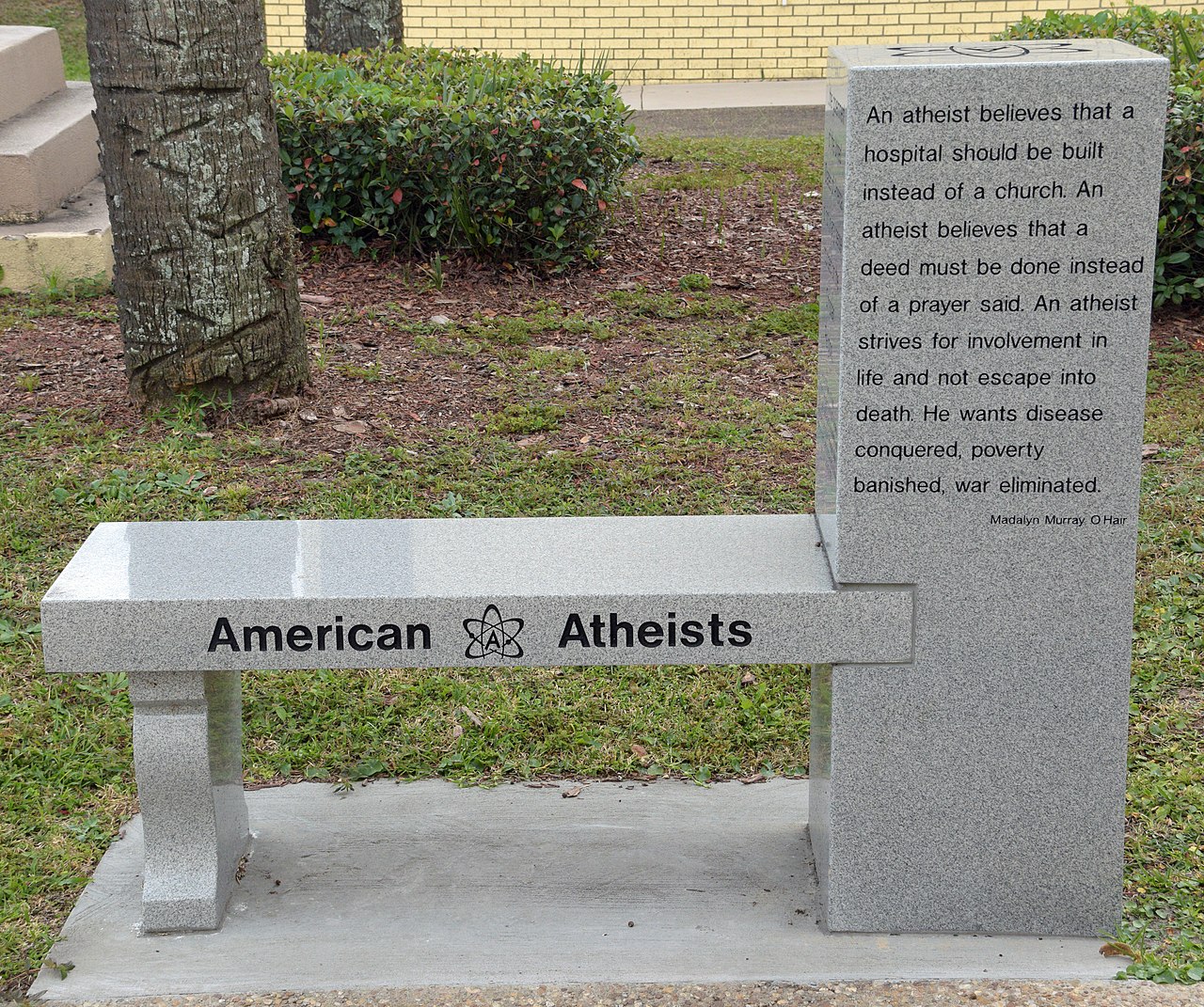
Madalyn Murray O'Hair (1919–1995) was a prominent and controversial American activist for secularism and the separation of church and state. She gained national attention in the late 1950s and early 1960s by bringing lawsuits that challenged religious practices in public schools, and she later founded and led an organization devoted to advocacy on behalf of nonbelievers.
Image gallery
3 Images
Activism and legal impact
O'Hair was a plaintiff in school prayer cases that reached the U.S. Supreme Court in 1963. Those rulings declared mandatory Bible readings and formal prayer in public schools unconstitutional, a turning point in American church–state jurisprudence. Her legal work helped define modern limits on government endorsement of religion and energized a wider secular movement in the United States.
Organization and public life
In 1963 she established American Atheists, serving as its president for many years and launching its magazine and public campaigns. She was an outspoken, media-savvy figure who used litigation, publications and public appearances to promote atheism and to press for the removal of religious symbols and practices from government institutions.
Controversies and criticism
O'Hair's combative style and high-profile tactics made her a polarizing figure. Supporters credit her with advancing civil liberties and giving nonbelievers a public voice; critics objected to her confrontational rhetoric and some organizational practices. Over time she became a lightning rod for opposition and was widely described in the press as one of the most disliked public personalities of her era.
Notable facts
- She combined legal strategy with public advocacy to shape debates about religion in public life.
- Her work is frequently cited in discussions of church–state separation and related Supreme Court decisions.
- Her leadership of American Atheists established one of the most visible secular advocacy groups in the U.S.
Death and legacy
In 1995 O'Hair, her son Jon, and her granddaughter Robin were kidnapped and later found to have been murdered by a former employee of the organization. The crime shocked observers and complicated public assessment of her life. Today her legacy is mixed: she is credited with advancing constitutional protections against government-imposed religion while remaining a contentious and divisive public figure whose methods and personality provoked intense debate.
Related articles
Author
AlegsaOnline.com Madalyn Murray O'Hair Leandro Alegsa
URL: https://en.alegsaonline.com/art/125641