
Lucas Papademos — Greek economist and former prime minister
Greek central banker and economist; Governor of the Bank of Greece (1994–2002), Vice‑President of the ECB (2002–2010) and interim Prime Minister of Greece during the 2011–2012 debt crisis.
Overview
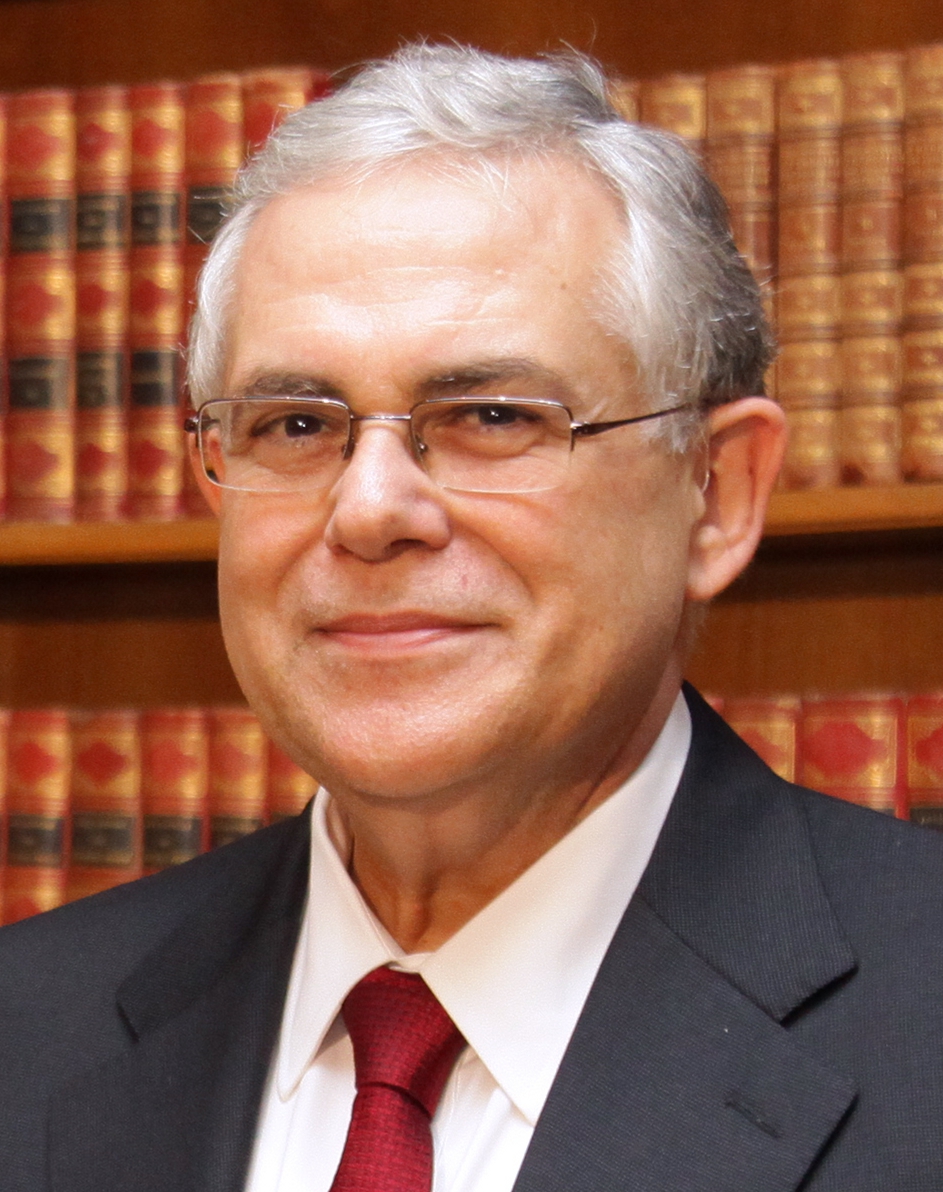
Lucas Demetrios Papademos (Greek: Λουκάς Παπαδήμος; born 11 October 1947) is a Greek economist and central banker. He is best known for serving as Governor of the Bank of Greece, as Vice‑President of the European Central Bank, and as the head of a technocratic interim government in Greece during the sovereign debt crisis. His career spans national central banking, European monetary institutions and academic posts.
Image gallery
3 Images

Early life and education
Papademos trained as an engineer and later as an economist, receiving advanced degrees abroad and establishing a technical and analytical approach to monetary policy. His academic background provided a foundation for analytical work on macroeconomic stability and financial systems, shaping his reputation as a policy‑oriented technocrat before he entered senior central banking roles.
Central banking career
He served as Governor of the Bank of Greece from the mid‑1990s until 2002, a period that included preparations for Greece’s accession to the eurozone. In 2002 he became Vice‑President of the European Central Bank, a position he held until 2010. In these roles he was involved in monetary policy decisions, banking supervision issues and technical coordination between national central banks and European institutions.
Prime ministership and the debt crisis
In November 2011 Papademos was appointed prime minister of a coalition, technocratic government tasked with stabilizing public finances, negotiating bailout terms with international creditors, and implementing urgent reforms. His administration acted as a transitional authority whose main remit was crisis management, legislation needed by rescue programmes and the organization of subsequent national elections. The government was short‑lived but played a central role in carrying forward bailout agreements and financial commitments.
Academic and policy work
Outside of government, Papademos has held visiting and fellowship positions in academic and research institutions. He was a Visiting Professor at the Kennedy School of Government at Harvard University and has been affiliated as a senior fellow with the Center for Financial Studies in Frankfurt. He has contributed to discussions on monetary policy, eurozone governance and the technical aspects of banking stability.
Later life and legacy
Papademos is frequently described as a technocrat: an expert called upon in moments of financial or institutional strain to implement technically demanding policies. His work illustrates the movement of senior economists between national central banks, supranational institutions and short‑term government duties. He has also been the target of political violence in the 2010s, an event that underscored the tensions surrounding austerity and reform debates in Greece.
Assessment
Commentators and analysts note that his background in central banking informed a pragmatic, rule‑based approach to crisis management. While supporters credit his steadiness and technical expertise, critics argue that technocratic governments face limits in political legitimacy and long‑term mandate. Histories of the eurozone crisis commonly present his premiership as part of a broader sequence of emergency measures taken by national leaders and international institutions to preserve financial stability.
For institutional profiles, policy statements and further reading see the linked institutional pages and academic records referenced above.
Related articles
Author
AlegsaOnline.com Lucas Papademos — Greek economist and former prime minister Leandro Alegsa
URL: https://en.alegsaonline.com/art/125451