
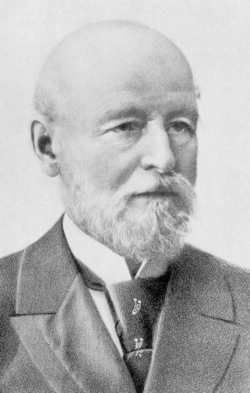
Leo von Caprivi (1831–1899)
Prussian general and statesman who served as German Chancellor from 1890–1894, succeeding Otto von Bismarck; known for trade treaties, colonial negotiations that produced the Caprivi Strip, and clashes with conservatives.
Georg Leo von Caprivi (24 February 1831 – 6 February 1899) was a Prussian army officer and politician who served as Chancellor of Germany from March 1890 to October 1894. He succeeded the long-serving statesman Otto von Bismarck and led the imperial government under Kaiser Wilhelm II as Chancellor of Germany. His tenure marked a shift from Bismarck's dominant style toward a more conciliatory, administratively focused leadership.
Image gallery
7 Images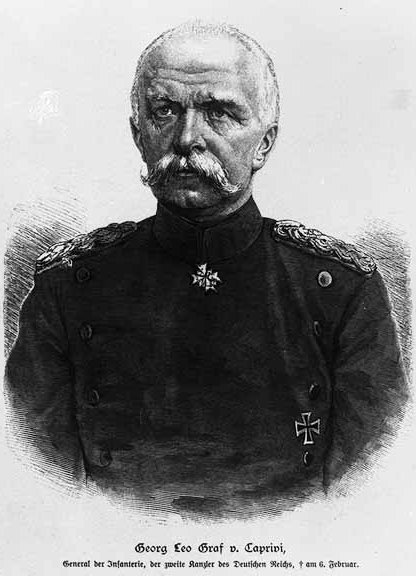


Background and career
Caprivi came from a family of minor nobility and made his career in the Prussian army, rising to the rank of major general. Before becoming chancellor he held several military and civil posts in the Prussian state, developing a reputation for practical administration. Contemporary accounts emphasize his competence as an organizer rather than as a flamboyant politician.
Domestic policy and politics
Domestically Caprivi attempted to broaden the government's social and political base. He negotiated a series of commercial treaties and tariff adjustments aimed at lowering some duties and encouraging industrial and agricultural trade—policies that appealed to urban industrialists and parts of the liberal middle class but alarmed conservative landowners. His moderate reforms and willingness to compromise created friction with the traditional conservative bloc.
Foreign policy and colonies
On colonial and diplomatic matters Caprivi pursued pragmatic solutions. The most enduring geographical legacy of his chancellorship is the so-called Caprivi Strip, a narrow territorial arrangement in southwest Africa that arose during negotiations with other colonial powers. His approach to alliances and overseas possessions tended to be transactional and less driven by the personal diplomacy that characterized Bismarck's era.
Resignation and legacy
Persistent disagreements with the Kaiser and with conservative elements in parliament over tariffs, military questions and administrative direction culminated in Caprivi's resignation in 1894. Historians often portray him as a transitional figure who sought moderate reform after Bismarck and whose mixed record reflects the tensions of a changing German Empire.
Notable facts
- Full name and titles later included Georg Leo Graf von Caprivi de Caprara de Montecuccoli.
- Named in connection with the Caprivi Strip in southern Africa, a legacy of colonial negotiations.
- Remembered for trade treaties and administrative reforms that reshaped domestic politics in the early 1890s.
- Served as a senior Prussian military officer before entering national politics; see military background: Prussian service.
Questions and answers
Q: Who was Leo von Caprivi?
A: Leo von Caprivi was a German major general and politician who succeeded Otto von Bismarck as Chancellor of Germany.
Q: When was Leo von Caprivi Chancellor of Germany?
A: Leo von Caprivi was German Chancellor from March 1890 to October 1894.
Q: What was Leo von Caprivi's full name?
A: Leo von Caprivi's full name was Georg Leo Graf von Caprivi de Caprara de Montecuccoli, which translates to Count George Leo of Caprivi, Caprara, and Montecuccoli in English.
Q: When was Leo von Caprivi born and when did he die?
A: Leo von Caprivi was born on February 24th, 1831 and died on February 6th, 1899.
Q: What was Leo von Caprivi's military rank?
A: Leo von Caprivi was a major general in the German military.
Q: Who did Leo von Caprivi succeed as Chancellor of Germany?
A: Leo von Caprivi succeeded Otto von Bismarck as Chancellor of Germany.
Q: For how long was Leo von Caprivi Chancellor of Germany?
A: Leo von Caprivi was Chancellor of Germany for four years, from 1890 to 1894.
Related articles
Author
AlegsaOnline.com Leo von Caprivi (1831–1899) Leandro Alegsa
URL: https://en.alegsaonline.com/art/124281