
Leonid Kantorovich: Soviet Mathematician and Economist
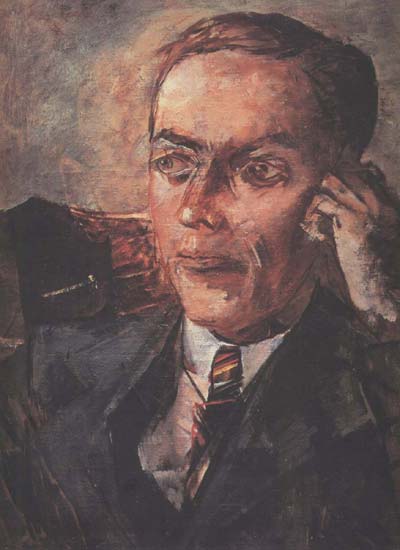
Leonid V. Kantorovich (1912–1986), Soviet mathematician and economist who pioneered linear programming and methods for optimal allocation of resources; Nobel laureate in Economic Sciences (1975).
Overview
Leonid Vitaliyevich Kantorovich (19 January 1912 – 7 April 1986) was a Soviet scholar who bridged mathematics and economics. He is widely credited with creating mathematical approaches for optimal resource allocation and with founding a rigorous theory of linear programming. His name in Russian and further biographical details are often shown as the Russian form of his name.

Image gallery
5 Images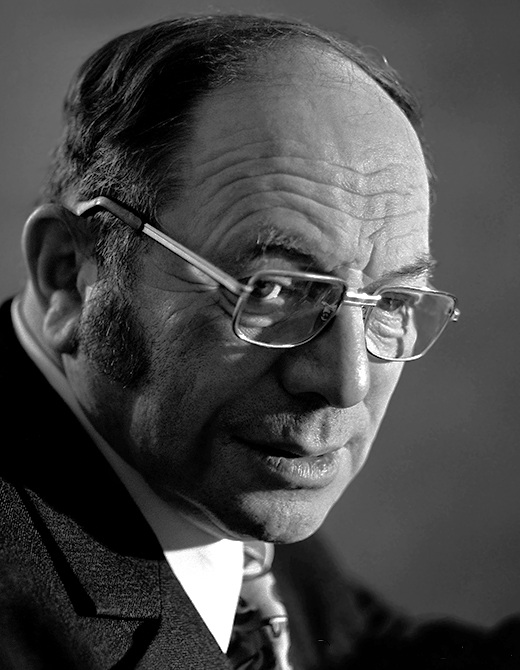


Major contributions
Kantorovich trained as a mathematician and applied mathematical ideas to economic planning. In the late 1930s he introduced methods that became the basis of modern mathematical optimization, producing tools to formalize production, allocation and cost minimization problems. For his combined work in mathematics and applied economics he is recognized both as a theorist and as an innovator in practical planning; his role is often described in accounts of Soviet economic thought and in histories of operations research. See also references to his standing as an economist.
Selected ideas and methods
- Early formulation and systematic use of linear programming for production planning and resource allocation.
- Contributions to functional analysis and the development of what is now called the Kantorovich metric in optimal transport theory.
- Work on numerical and computational mathematics, including algorithms for approximation and optimisation used in applied problems.
- Conceptual links between duality in optimization and prices or valuations in economic systems.
Career and honours
Kantorovich spent much of his career in Soviet academic institutions and after 1960 relocated to Siberia, where he helped establish the Department of Computational Mathematics at Novosibirsk State University and contributed to building the scientific community in that region; his later career is associated with Novosibirsk. He received major awards including the Stalin Prize (1949) and, jointly with other scholars who advanced allocation theory, the Nobel Prize in Economic Sciences in 1975 (Nobel citation and summary).
Legacy and impact
Kantorovich's work created a durable interface between pure mathematics and applied economics. Linear programming and related optimization techniques that he helped develop became central tools in operations research, industrial engineering, transportation planning and many branches of applied science. Concepts originating in his work—such as duality and transport metrics—now appear in probability, statistics, data science and machine learning as well as in economic modeling. His career is often cited as an example of how rigorous mathematics can address large-scale practical problems.
Notable facts
Although his research grew from problems of production and planning in a particular historical context, many of Kantorovich's methods proved widely portable and influential. He combined abstract functional-analytic insight with attention to algorithms and computations, helping to found computational mathematics as an institutional specialty in the Soviet Union.
Related articles
Author
AlegsaOnline.com Leonid Kantorovich: Soviet Mathematician and Economist Leandro Alegsa
URL: https://en.alegsaonline.com/art/124237
Sources
- nsu.ru : Kantorovich`s biography in Russian