
Keith Olbermann: broadcaster, political commentator, and sports anchor
Profile of Keith Olbermann, an American sportscaster turned political commentator known for SportsCenter and Countdown, his combative on-air style, high-profile departures, and influence on cable news discourse.
Overview
Keith Olbermann (born January 27, 1959) is an American television personality whose career spans sports broadcasting and political commentary. He first gained national attention as a sportscaster and later became widely known for his outspoken, often combative commentary on cable news. Olbermann's programs mixed information, opinion and pointed critiques of public figures and institutions, which made him a prominent and sometimes polarizing presence in U.S. media.
Image gallery
3 Images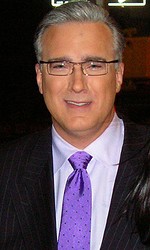


Career and broadcasting style
Olbermann built a reputation for rapid delivery, sharp editorial phrasing and a willingness to engage in direct criticism of political leaders and rival pundits. His style blended elements of sports anchoring—timing, energy and performance—with opinionated political analysis. Over time he developed recurring segments and emphatic sign-offs that reinforced his on-air persona. Critics and supporters alike noted his capacity to mobilize viewers and shape conversations on contentious topics.
Television roles and notable programs
His early national profile came from sports work at ESPN, where he was a familiar face on programs such as SportsCenter. Later he transitioned into political coverage and opinion journalism, most prominently as the host of Countdown with Keith Olbermann on MSNBC, a channel operated in partnership with NBC and Microsoft during parts of its history. After leaving that show he took a position at Current TV, a network associated with several high-profile media figures. Throughout his career he interviewed politicians, media personalities and public figures, and he frequently addressed conservative commentators and administrations in his commentary—for example, he criticized figures such as Bill O'Reilly and political leaders including George W. Bush in the course of his broadcasts.
Controversies and departures
Olbermann's outspoken approach sometimes led to conflicts with company executives, colleagues and regulatory concerns. He experienced suspensions and contract disputes at various points, and his exit from MSNBC came amid management changes following Comcast's acquisition of NBCUniversal in 2011. His subsequent tenure at Current TV also ended prematurely. These high-profile departures attracted significant media attention and prompted debate about editorial independence, personality-driven news and the boundaries between reporting and advocacy.
Impact and reception
Supporters credit Olbermann with elevating progressive perspectives in cable news and with introducing spirited, personality-led commentary to a wide audience. Detractors criticized his tone as partisan and sometimes adversarial. Regardless of viewpoint, many media analysts regard him as influential in shaping the style of opinion programming that became prominent on 24-hour news channels in the early 21st century. His career illustrates broader trends in television: the blurring of news and commentary, the centrality of on-air personalities, and the commercial pressures that affect editorial choices.
Notable facts and distinctions
- Born in 1959, he started in local television before rising to national prominence.
- He moved from sports broadcasting to political commentary, an uncommon transition that highlights his versatility.
- Olbermann often used recurring editorial segments to make pointed arguments, a technique that increased his visibility and helped define his brand.
- His career includes multiple widely covered exits from networks, sparking discussion about media management and talent relations.
- He remains a frequently cited example when discussing the evolution of opinion-driven cable news.
For further reading on networks and personalities mentioned here, see materials from the networks and commentators linked above or consult comprehensive media histories and profiles.
Related articles
Author
AlegsaOnline.com Keith Olbermann: broadcaster, political commentator, and sports anchor Leandro Alegsa
URL: https://en.alegsaonline.com/art/123504
Sources
- politico.com : "Keith Olbermann joins call to kill bill"