
Wassily Kandinsky: Pioneer of Abstract Art
Wassily Kandinsky (1866–1944), Russian-born painter, printmaker and theorist, credited with helping to invent abstract painting; teacher at the Bauhaus and author of influential writings on color and spirituality in art.
Overview
Wassily Kandinsky (born 1866, died 1944) was a Russian-born artist and writer whose experiments helped establish abstract painting as a major current in modern art. Trained initially in law and economics, Kandinsky turned to painting in his thirties and became known for works that emphasized color, form and the expressive, often spiritual, effects of shapes and hues.
Image gallery
10 Images


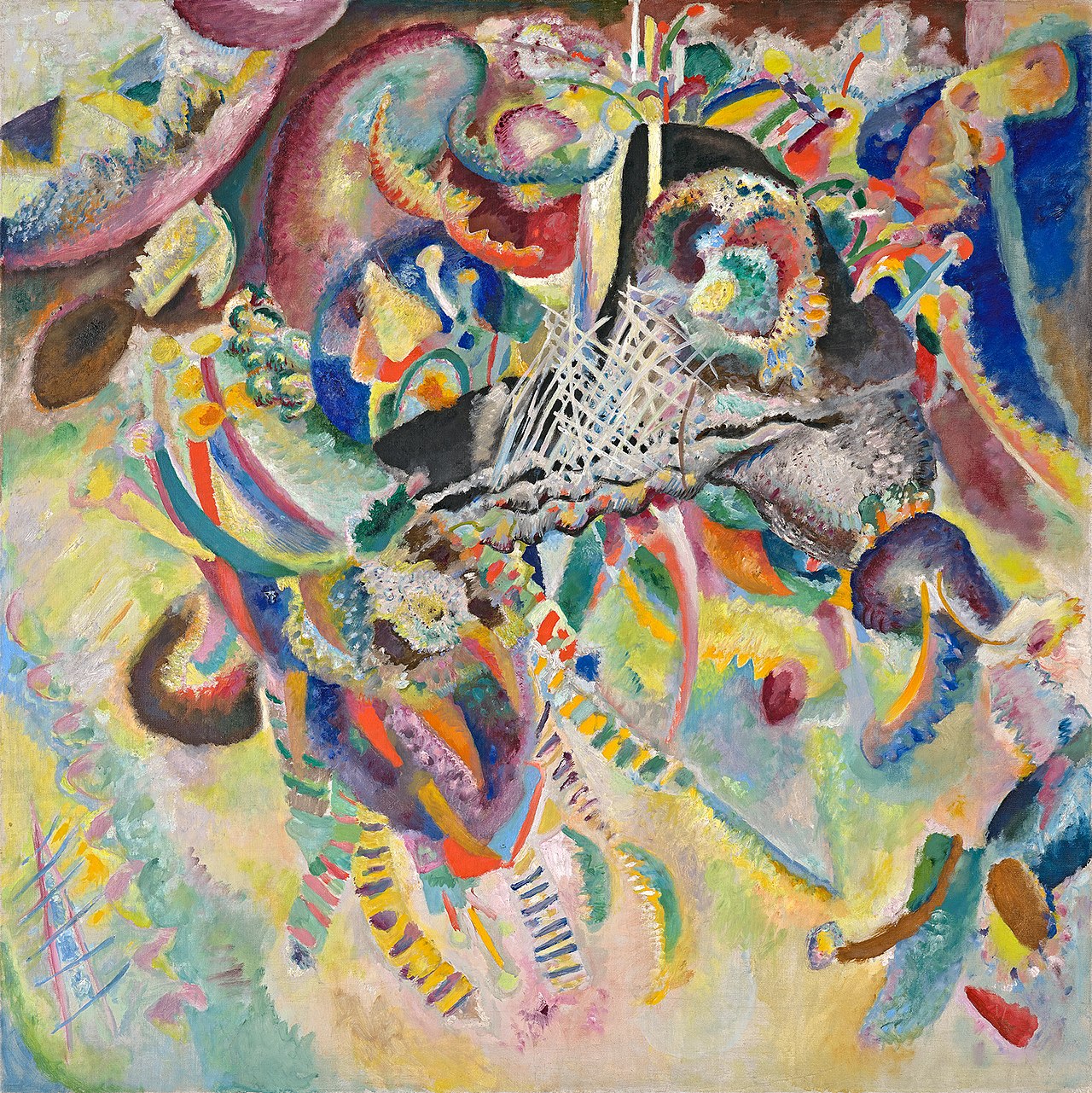


Artistic development and style
Kandinsky's early work shows influences from Impressionism and the bold colors of Fauvism; over time he moved toward increasingly abstract arrangements. He often used musical terms for his works—"Improvisation," "Impression," "Composition"—reflecting his conviction that color and form could produce effects analogous to music. His paintings range from swirling, organic gestures to later compositions with geometric clarity, straight lines and circles.
Theories, writings and intellectual context
Beyond painting, Kandinsky was an important theorist. His 1911 essay and later book Concerning the Spiritual in Art argued that art should convey inner necessity and spiritual value rather than merely describe the external world. He drew on ideas from music, religion and contemporary philosophy, and he showed interest in synesthesia—the blending of senses—believing that colors could be "heard" and forms could act on the viewer's emotions.
Groups, teaching and later life
Kandinsky was a founding member of the Munich-based group Der Blaue Reiter, which promoted expressive color and symbolic imagery. After World War I he joined the Bauhaus school, where he taught and refined a more systematic, geometric vocabulary that balanced intuition with design principles. As political conditions changed in Germany he moved to France, where he continued to work until his death in 1944.
Legacy and notable facts
Kandinsky's experiments shaped the possibilities of non-representational painting and influenced generations of abstract artists. His work is widely exhibited and studied for its pioneering role in modernism and for its ambitious blending of theory and practice. Collectors and museums regard certain compositions from the 1910s and 1920s as milestones of 20th-century art.
Further reading
Questions and answers
Q: Who is Wassily Kandinsky?
A: Wassily Kandinsky was a Russian painter, printmaker, and art theorist who was one of the most important 20th-century artists.
Q: What is Kandinsky known for?
A: Kandinsky is known for being a major figure in modern art and for painting some of the first modern abstract works.
Q: How did Kandinsky's art change over time?
A: Kandinsky's art changed several times during his life, ranging from fauvist to abstract to expressionist to constructivist.
Q: When was Wassily Kandinsky born?
A: Wassily Kandinsky was born on December 16, 1866.
Q: When did Kandinsky pass away?
A: Kandinsky passed away on December 13, 1944.
Q: What was Kandinsky's nationality?
A: Kandinsky was Russian.
Q: What was Kandinsky's profession?
A: Kandinsky was a painter, printmaker, and art theorist.
Related articles
Author
AlegsaOnline.com Wassily Kandinsky: Pioneer of Abstract Art Leandro Alegsa
URL: https://en.alegsaonline.com/art/123263