
Joe Paterno: Longtime Penn State Coach and Contested Legacy
Overview of Joe Paterno (1926–2012), longtime Penn State head coach, record-holder for wins, his achievements, the 2011 Sandusky scandal and the mixed legacy that followed.
Joseph Vincent "Joe" Paterno (December 21, 1926 – January 22, 2012), often called JoePa, was an American college football figure best known for his long tenure at Penn State. Born and raised in Brooklyn to an Italian-American family, Paterno played college football before beginning a coaching career that made him one of the most prominent personalities in the sport. He served as the head coach of the Penn State Nittany Lions from 1966 through 2011 and amassed a record number of victories at the time.
Image gallery
8 Images
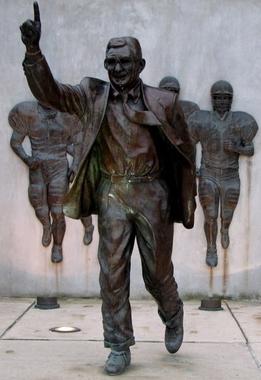


Career and accomplishments
Paterno began his association with Penn State as an assistant under head coach Rip Engle in the early 1950s and was promoted to lead the program in 1966. Over more than four decades he was widely admired for emphasizing academic standards, program stability and conservative football principles. His teams won a large number of games and multiple major bowl appearances, and he remains notable for reaching the milestone of 400 wins, a mark no other NCAA Division I Football Bowl Subdivision coach had achieved when he reached it.
- Career wins: 409 (long recognized as the most in major-college history at the time)
- Multiple undefeated seasons and major bowl victories
- Inducted into the College Football Hall of Fame in 2007
Controversy and dismissal
Late in his career Paterno's reputation became the subject of intense scrutiny following the arrest of former assistant coach Jerry Sandusky on child sexual abuse charges. Questions were raised about how university officials and coaching staff handled reports of misconduct. In November 2011, the university's trustees relieved Paterno of his duties amid concerns about his possible responsibility for how information had been handled. The sequence of events provoked national debate about institutional accountability, reporting obligations and the responsibilities of senior staff within collegiate athletics.
In the months that followed, investigations and sanctions by outside bodies affected the program and its records. Some penalties were later modified or subject to legal and administrative review. Public opinion about Paterno diverged sharply: some continued to praise his long record of on-field success and support for academics, while others criticized his response to allegations involving staff members.
Legacy and death
Paterno died from lung cancer on January 22, 2012. His life and career are remembered as a mixture of major sporting achievement and serious institutional controversy. For historians of sport and administrators, his story raises enduring questions about leadership, ethics, and the balance between competitive success and organizational responsibility in collegiate athletics. Many accounts of modern college football reference Paterno both for the records he set and for the debates his final years ignited.
Further reading on Paterno's career, the Penn State program and the broader issues surrounding the scandal can be found through archived reports and institutional reviews. For contemporary context, see materials on the role of coaching leadership and university governance in athletics (coach responsibilities), the history of the Penn State program (Penn State Nittany Lions), and journalistic investigations of the 2011–2012 events (college football coverage). Additional resources include official trustee statements and court records relating to the case (university decisions), biographical summaries (early life), and institutional honors lists (Hall of Fame).
Because aspects of the later events remain debated and complex, assessments of Joe Paterno tend to emphasize both his long-term influence on the sport and the unresolved ethical questions that arose at the end of his career.
Questions and answers
Q: Who was Joe Paterno?
A: Joe Paterno was an American college football coach who coached for 46 years from 1966 through 2011 and was the head coach of the Penn State Nittany Lions.
Q: What was Joe Paterno's nickname?
A: Joe Paterno's nickname was "JoePa".
Q: What was the record of Joe Paterno's team during his time as head coach?
A: Joe Paterno's team won 409 games during his time as head coach, making him the coach with the record for most wins by an NCAA Division I Football Bowl Subdivision (FBS) coach.
Q: What was Joe Paterno's ethnic background?
A: Joe Paterno was an Italian-American who was born and raised in Brooklyn.
Q: Why was Joe Paterno fired from Penn State?
A: Joe Paterno was fired from Penn State in November 2011 because the university was concerned about his possible responsibility after long-time assistant coach Jerry Sandusky was arrested on child sexual abuse charges.
Q: How many undefeated teams did Joe Paterno coach?
A: Joe Paterno coached five undefeated teams that won major bowl games.
Q: When did Joe Paterno die?
A: Joe Paterno died on January 22, 2012, of lung cancer.
Related articles
Author
AlegsaOnline.com Joe Paterno: Longtime Penn State Coach and Contested Legacy Leandro Alegsa
URL: https://en.alegsaonline.com/art/122251
Sources
- mcall.com : "Penn State rallies to win No. 400 for Paterno"
- post-gazette.com : "Paterno and Spanier both out at Penn State"
- cnn.com : "Penn State president blames scandal on Sandusky"
- guardian.co.uk : "Former Penn State football coach Joe Paterno dies aged 85"