
Jerome Adams (American physician and 20th U.S. Surgeon General)
Profile of Jerome M. Adams, an American anesthesiologist who served as the 20th U.S. Surgeon General (2017–2021), his public-health work, prior role in Indiana, and notable aspects of his tenure.
Jerome Michael Adams (born September 22, 1974) is an American physician and anesthesiologist who served as the 20th Surgeon General of the United States from September 2017 to January 2021. His career spans clinical practice, state-level public-health leadership and national public communication on health threats. The Surgeon General's office he led is responsible for public health advisories, education and preventive health messaging in the United States.
Image gallery
10 Images
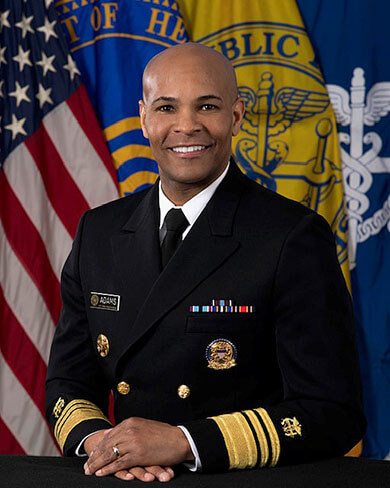




Background and public-health roles
Before his federal appointment, Adams held the post of Indiana State Health Commissioner from 2014 to 2017, where he addressed state priorities including infectious disease, substance use and preventive care. On June 29, 2017 President Donald J. Trump nominated Adams for Surgeon General; the United States Senate confirmed the nomination on August 3, 2017 by a recorded vote and he took office that fall. Information about the Surgeon General's office is available from the official office page here.
Responsibilities and focus areas
As Surgeon General, Adams was the nation’s leading spokesperson on public health matters. Typical responsibilities include issuing advisories, promoting prevention campaigns and working with federal, state and local partners. During his tenure, commonly reported priorities included addressing:
- the opioid and substance-use crises;
- tobacco and e-cigarette use prevention;
- HIV prevention and treatment outreach;
- communicable disease preparedness, including pandemic response.
Notable aspects of his tenure
Adams served during a period marked by high-profile public-health events. His role required translating scientific guidance into public messages and coordinating with health agencies, state health departments and the legislative branch. The confirmation and oversight process involved the United States Senate, reflecting the position's public accountability. He used public outreach, media appearances and social platforms to communicate health guidance.
Legacy and context
Physicians who enter public-health leadership must balance clinical knowledge, policy considerations and public communication. Adams’ career illustrates this mix: clinical training in anesthesiology combined with administrative experience at the state and federal levels. After leaving the Surgeon General’s office, individuals with similar backgrounds often continue in public-health advocacy, private-sector advisement or academic roles.
While assessments of specific policies and communications vary among observers, the office of the Surgeon General remains an important channel for national health guidance, emergency advisories and preventive health campaigns directed at improving population health.
Related articles
Author
AlegsaOnline.com Jerome Adams (American physician and 20th U.S. Surgeon General) Leandro Alegsa
URL: https://en.alegsaonline.com/art/121858
Sources
- ibj.com : "Pence names Adams Indiana's health commissioner"
- wfyi.org : "Indiana Names OB-GYN To Fill Vacated Health Commissioner Seat"
- altgov2.org : "Nominee Report | U.S. Office of Government Ethics"
- statnews.com : "Jerome Adams nominated as new U.S. surgeon general"
- fox59.com : "President Trump nominates Indiana Health Commissioner Jerome Adams for U.S. Surgeon General"
- cnn.com : "Dr. Jerome Adams confirmed as surgeon general"