
James Scullin — Australian Prime Minister during the onset of the Great Depression
James Scullin (1876–1953) was Australia's ninth prime minister (1929–1932). He led the Labor government as the global economic crisis began, presided over divisive responses and later served in diplomatic roles.
Overview
James Henry Scullin served as the ninth Prime Minister of Australia from October 1929 to January 1932. He assumed office just as the international economic crisis erupted and his government struggled to manage the social and fiscal consequences. A member of the Australian Labor Party, Scullin is widely remembered for his integrity and for presiding over a period of severe economic and political turmoil.
Image gallery
10 Images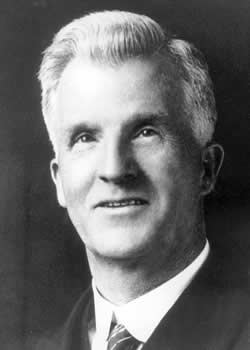


Background and rise
Born on 18 September 1876, Scullin entered public life after experience in labour organisations and journalism, and won election to federal parliament before becoming leader of his party. He led Labor into the 1929 election and formed government that October. His premiership began at a moment when international trade collapsed and unemployment rose sharply following the 1929 stock market crash.
Prime ministership and policy challenges
The Scullin government faced competing economic prescriptions. Some advisers and state leaders urged conservative fiscal restraint and spending cuts, while others within Labor and some state premiers sought measures to sustain demand and protect wages. In 1931 the federal and state governments reached the Premiers' Plan, an agreement that imposed spending reductions and other austerity measures; the Plan deepened divisions within the Labor movement and provoked fierce debate about how democracies should respond to deep downturns.
Political consequences
Internal disagreement over economic policy and disagreements with state Labor figures weakened the government. Several senior figures left or opposed the party's course; opponents capitalised on public discontent, and Labor suffered a heavy defeat at the 1931 federal election. Scullin remained a prominent figure in the party and contested later elections, but the early 1930s realignment altered Australian politics for the decade.
Later life and legacy
After his years as prime minister Scullin continued in public service and was later appointed to represent Australia abroad during the Second World War. His record is often evaluated in the context of timing: many historians and commentators note that he inherited an international shock of great scale and limited fiscal and monetary tools compared with later eras. He died in 1953, remembered for personal probity and for leading Australia through one of its most testing peacetime crises.
Notable facts
- Scullin became prime minister days before the global economic crisis intensified; the timing shaped his government's options.
- The 1931 Premiers' Plan was a central and controversial response to the downturn.
- Party splits during his term contributed to the formation of a non-Labor grouping that defeated Labor at the 1931 election.
- Scullin later served as Australia’s senior representative in the United Kingdom during the Second World War, reflecting continued public trust in his service.
For further contextual information about the economic context, see Great Depression, and for party history consult the Australian Labor Party resources.
Related articles
Author
AlegsaOnline.com James Scullin — Australian Prime Minister during the onset of the Great Depression Leandro Alegsa
URL: https://en.alegsaonline.com/art/121368