
Ian Smith (Rhodesian Prime Minister)
Ian Smith (1919–2007) was prime minister of Rhodesia from 1964–1979. He led a white-minority government, declared unilateral independence in 1965, and presided over a prolonged guerrilla war and negotiated transition.
Overview
Ian Douglas Smith was a Rhodesian politician best known for serving as prime minister of Rhodesia from 1964 to 1979. Born in 1919 in what was then Southern Rhodesia, he became the country's first native-born premier and led a predominantly white political movement that resisted immediate majority rule. His tenure is most often associated with the 1965 Unilateral Declaration of Independence and the international crisis that followed.
Image gallery
10 Images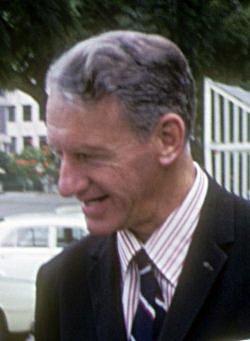





Early life and rise to power
Smith served in the wartime armed forces and returned to Rhodesian farming and party politics after World War II. He rose through the ranks of the dominant conservative party and became prime minister in 1964. His political style was direct and combative; he positioned himself as a defender of Rhodesian prerogatives and of the existing social and economic order.
Leadership and the Unilateral Declaration
In November 1965 Smith's government issued a Unilateral Declaration of Independence (UDI), formally breaking constitutional links with the United Kingdom. The move aimed to prevent a rapid shift to majority rule and to maintain minority political control. The declaration was not recognised by the British government or the international community, and it triggered diplomatic isolation and economic sanctions against Rhodesia.
Conflict, sanctions, and domestic policy
During Smith's rule Rhodesia entered a prolonged period of armed conflict known as the Bush War, fought between Rhodesian security forces and African nationalist guerrilla movements. The war, together with international sanctions, shaped many government policies of the period and placed heavy burdens on the country's economy and society.
Negotiation and transition
Over the 1970s Smith's government faced mounting military and diplomatic pressure that eventually led to negotiations with nationalist leaders and outside mediators. These talks culminated in agreements that ended white minority rule and led to internationally supervised elections. The transition saw the establishment of Zimbabwe as an independent state under majority rule at the end of the 1970s.
Legacy and assessment
Smith remains a polarising figure. Supporters credit him with defending Rhodesian institutions and sovereignty; critics condemn his role in prolonging minority rule and resisting majority enfranchisement. Historians note his impact on the region's late-colonial politics and the lasting consequences of the decisions made during his administration.
Key events
- 1964: Becomes prime minister.
- 1965: Unilateral Declaration of Independence.
- 1960s–1970s: Rhodesian Bush War and sanctions.
- Late 1970s: Negotiated settlement and transition toward independence.
Related articles
Author
AlegsaOnline.com Ian Smith (Rhodesian Prime Minister) Leandro Alegsa
URL: https://en.alegsaonline.com/art/120836